


Large Copper Tray
A large copper tray brings genuine weight and warmth to a room, shifting easily from utilitarian service to bold wall display.
Large Copper Tray
A large copper tray encompasses serving platters, deep chargers, and wall-hanging display pieces originating from the nineteenth and early twentieth centuries. These substantial items span diverse global traditions, including British Arts and Crafts workshops, Middle Eastern metalwork, and Japanese export pieces.
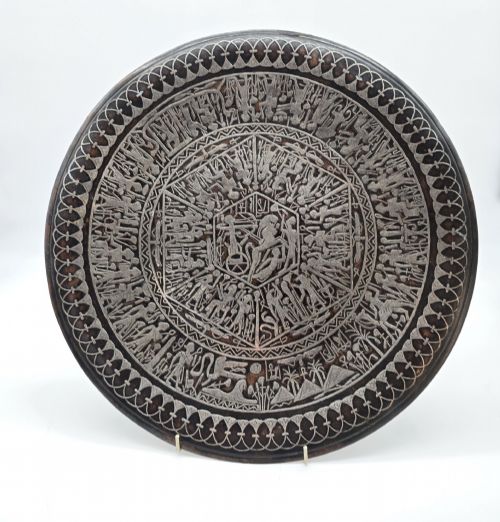
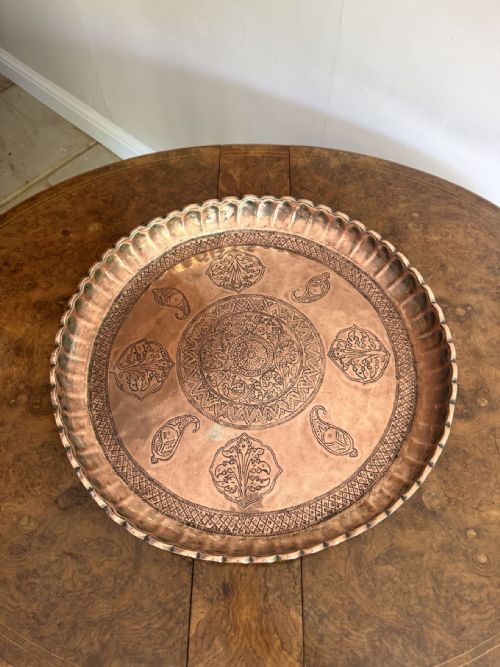
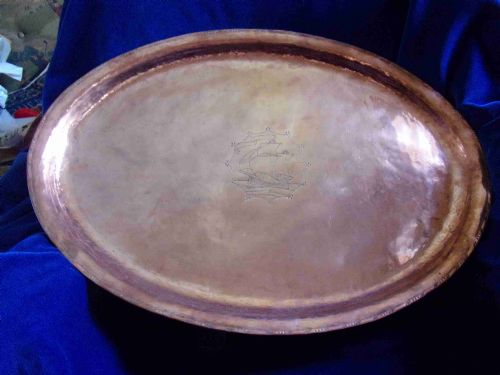
The version most commonly encountered on this page is the Arts and Crafts circular tray or deep charger, often bearing hand-beaten surfaces from the period around nineteen hundred. Alongside these, buyers frequently meet Egyptian Cairo Ware chargers inlaid with silver and bronze, as well as Indo-Persian engraved vessels.
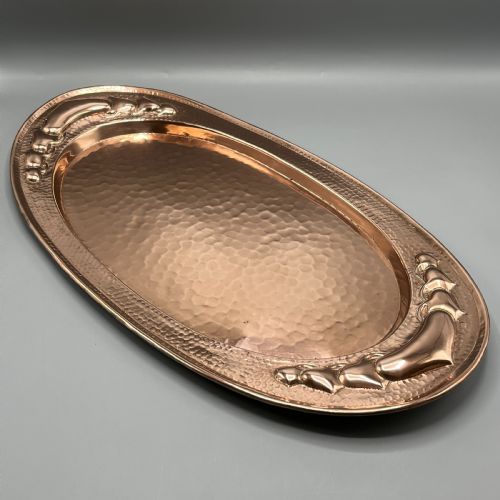
Makers working within these traditions produced pieces intended for both domestic hospitality and decorative display. The forms range from plain oval serving vessels with twin handles to heavily chased wall chargers and mixed metal presentation pieces.
What varies in quality
The gauge of the metal dictates the structural integrity of the piece, with thicker plates resisting distortion and offering a more satisfying heft during use. Weight and rigidity separate robust serving vessels from purely decorative wall hangings.
The precision and depth of the handwork determine artistic merit, distinguishing brisk, confident chasing and clean planishing marks from shallow, mechanical stamping. Signed works by established makers show superior control in the hammered surface texture and decorative borders.
The preservation of original surface patination and inlaid metals heavily influences the integrity of the piece. Cleanly integrated handles, secure gallery rims, and intact mixed metal elements reflect superior original construction.
Design styles represented across the inventory include Arts and Crafts, Art Nouveau, Egyptian Revival, Middle Eastern, and Meiji period Japanese work.
Hugh Wallis·J and F Pool·WMF Jugendstil
The Large Copper Tray Glossary
- Planishing
- The process of smoothing and shaping sheet metal with a hammer, leaving a patterned series of flat facets across the surface. This technique strengthens the copper while creating a textured finish.
- Repoussé
- A metalworking method where the artisan hammers the design from the reverse side to form raised relief patterns on the front. It allows for deep, sculptural ornamentation on serving trays and chargers.
- Cairo Ware
- Nineteenth and early twentieth-century metalwork from Egypt featuring heavy bronze or copper vessels inlaid with silver and geometric calligraphy. These decorative chargers were popular amongst European collectors.
- Gallery
- A raised wooden or metal border fitted around the perimeter of a serving tray to secure glassware and decanters. It often incorporates decorative pierced cutouts or turned handles.
- Charger
- A large ornamental plate or shallow bowl traditionally used for ceremonial display rather than direct dining. In copper, these pieces frequently hang on walls to showcase intricate engraving.
Large Copper Tray: Frequently Asked Questions
How were these large trays used historically?
These vessels served multiple domestic functions, operating as heavy serving platters for dining rooms or as presentation pieces for formal occasions. Many were also mounted directly onto walls as decorative chargers to display intricate metalwork.
Smaller variants handled daily tea and beverage service, while substantial two-handled ovals managed large joints of meat or heavy decanter sets. Their dual role as utilitarian furniture and wall art made them central to period interior decoration.
How do I care for an antique copper surface?
Maintenance requires minimal intervention to preserve the natural historic patination that develops over decades of exposure. Dusting with a soft dry cloth prevents grime accumulation without stripping the surface character.
Harsh chemical polishes should be avoided because they remove the aged dark tones prized by collectors. If cleaning is necessary, a gentle non-abrasive metal cleaner applied sparingly maintains the integrity of the original hand-beaten finish.
How do I identify Arts and Crafts copper work?
Arts and Crafts pieces typically exhibit visible hammer marks from hand-planishing, celebrating the direct touch of the artisan over industrial perfection. Designs favour naturalistic motifs, simple geometric borders, and honest construction without hidden joins.
Many of these items carry maker stamps or signatures tucked near the rim or base. The overall aesthetic prioritises tactile material warmth and robust utility above fussy ornamentation.