
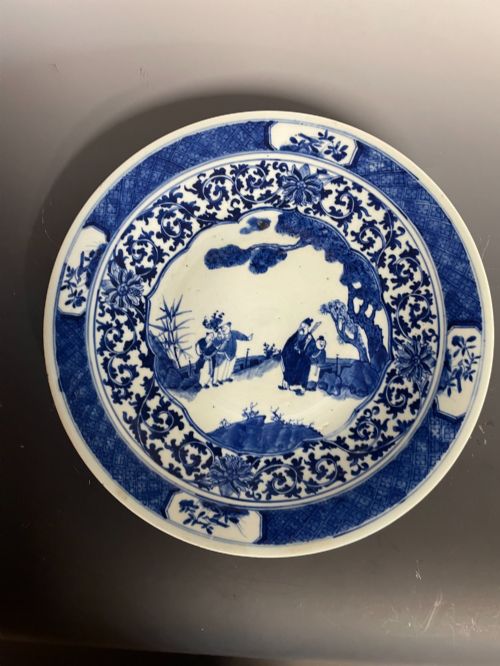
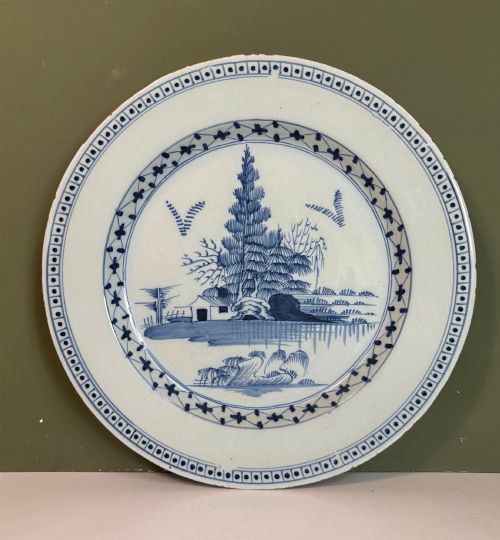

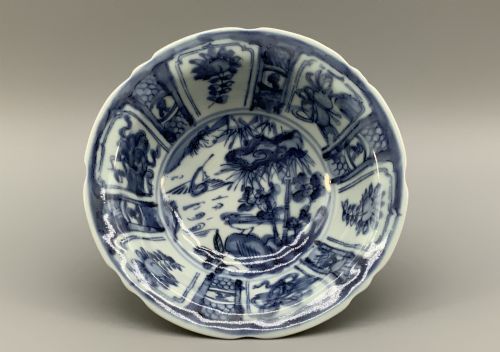
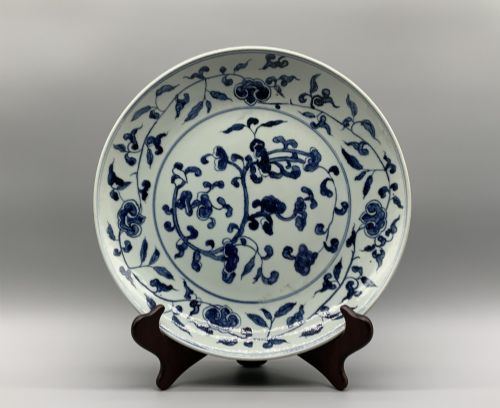


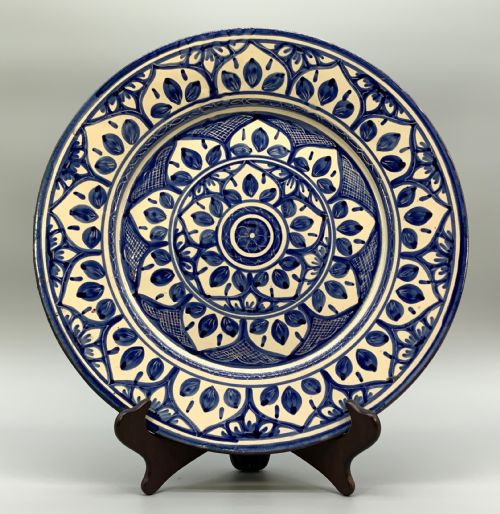
Blue White Charger Plate
A blue white charger plate brings bold cobalt ornament to your wall or sideboard, offering centuries of ceramic artistry in a single grand dish.
Understanding the blue white charger plate
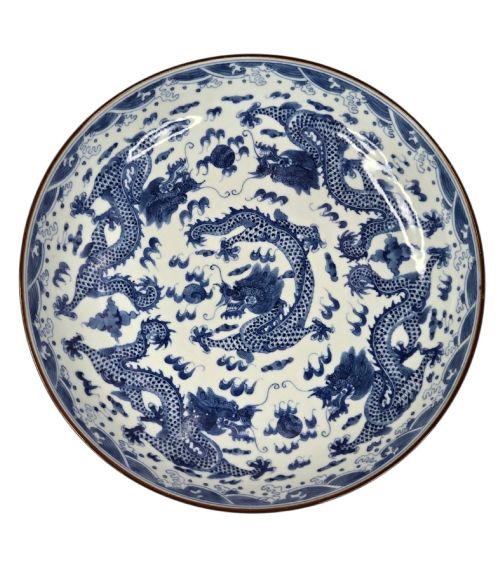
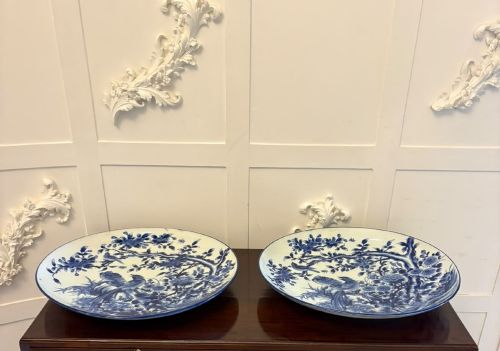
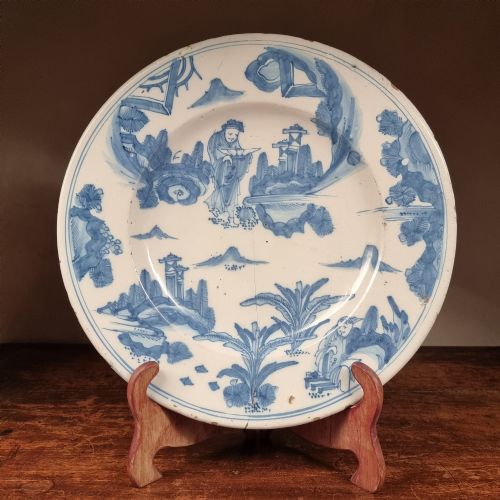
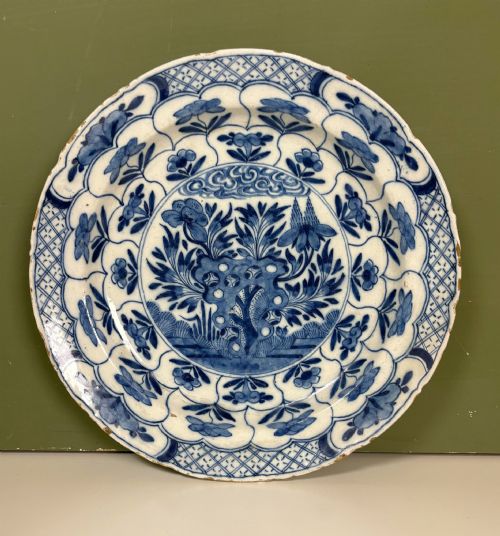
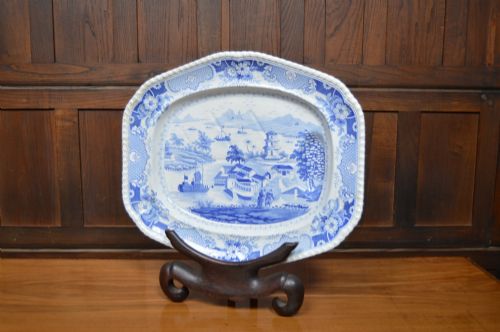
A blue white charger plate serves as a wide decorative platter or large serving dish, usually measuring significantly broader than a standard dinner plate. These pieces display deep cobalt painting across earthenware bodies, ranging from nineteenth century transferware patterns to continental delftware.
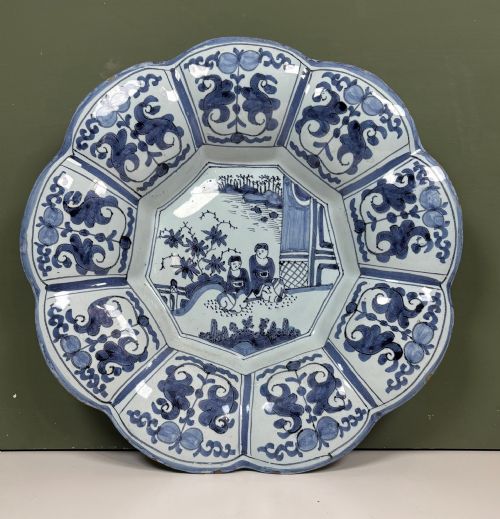
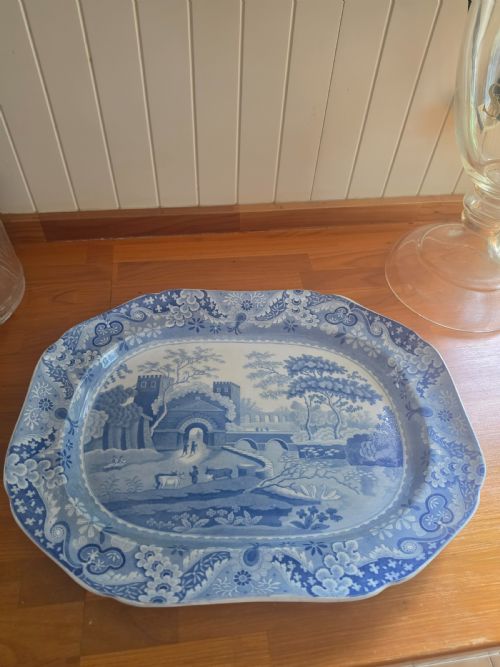
The selections available here include Victorian transfer-printed designs alongside continental pieces decorated in a Moorish revival style. Makers such as Minton also appear among the larger serving plates produced during the mid nineteenth century.
Earlier examples in the record extend back to eighteenth century delftware and nineteenth century Japanese Imari imports. Collectors frequently encounter large round serving vessels that combine utilitarian scale with intricate cobalt scenery.
Materials and construction
Potters built these large vessels using earthenware bodies coated in white tin-glaze or standard ceramic glaze. Cobalt oxide pigment was then applied by hand or via transfer printing before the final firing.
Continental delft factories utilised faience glazes to achieve a smooth white ground suitable for intricate Moorish patterns. Victorian transferware employed engraved copper plates to transfer complex architectural and landscape scenes onto the wet clay surface.
Current listings feature earthenware chargers spanning the Victorian era through to mid twentieth century continental delftware production.
Judging quality and execution
Quality rests upon the crispness of the cobalt painting and the depth of the glaze. Hand-painted Japanese Imari and continental delft examples show individual brushwork, whereas transfer-printed Victorian chargers rely on the precision of the copperplate engraving.
The stability of such broad earthenware bodies also determines merit, as large plates are prone to warping during high-temperature kiln firings. Superior examples maintain a balanced circular form and an even distribution of glaze across the entire surface.
The Blue White Charger Plate Glossary
- Charger plate
- A large decorative platter or serving dish that traditionally sits beneath other courses or hangs upon a wall. These oversized plates command attention through sheer scale.
- Transferware
- Pottery decorated by printing a design from an engraved copper plate onto tissue paper and then transferring it onto the ceramic body. This technique allowed intricate pictorial scenes to be produced in quantity.
- Tin-glazed earthenware
- Pottery covered with a glaze made opaque by the addition of tin oxide, providing a white surface for painting in blue cobalt. This forms the basis of traditional delftware.
- Cobalt oxide
- A mineral pigment used by ceramists to produce a rich blue colour that withstands high kiln temperatures without fading. It remains the defining hue of these plates.
- Faience
- Tin-glazed earthenware produced in Europe, particularly in France, Holland, and various continental workshops. It often imitates oriental porcelain styles.
Frequently Asked Questions
How were blue white charger plates used?
These large dishes served primarily as decorative centerpieces or as under-plates for grand dining tables. Their broad surfaces allowed them to function as serving platters for substantial feasts.
Over time, many found their way to walls and cabinets where their painted cobalt patterns could be displayed as art objects.
How do I hang a large charger plate safely?
Hanging a heavy earthenware charger requires a properly sized spring-loaded wire hanger that distributes weight evenly across the rim. Ensure the wall fixing is secured directly into masonry or a stud.
Avoid adhesive disc hangers on antique ceramic pieces due to the weight and the risk of pulling away from old glazes.
How do I tell transferware from hand-painted pieces?
Examine the blue decoration closely under a magnifying glass to check for the fine dotted matrix characteristic of copperplate transfer printing. Hand-painted examples will show brush strokes and slight variations in pigment density.
Transfer-printed patterns repeat identical lines precisely, whereas painted work reveals the touch of an individual decorator.