






Blue Porcelain Chargers
These blue porcelain chargers bring rich cobalt painting and generous scale to a room, drawing the eye instantly to centuries of ceramic skill.
Blue Porcelain Chargers
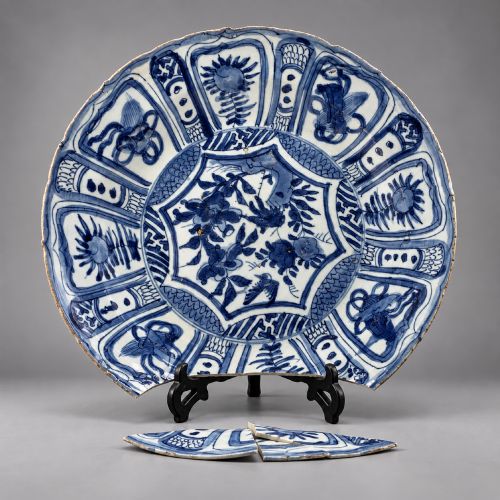
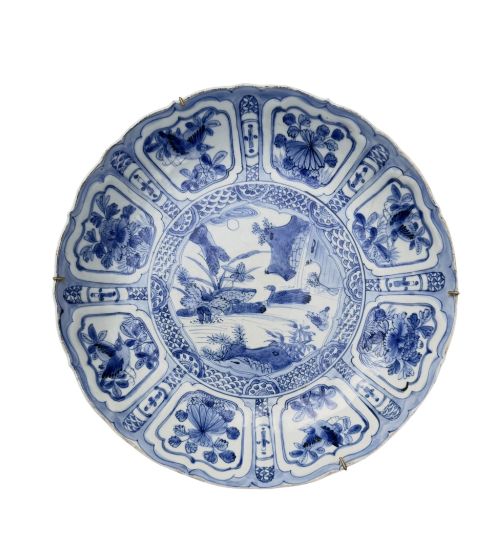
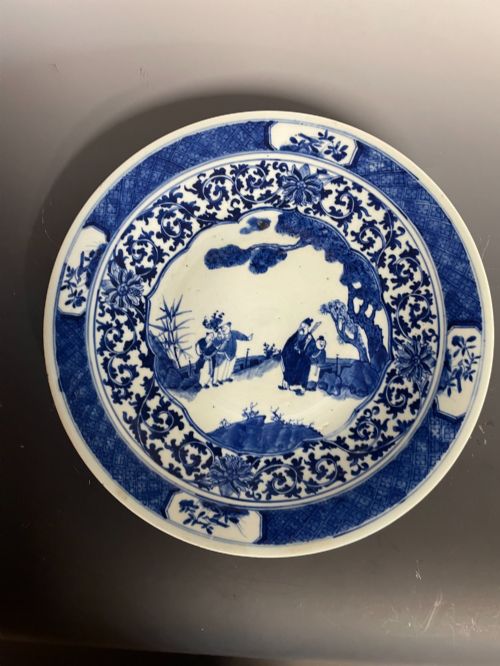
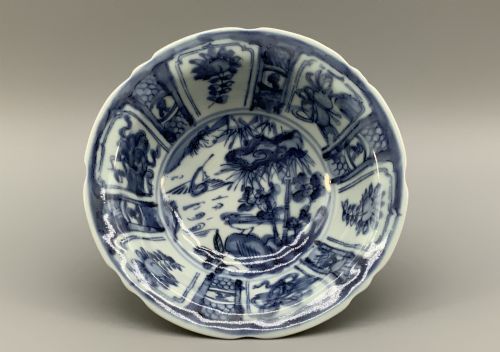
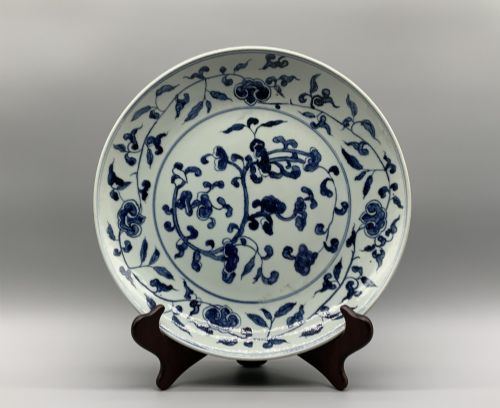
When you search for blue porcelain chargers, you encounter large display plates and shallow dishes created across multiple centuries in Asia and Europe. The selection spans Chinese export porcelain from the Qing Dynasty, Japanese Imari from the Meiji period, and European pieces from Delft potteries and English or French factories.
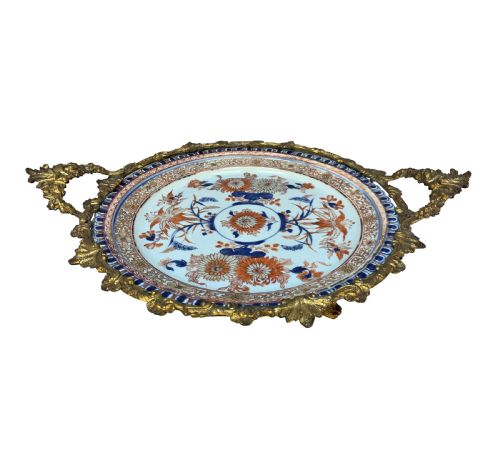
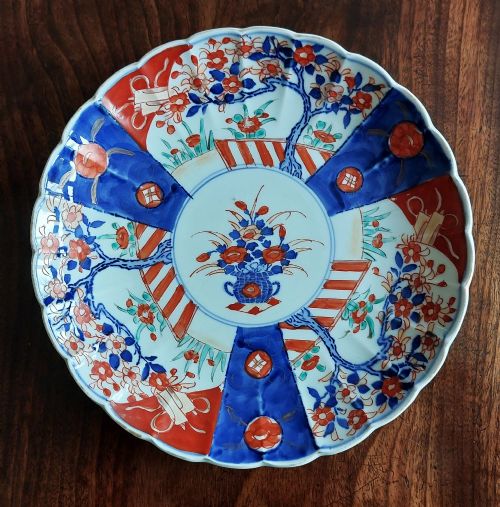
Most entries on this page take the form of Japanese Imari chargers and Chinese blue and white porcelain dishes, often featuring scalloped edges or geometric shapes. These substantial vessels were made for grand display on walls, sideboards, and dining tables.
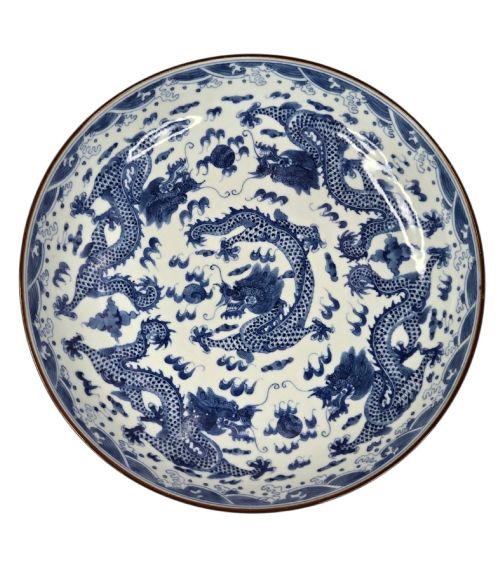
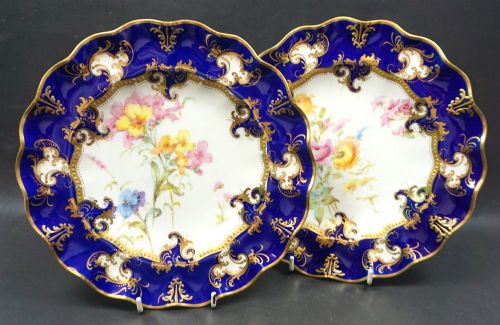
The periods represented stretch from the late seventeenth century through the nineteenth century and into the early twentieth century. Buyers find everything from Kangxi period dragon chargers to Victorian ironstone service plates and Royal Worcester cabinet pieces.
How they were made
Makers shaped fine porcelain clay and applied cobalt underglaze pigments before firing the pieces at high temperatures to achieve deep, permanent blue tones. Many examples incorporate intricate gilding, gold leaf, and enamel highlights applied over the glaze during subsequent lower-temperature firings.
Japanese Arita kilns and Chinese imperial workshops utilised traditional wheel-throwing and mould-pressing techniques to form broad charger bodies. European potteries in Delft, France, and England adapted these Asian motifs while employing their own local soft-paste or hard-paste porcelain recipes.
Exotic birds peer from cobalt branches across several Imari dishes, proving that historic artisans loved adding feathered characters to their tableware.
What varies in quality
The clarity and depth of the cobalt underglaze determine much of the visual success, distinguishing crisp, vibrant painting from blurred or muddy tones. Precision in the porcelain body and the crispness of moulded or scalloped edges also indicate superior craftsmanship.
Preservation of surface details such as gold leaf, enamel highlights, and ormolu mounts separates standard production wares from exceptional cabinet pieces. Pieces that retain their original glaze lustre without extensive restoration command greater appreciation from collectors.
Royal Worcester·Royal Crown Derby·Royal Bonn·John Davenport
The Blue Porcelain Chargers Glossary
- Cobalt Underglaze
- A blue metallic oxide pigment applied to raw porcelain clay before glazing and firing, creating durable decoration that cannot rub off. This technique produces the characteristic rich blue tones seen on traditional Chinese and Japanese export wares.
- Imari
- A style of Japanese porcelain originating in Arita and exported through the port of Imari, traditionally featuring a palette of cobalt blue and iron red with gold accents. These wares often display complex floral and avian motifs.
- Kraak Style
- A type of Chinese porcelain characterised by panelled borders and central medallion designs, heavily copied by European potteries during the seventeenth century. The style gained popularity across Dutch and English households.
- Soft-Paste Porcelain
- A ceramic composition made from white clay mixed with ground glass and other materials, fired at lower temperatures than hard-paste porcelain. European factories utilised this method before discovering local hard-paste deposits.
- Cabinet Plate
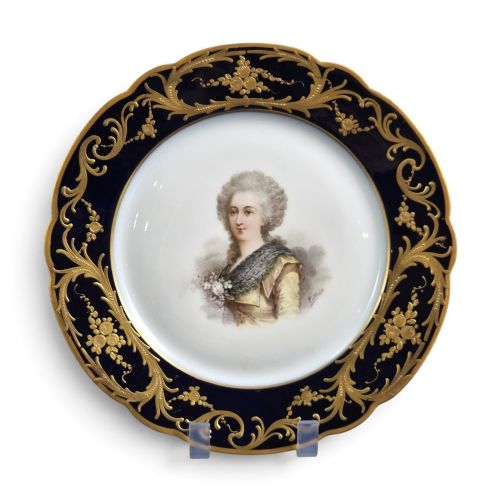
- A decorative ceramic plate intended for display in a display cabinet or on a wall rather than for practical dining use. These items frequently feature hand-painted portrait scenes or botanical studies.
Blue Porcelain Chargers: Frequently Asked Questions
How do I hang a heavy charger?
Displaying large chargers securely requires specialised wall brackets or spring-loaded plate hangers designed to distribute the weight evenly across the rim. Ensure the mounting fixings anchor directly into solid wall studs or use appropriate masonry plugs.
Avoid wire-only hangers that rely on tension alone, as antique porcelain can slip or fracture under sudden stress. Periodic checks of the mounting hardware help keep heavy decorative plates secure.
Were these pieces used for dining?
Large chargers and broad dishes often served functional roles at formal banquets, holding meat joints or acting as under-plates beneath smaller course vessels. Over time, many fine examples transitioned exclusively to decorative display due to their artistic value.
Cabinet plates and hand-painted portrait dishes were manufactured specifically for visual enjoyment in domestic interiors. Examining the foot ring for wear patterns helps indicate whether a specific charger saw active service.
How do I date Chinese blue and white?
Dating early ceramics involves examining the characteristics of the cobalt blue pigment, foot rim construction, and glaze texture. Kangxi period pieces often display vibrant sapphire tones and finely finished foot rims without glaze grit.
Stylistic motifs such as five-clawed dragons or specific floral borders provide further clues when compared against documented baseline examples. Reign marks painted on the base also offer guidance, though later reproduction marks require careful contextual analysis.