






Decorative Porcelain Display Platters
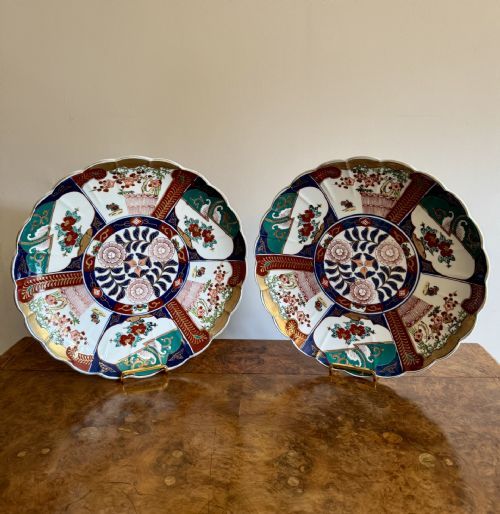
Decorative porcelain display platters bring vibrant palettes and grand scale to walls and cabinets, dominated here by Japanese Imari chargers.
Decorative Porcelain Display Platters
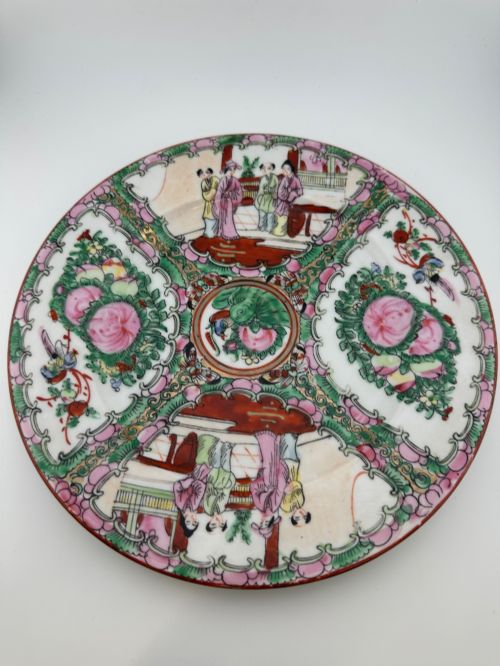
When you search for decorative porcelain display platters, you encounter large chargers and cabinet plates designed primarily for visual impact rather than dining use. These substantial dishes span Japanese Imari wares, European factory productions, and Delft earthenwares, originating from the late seventeenth century through to the early twentieth century.
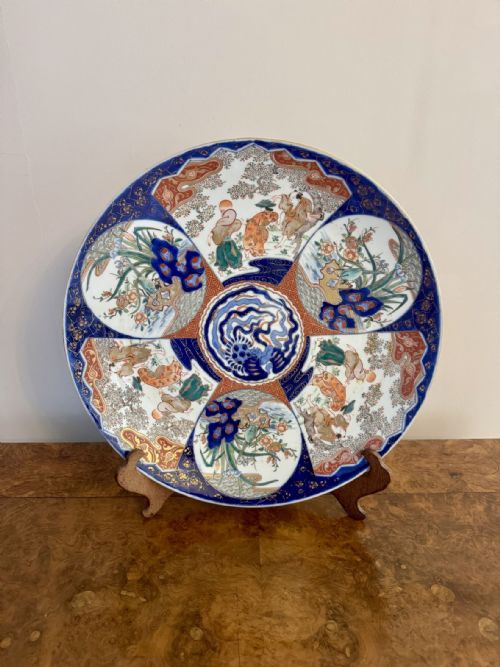
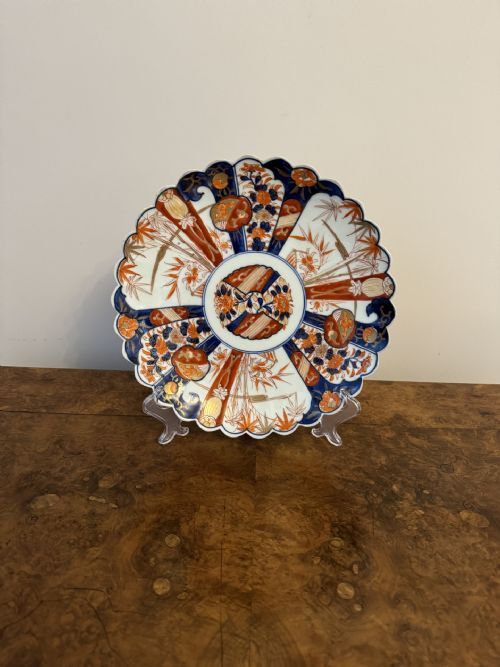
The most common pieces on this page are Japanese Imari chargers and large plates dating from the Meiji period around 1900. Alongside these Asian imports, you find nineteenth-century European porcelain chargers from Vienna, French workshops, and English makers such as Coalport and Mason's.
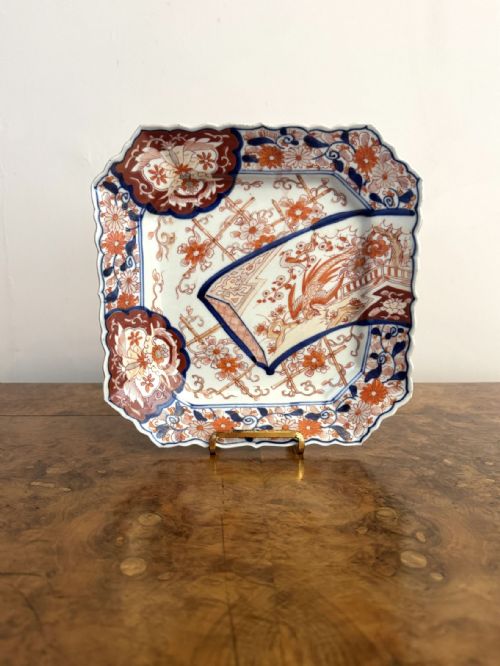
Forms range from traditional circular chargers and scalloped plates to square shapes and deep platters. Their decorative schemes include hand-painted floral motifs, birds, koi carp, and narrative scenes depicting figures like the Seven Lucky Gods.
How they were made
The physical presence of these pieces relies on porcelain bodies shaped into wide, stable canvases suitable for hanging or resting on display stands. Potters applied cobalt underglaze pigments before the initial firing to establish deep blue tones beneath the glassy surface.
Overglaze enamels, gilding, and gold leaf were subsequently added by hand in separate stages and fixed with a lower-temperature secondary firing. Some decorative charger plates incorporate specialised surface treatments such as enamel work on metal cores or textured glazes mimicking natural elements like tree bark.
Listings feature porcelain forms spanning the 18th century, the Victorian and Edwardian eras, and the Meiji period, utilising cobalt underglaze, enamel, and gold leaf.
What varies in quality
The distinction between ordinary and superior pieces rests on the precision and depth of the hand-painted brushwork. Finer examples display meticulous control in intricate floral borders, vivid cobalt tones, and precisely applied gold leaf or gilding that catches the light.
Compositional balance and the crispness of moulded details, such as scalloped edges or square corners, further separate standard production items from exceptional works. The complexity of the narrative scenes, including multi-figure compositions like the Seven Lucky Gods, indicates the skill invested by the original makers.
Coalport·Mason·Pucher Deroche·Vienna
The Decorative Porcelain Display Platters Glossary
- Charger
- A large decorative plate or platter, traditionally intended for display rather than for serving food at the table.
- Imari
- A style of Japanese porcelain featuring a distinctive palette of cobalt blue, iron red, and gilt highlights, widely exported from the Edo period onwards.
- Underglaze
- Pigment applied directly to the unfired ceramic body before the glaze layer is applied, protecting the colour permanently beneath a glassy surface.
- Gilding
- The application of gold leaf or gold powder to the surface of porcelain to accentuate decorative motifs and borders.
- Meiji Period
- The era in Japanese history spanning from 1868 to 1912, characterised by a surge in decorative arts produced for international markets.
Decorative Porcelain Display Platters: Frequently Asked Questions
What is a charger plate?
A charger plate is a large decorative dish that exceeds the standard dining plate in diameter. Historically utilised for formal presentation or upright display on a wall or cabinet.
On this page, chargers serve as prominent visual focal points due to their broad, painted surfaces.
How were Imari plates made?
Imari plates were produced using a combination of underglaze cobalt blue painting on the clay body followed by a high-temperature firing. Artisans then added iron-red enamels and gold gilt details in subsequent lower-temperature firings.
This multi-stage technique created the characteristic layered, colourful patterns seen on Japanese porcelain.
How do I display a heavy porcelain platter?
Heavy porcelain platters and chargers require sturdy wall-mounting brackets with coated prongs designed to distribute weight evenly across the rim. Alternatively, they sit securely in deep, dedicated display stands on flat surfaces.
Ensure any wall fixture is anchored directly into solid masonry or wall studs.
How do I tell Meiji period Imari apart?
Meiji period Imari pieces typically exhibit crisp, vibrant underglaze blues combined with dense iron-red and gold painted designs depicting foliage, birds, or figures. The porcelain bodies are generally heavier and more uniformly potted than earlier eighteenth-century prototypes.
Look closely at the brushwork control and the brightness of the gilt highlights for period indicators.