





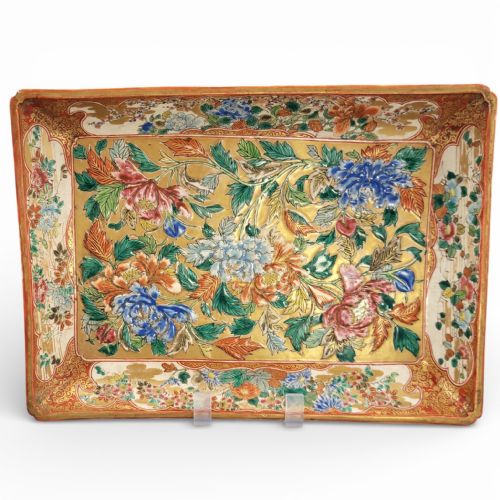
Gilded Japanese Chargers
These gilded japanese chargers bring rich hand painted decoration and gold leaf to wall displays and table settings.
Gilded Japanese Chargers
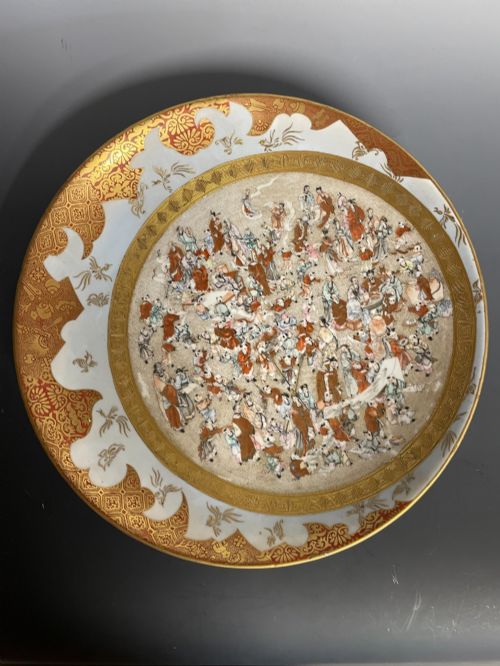
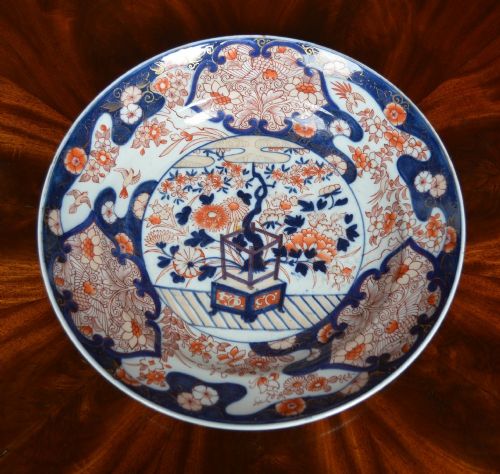
When you search for gilded japanese chargers, you encounter large decorative plates and shallow dishes spanning the eighteenth century through to the early twentieth century. These pieces predominantly display Japanese Imari, Satsuma, and Kutani styles originating from the Meiji period and surrounding eras.
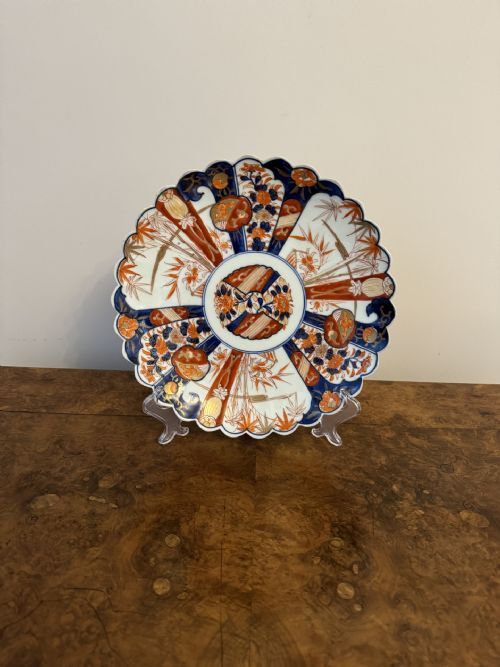
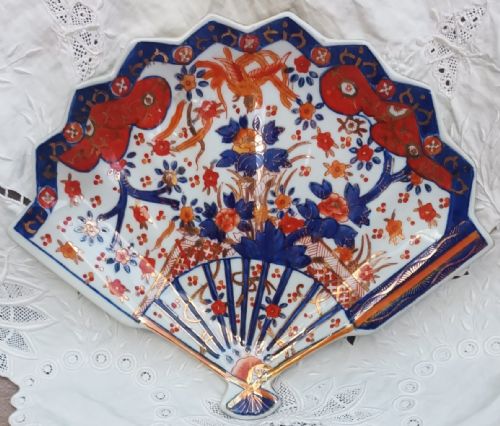
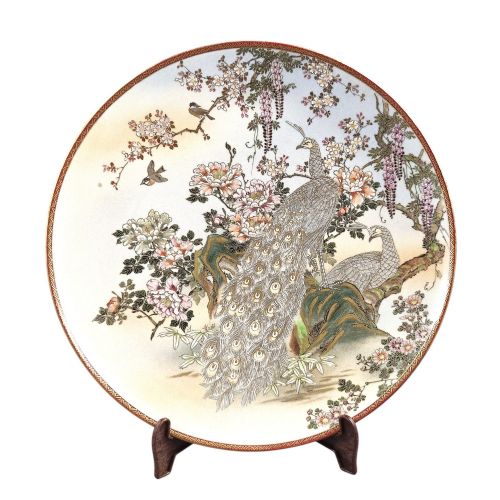
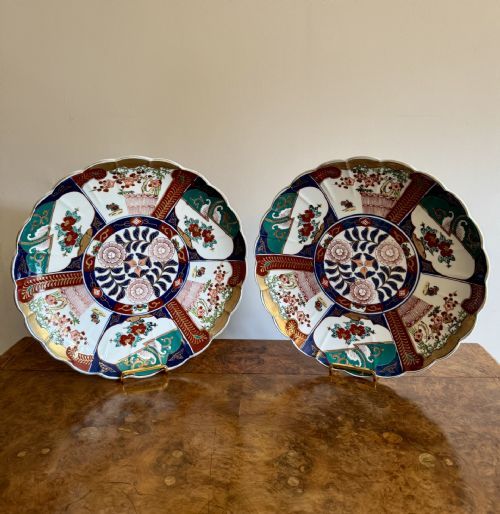
The selection on this page centres on large ceramic chargers, wall chargers, and decorative plates shaped in round, scalloped, octagonal, and fan forms. Makers utilised porcelain and earthenware as foundations for intricate hand painted floral, bird, and peacock designs.
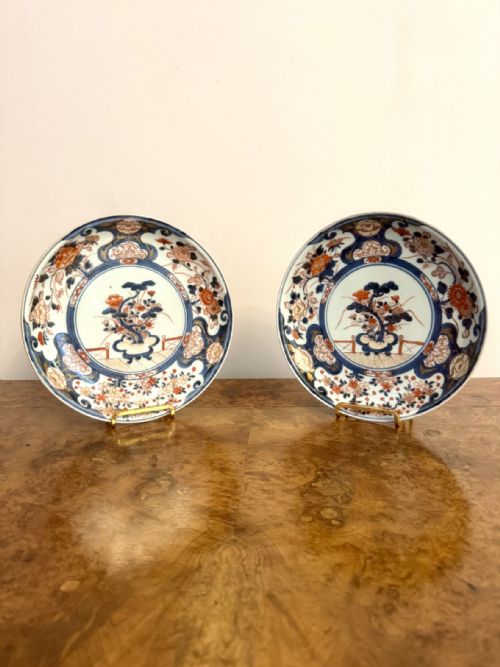
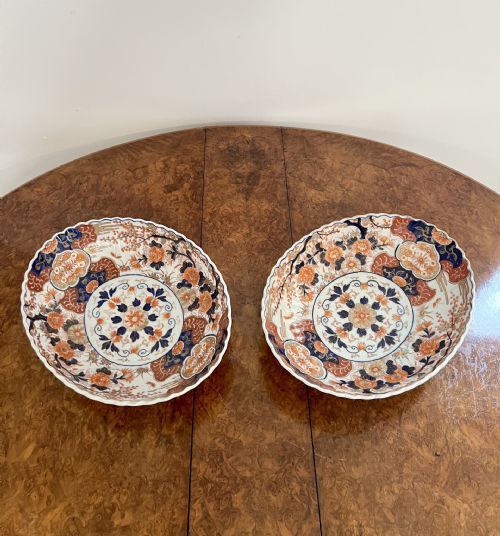
Imari porcelain forms the largest share of the current selection, accompanied by Satsuma moriage dishes and Kutani gold platters. Collectors select these items to bring nineteenth century ceramic artistry into modern interiors.
How they were made
Potters shaped porcelain and earthenware into large plates and chargers before applying underglaze and overglaze colours by hand. Artisans incorporated gold leaf, gilding, and gold gilt to accentuate specific motifs within the painted designs.
Satsuma pieces frequently employed raised moriage enamel work to create tactile surfaces alongside polychrome pigments. Kiln firing fixed the glaze and metallic details onto the ceramic body, producing durable decorative objects.
Peacocks strut across Satsuma chargers while golden wisteria trails down porcelain plates, bringing nineteenth-century gardens indoors.
What varies in quality
The standard of painting determines the merit of each piece, distinguishing hurried factory output from meticulous hand work by skilled artists. Precision in brushwork and the complexity of floral or avian scenes separate standard examples from superior items.
The preservation of the gold leaf and enamel glaze dictates the visual impact of the charger. Crisp shaping, such as clean scalloped edges or unusual octagonal and fan forms, indicates higher ambition in the original workshop.
Koshida·Shoza·Fukagawa·Mintons
The Gilded Japanese Chargers Glossary
- Imari
- A style of Japanese export porcelain decorated in underglaze blue and overglaze red, gold, and other colours. This distinctive palette dominated nineteenth century trade.
- Satsuma
- A type of Japanese earthenware featuring a crackled ivory glaze and detailed polychrome enamel painting. Artisans often added raised gold highlights to these surfaces.
- Moriage
- A ceramic technique using piped slip to create raised, decorative patterns on the surface of pottery. This method adds a tangible texture beneath the glaze and gilding.
- Charger
- A large decorative plate traditionally used for ceremonial display rather than dining. These pieces measure significantly larger than standard dinner plates.
- Kutani
- A style of Japanese porcelain known for bold pictorial designs and extensive use of gold. Kutani plates frequently depict natural scenes with rich colouration.
Gilded Japanese Chargers: Frequently Asked Questions
How were gilded japanese chargers used?
These large ceramic pieces served primarily as decorative wall chargers or centrepiece displays in nineteenth century interiors. Households placed them on tables or mounted them on walls to showcase intricate hand painted artistry.
Their substantial diameter made them focal points in reception rooms. Today, collectors continue to display them on walls using specialised hangers or on sturdy stands.
How do I identify a Meiji period piece?
Meiji period items date between eighteen sixty-eight and nineteen twelve, aligning with the reign of Emperor Meiji. Look for characteristics such as dense hand painted floral or bird motifs combined with heavy gilding.
Porcelain and earthenware from this era often display traditional Imari or Satsuma aesthetics produced for export markets. The combination of refined brushwork and gold leaf points directly to this transformative era in Japanese ceramics.
What is the difference between Imari and Satsuma?
Imari pieces utilise hard porcelain with a palette dominated by underglaze blue, iron red, and gold. They feature crisp, resonant ceramic bodies designed for durability and vibrant colour contrast.
Satsuma items consist of earthenware with a characteristic ivory crackle glaze and raised enamel decoration known as moriage. These pieces offer a softer, more tactile surface with extensive use of gold leaf.
How do I care for antique chargers?
Dust these ceramic pieces gently with a soft, dry cloth to prevent accumulation on the textured surface. Avoid using liquid cleaners or abrasive materials that might damage the delicate gilding and overglaze enamel.
Display them away from direct sunlight and areas of high humidity to protect the integrity of the glaze and gold leaf. Ensure wall mounts provide secure support given the substantial weight of large ceramic chargers.