


Japanese Cabinet Plate
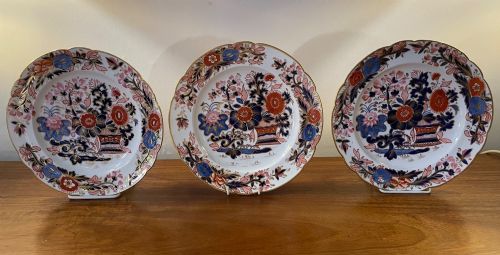
These japanese cabinet plate pieces combine intricate eastern motifs with traditional ceramic forms.
Japanese Cabinet Plate
When you search for a japanese cabinet plate, you are looking at decorative porcelain and earthenware created for display rather than daily service. These objects span the nineteenth century, the Meiji period, and the early twentieth century.
The version you are most likely to meet on this page is the Japanese Imari plate, often featuring scalloped edges, hexagonal shapes, or shell-like forms. Alongside these, you will find Satsuma earthenware dishes and Satsuma Meiji period plates.
Makers such as Shuzan and Yasuda appear alongside European interpretations of Japanese style from Minton, Meissen, and Derby. The selection ranges from single display chargers to paired sets and larger collections.
How they were made
Porcelain and earthenware form the physical foundation of these pieces, shaped into plates, chargers, and dishes. Skilled artisans applied vibrant enamels and rich glazes to the ceramic bodies.
Many examples incorporate gold leaf, gilt, and gilding to highlight intricate surface patterns. Cloisonné technique also appears, introducing metallic wirework alongside detailed enamel imagery.
Listings feature porcelain and earthenware from the nineteenth century, the Meiji period, and the early decades of the twentieth century.
What varies in quality
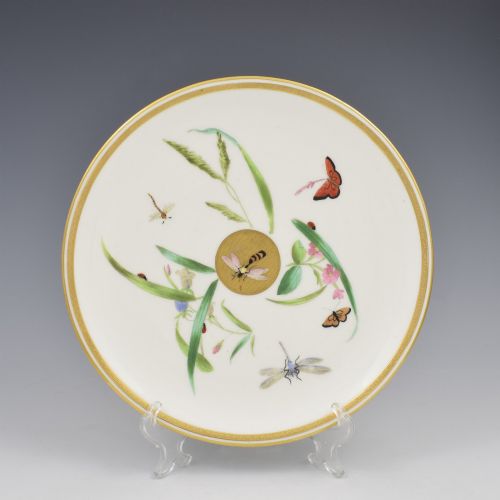
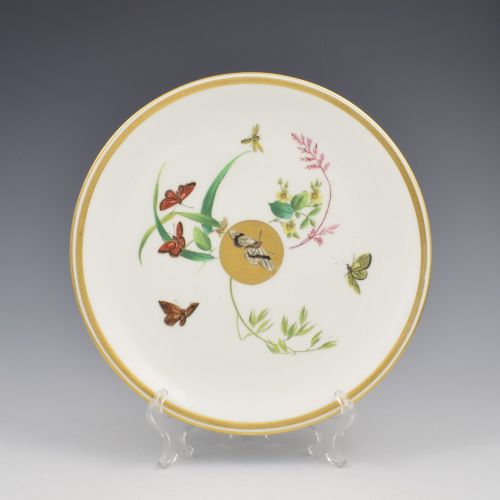
The distinction between standard items and exceptional examples lies in the precision of the hand-painted enamel and the application of gold leaf. Superior pieces display crisp definition in motifs such as birds, insects, and floral arrangements.
Form and moulding also separate ordinary production from finer work, seen in scalloped rims, hexagonal symmetry, and shell-shaped contours. The prestige of the workshop or maker, whether Japanese studios like Yasuda or European factories, shifts the standing of a piece.
Shuzan for Yasuda·Minton·Meissen·Fukagawa·Derby
The Japanese Cabinet Plate Glossary
- Imari
- A style of Japanese porcelain decorated in underglaze blue, iron red, and gold. It takes its name from the port from which the ceramics were shipped.
- Satsuma
- A type of Japanese earthenware characterised by a crackled ivory glaze and detailed polychrome enamel painting. It became widely exported during the Meiji period.
- Cloisonne
- A metalwork technique where fine wires are soldered to a base to create compartments filled with enamel paste. These are then fired and polished smooth.
- Charger
- A large decorative plate intended for display on a sideboard or wall rather than for dining use. These often showcase the most elaborate artistry.
- Kakiemon
- A style of Japanese enamel decoration featuring asymmetrical designs and a restrained palette, later copied by European factories like Meissen and Derby.
Japanese Cabinet Plate: Frequently Asked Questions
What is a japanese cabinet plate?
A japanese cabinet plate is a decorative ceramic piece intended for display in a cabinet or on a wall. These items prioritise artistic design over functional dining use.
They encompass traditional Japanese Imari and Satsuma wares alongside European interpretations of Japanese aesthetics from the nineteenth and early twentieth centuries.
How do I identify Imari porcelain?
Imari porcelain is characterised by a distinct palette combining underglaze blue, vibrant iron red, and rich gilt highlights. The patterns frequently feature floral motifs, panels, and intricate borders.
Most examples found in this category date from the Meiji period or the broader nineteenth century.
What is Satsuma ware?
Satsuma ware is a type of Japanese earthenware recognised by its characteristic ivory-coloured body and fine crackle glaze. These pieces are typically decorated with detailed enamel paintings heightened with gold.
Dishes and plates from this tradition often depict figures, landscapes, or natural scenes.
Were European factories influenced by Japanese design?
European makers adopted Japanese motifs during the Aesthetic Movement of the late nineteenth century. Factories such as Minton, Meissen, and Derby produced porcelain featuring asymmetric compositions, insects, and gilt sunbursts.
These European interpretations sit alongside authentic Japanese imports from the same eras.