





Blue Japanese Plates
Blue japanese plates bring together intricate ceramic traditions and vivid cobalt pigments, offering collectors striking decorative displays rooted in centuries of kiln craft.
Blue Japanese Plates
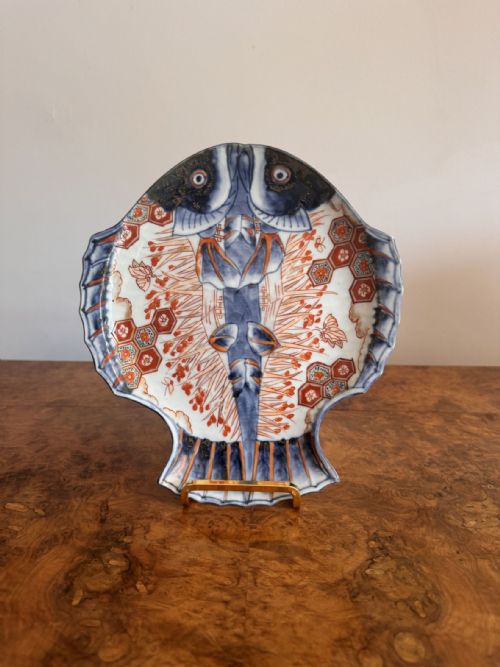
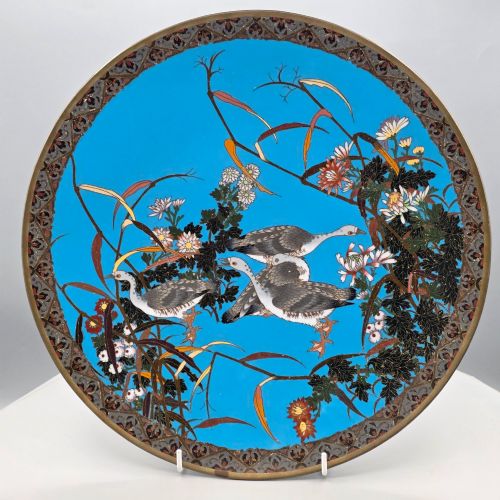
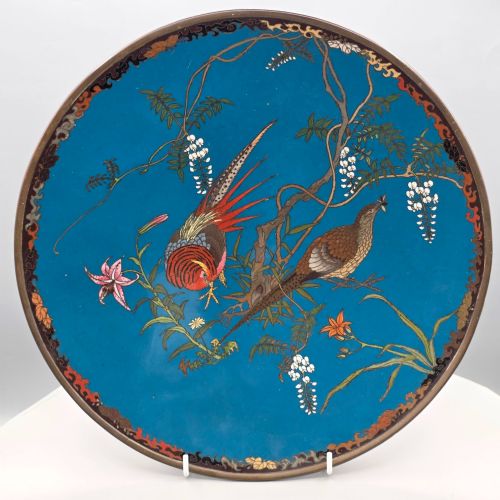
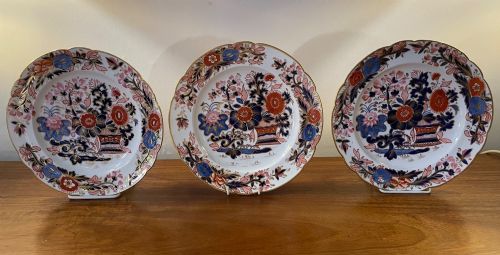
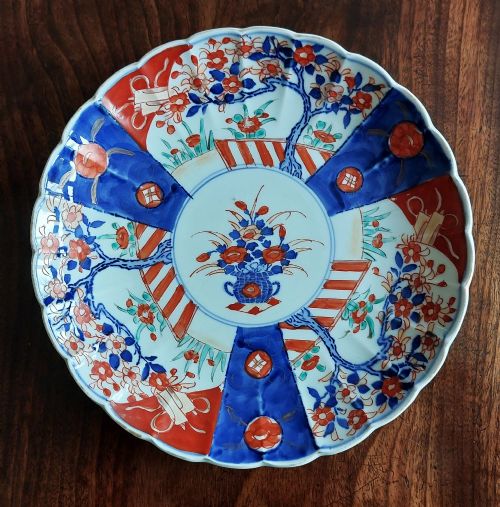
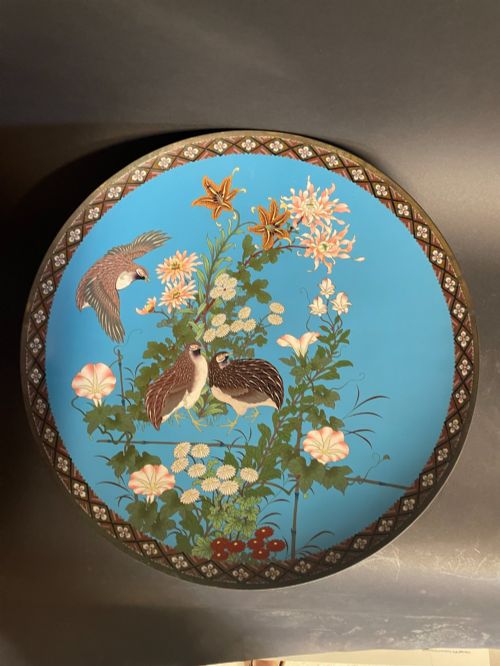
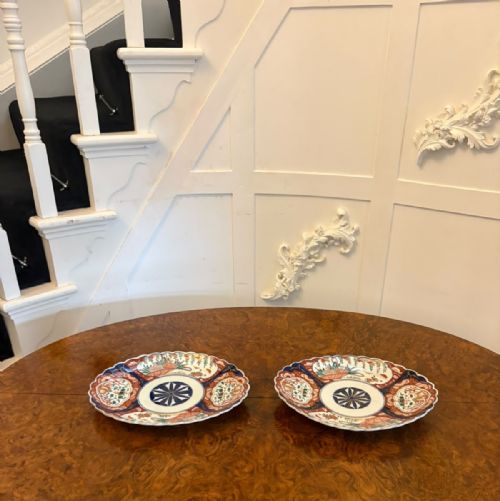
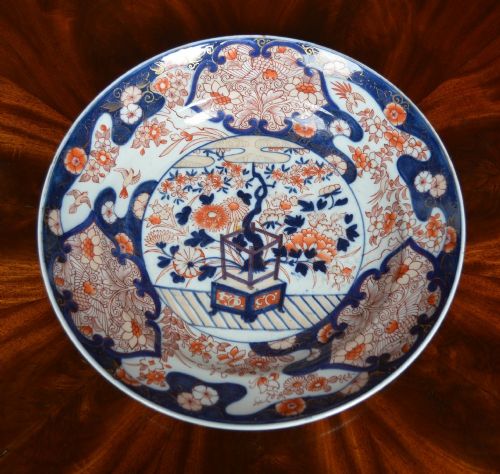
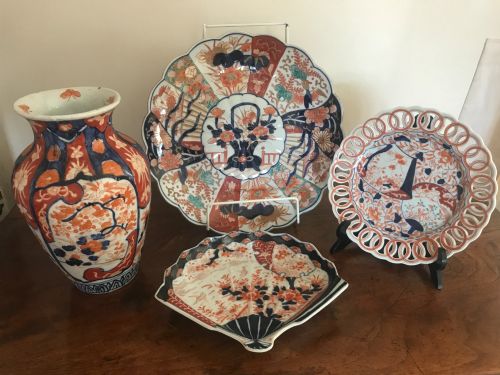
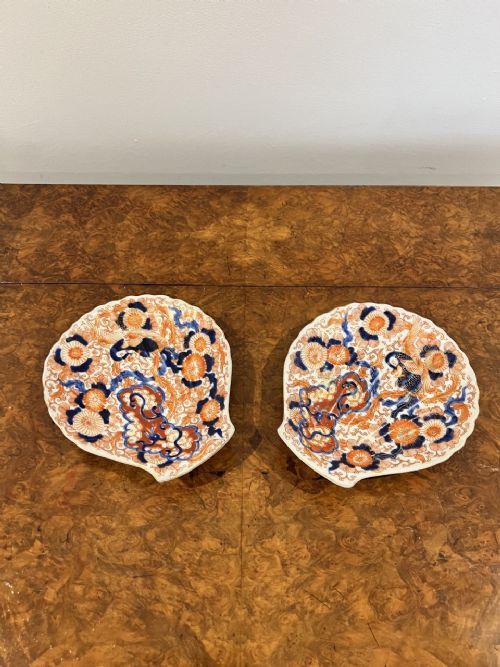
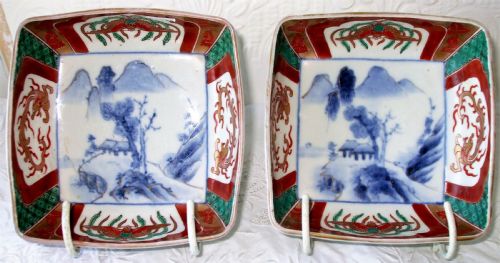
Blue japanese plates encompass decorative ceramics and chargers produced across the nineteenth and early twentieth centuries, spanning the Meiji period and the transition from the Edo era. The pieces appearing here surface primarily as Imari porcelain wares, Arita porcelain designs, and enamel cloisonne examples formed as dishes, chargers, and scalloped plates. Buyers encounter various geometric forms alongside naturalistic shapes like fish, shells, and squares.
The visual vocabulary relies heavily on cobalt blue underglazes paired with contrasting enamel colours and gold leaf accents. Motifs range from exotic birds and geese to chrysanthemums, butterflies, and frogs, reflecting traditional decorative arts. These items function primarily as decorative display dishes and large wall chargers rather than routine table service.
How they were made
Makers shaped porcelain clay by hand or mould before applying cobalt blue pigments and coloured enamel paints beneath a clear glaze. Kiln firing fixed the vitrified body and set the metallic oxide colours to achieve the characteristic glossy finish.
Cloisonne variants involved soldering thin copper or brass wires onto a metallic base to form cellular compartments, which workers then filled with vitreous enamel paste. Subsequent firings and polishings yielded smooth surfaces adorned with birds and floral scenes.
Listings span periods from 1800 to 1910, utilising porcelain, enamel, copper, brass, and paper.
What varies in quality
The distinction between standard commercial output and superior craftsmanship rests on the precision of the hand-painted brushwork and the clarity of the cobalt pigment. Finer examples display meticulous detail in the depiction of exotic birds, foliage, and geometric borders without pigment blur.
In cloisonne pieces, the neatness of the wirework partitions and the depth of the enamel layers dictate the overall refinement. Superior specimens maintain crisp outlines and rich integration of gold leaf highlights across the surface.
The Blue Japanese Plates Glossary
- Imari
- A style of Japanese porcelain decorated in underglaze blue, iron red, and gold, originating from the port of Imari. These wares gained immense popularity across Europe during the nineteenth century.
- Meiji Period
- The era in Japanese history spanning from 1868 to 1912, characterised by rapid modernization and the widespread export of decorative arts. Pieces from this time often exhibit elaborate enamel and porcelain painting techniques.
- Charger
- A large decorative plate intended for display on a wall or sideboard rather than for dining use. Such pieces frequently measure over thirty centimetres in diameter.
- Cloisonne
- An enamelwork technique where metal wires form raised barriers on a copper or brass body to contain coloured glass pastes. The object undergoes multiple firings and polishings to achieve a smooth finish.
- Arita
- The town in northwestern Kyushu that serves as the historical centre of Japanese porcelain production. Kilns in this region produced many of the blue and white wares exported during the Meiji era.
Blue Japanese Plates: Frequently Asked Questions
How do I hang a heavy charger?
Heavy chargers and decorative plates require specialised wall mountings that distribute weight evenly across the base and rim.
Spring-loaded brass hangers or custom padded brackets secure the piece safely without damaging the porcelain body or enamel edges.
Were these plates used for dining?
Most large examples function as decorative chargers or display dishes rather than functional tableware.
Their substantial size and delicate enamel or gold leaf decoration indicate they were made primarily for visual appreciation and interior ornamentation.
How do I identify a Meiji period piece?
Meiji period items often display intricate enamelwork, precise cobalt painting, and dynamic motifs involving birds, flowers, and natural forms.
Reference to the 1868 to 1912 timeframe points toward this distinct era of export-focused Japanese craftsmanship.
What is the difference between Imari and Arita?
Arita refers to the geographical production centre where the porcelain clay was mined and fired in provincial kilns.
Imari acts as the port of shipment and the stylistic term for the characteristic blue, red, and gold decorated wares produced in that region.