


Oriental Enamelware Dishes
Oriental enamelware dishes are decorative bowls and chargers bringing intricate metalwork and colourful glazes into a room.
Oriental Enamelware Dishes
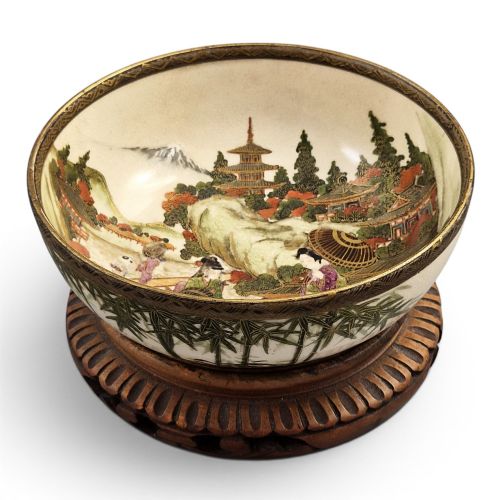
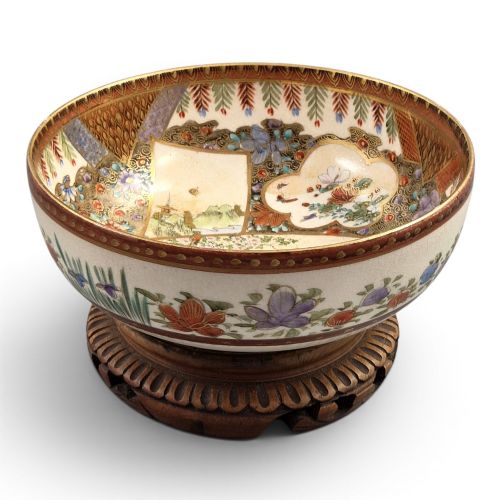
Oriental enamelware dishes encompass decorative bowls, plates, and chargers originating from Chinese and Japanese workshops during the nineteenth century. These pieces display elaborate motifs including birds, dragons, chrysanthemums, and landscapes across their surfaces.
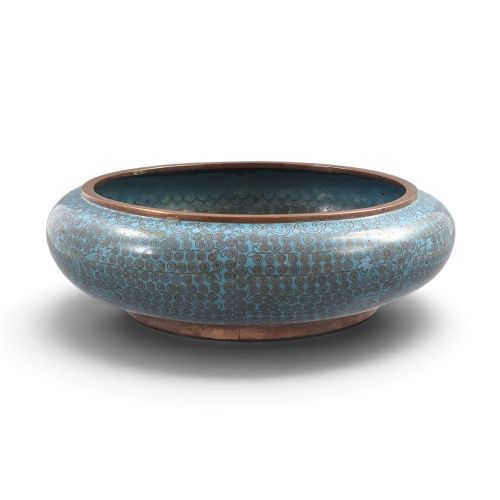
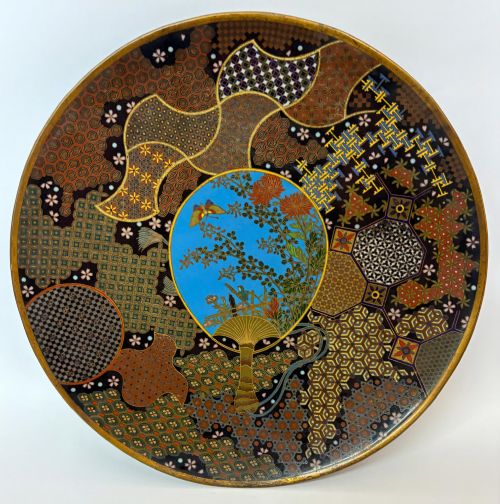
The selection here concentrates heavily on Japanese cloisonne enamel chargers and bowls dating from the late Edo period through the Meiji period, alongside Chinese scholar's brush washers. Buyers will frequently encounter large chargers and medium plates carrying detailed imagery produced in centres such as Nagoya.
The forms range from shallow decorative dishes to deep bowls and massive wall chargers designed for prominent display. Each piece reflects the distinct aesthetic traditions of Qing Dynasty China and Meiji Japan through careful placement of enamel and metal.
How they were made
The creation of these pieces relies on a foundation of copper, brass, or bronze shaped into bowls, plates, and chargers. Artisans then applied thin metal wires to form intricate cells that compartmentalise the coloured enamel pastes.
Following the application of the vitreous enamels, the vessels underwent multiple firings in a kiln to fuse the glass paste to the metal base. Skilled polishers then ground and smoothed the surface to achieve a uniform finish alongside the raised metal outlines.
Listings span from the 1860s through the Meiji and Qing periods, incorporating copper, brass, bronze, gold leaf, and earthenware alongside enamel.
What varies in quality
The distinction between standard production and superior work lies in the precision of the wirework and the complexity of the subject matter. Finer examples exhibit microscopic wire cells forming coherent pictorial narratives like landscapes, birds, and samurai figures with minimal surface pitting.
Depth of colour and harmony in the enamel palette also separate ordinary items from masterworks. The most accomplished pieces integrate gold leaf and utilise subtle tonal shifts within the glazes to create movement and texture across the charger.
The Oriental Enamelware Dishes Glossary
- Cloisonne Enamel
- A metalwork technique where thin wires are soldered to a metal base to create compartments filled with coloured paste and fired.
- Charger
- A large ornamental plate or dish traditionally used for display rather than dining purposes.
- Meiji Period
- The era in Japanese history spanning from 1868 to 1912 noted for rapid modernisation and exceptional decorative arts production.
- Edo Period
- The period in Japanese history preceding the Meiji era, spanning from 1603 to 1867, represented here by earlier chargers.
- Scholar's Brush Washer
- A small vessel utilised in East Asian traditions for cleaning writing brushes during calligraphy practice.
Oriental Enamelware Dishes: Frequently Asked Questions
How do I display oriental enamelware dishes?
These decorative bowls and chargers look best on sturdy stands or mounted securely on walls where natural light catches the enamel glazes. Ensure the display location protects the pieces from direct sunlight and accidental knocks.
Keep them away from damp environments to preserve the integrity of the metal bases and the fired glass surfaces over time.
How do I clean these enamel dishes?
Dust the surface gently with a soft, dry cloth to remove everyday particles without applying pressure to the wirework. Avoid chemical cleaners and water immersion entirely, as moisture can infiltrate any microscopic gaps in the metal or enamel.
Professional consultation is recommended if a piece requires deeper maintenance or restoration work.
How do I tell Meiji period pieces apart?
Japanese pieces from the Meiji period frequently feature highly refined cloisonne work with naturalistic motifs like birds, flowers, and landscapes. The wiring on these later items tends to be exceptionally fine and even.
Earlier examples from the late Edo period often display bolder designs with heavier wire cells and deeper colour palettes.
What is the difference between a bowl and a charger?
Bowls possess deep, rounded walls designed to hold objects or sit centrally on a table, whereas chargers are broad and shallow. Chargers function primarily as wall-hung plates or prominent tabletop display items.
Both forms utilise identical enamelling techniques on copper or bronze foundations.