






Blue Floral Ceramic Plates
Blue floral ceramic plates bring together centuries of painted earthenware, porcelain and transfer-printed tableware.
Blue Floral Ceramic Plates
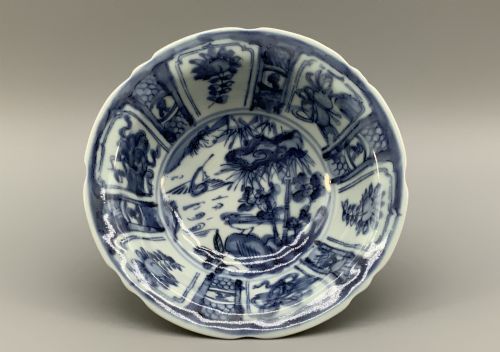
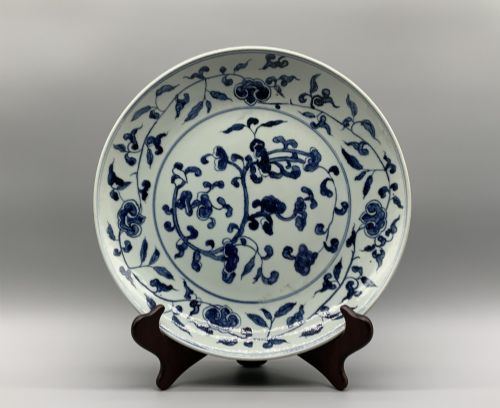
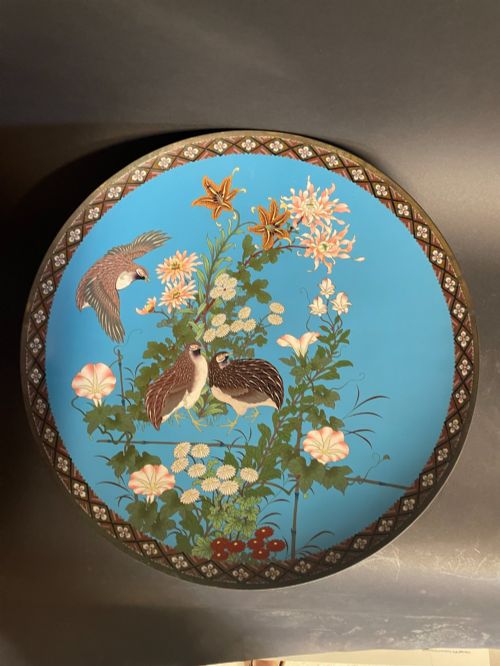
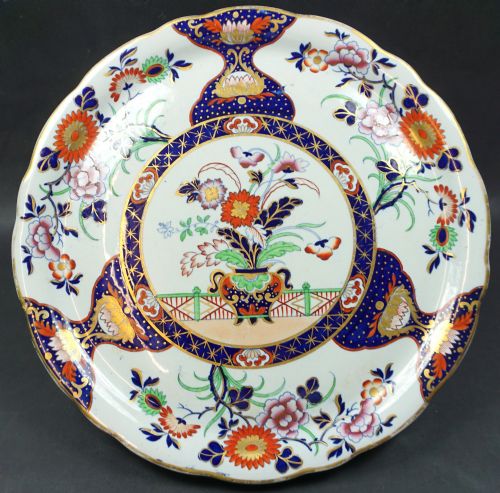
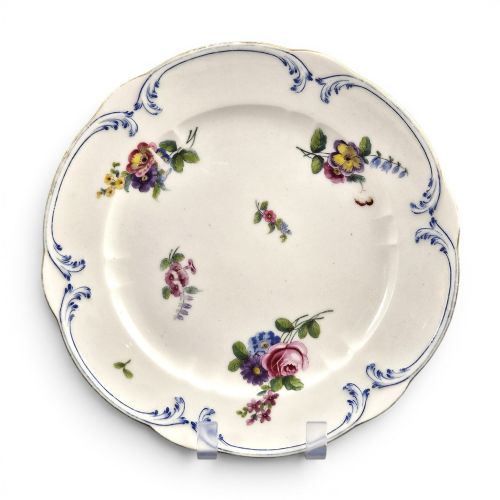
When searching for blue floral ceramic plates, buyers encounter a diverse selection of decorative plates, chargers, serving dishes and platters spanning several centuries. The domestic and international examples range from Georgian Staffordshire pottery and English pearlware to Japanese Imari porcelain created during the Meiji period.
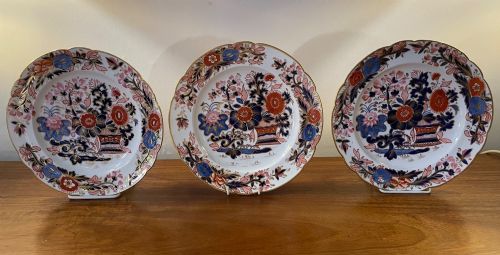
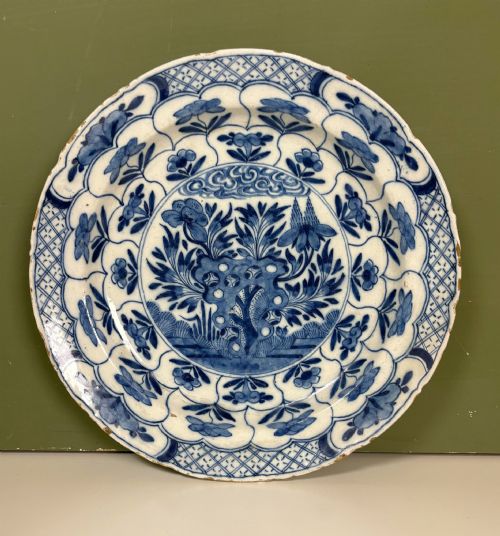
The assortment on this page draws heavily from eighteenth-century English Delftware, nineteenth-century ironstone and large Japanese Arita chargers. These pieces reflect distinct global trade routes and domestic ceramic traditions, moving from hand-painted blue and white motifs to polychrome Imari palettes.
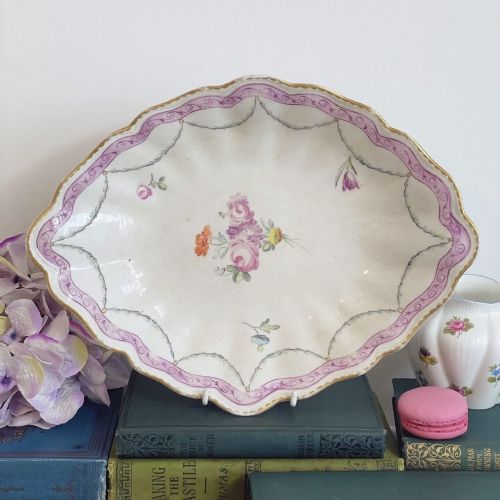
Forms vary from standard tea and dinner plates to grand chargers, lobed bowls and oval serving trays. Buyers find both individual display pieces and matched sets originating from notable European factories and East Asian kilns.
How they were made
The manufacture of these ceramics relies on local clays, earthenware bodies and hard-paste or soft-paste porcelain shaped on wheels or pressed into moulds. Cobalt pigment provides the deep blue underglaze colour seen across Chinese export porcelain, Delftware and English transferware.
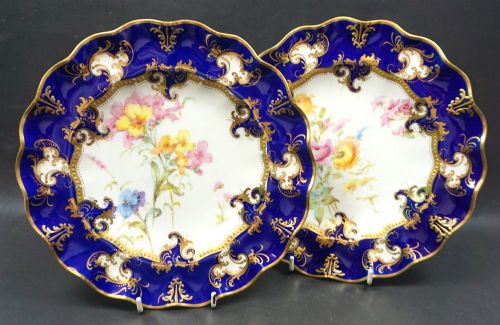
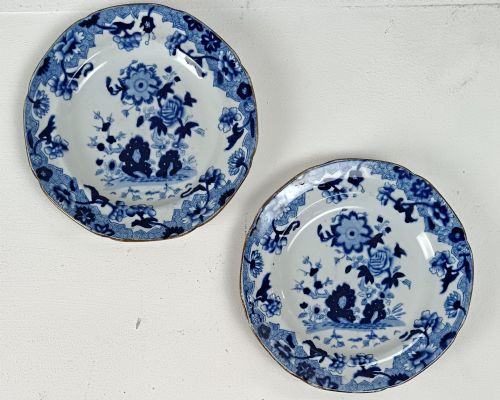
Makers applied glazes to seal the ceramic body before firing, occasionally incorporating enamel colours, gilding and gold leaf over the fired glaze. Transfer printing allowed factories to apply intricate floral sheet patterns onto earthenware before the final glaze firing.
Early nineteenth-century cheese dishes allowed Victorian dining rooms to present dairy produce with hand-coloured botanical flair.
What varies in quality
Quality in these ceramics rests on the clarity of the cobalt pigment, the precision of the hand-painted or transfer-printed botanical details and the crispness of moulded edges such as scalloped rims. Superior pieces display deep, uniform cobalt tones without running or blurring in the glaze.
The sophistication of the ceramic body itself separates standard utilitarian wares from cabinet pieces, with fine porcelains and early ironstone demonstrating thinner walls and more refined potting. Hand-painted brushwork executed by skilled artisans provides depth and variation absent in mechanical production.
Royal Crown Derby·John Rogers and Son·John Davenport of Longport·Hicks and Meigh·New Hall
The Blue Floral Ceramic Plates Glossary
- Imari
- A style of Japanese porcelain decorated in underglaze blue, iron red and gold, heavily influenced by Chinese export wares and produced primarily for export. The palette appears frequently on nineteenth-century chargers and plates.
- Delftware
- Tin-glazed earthenware produced in England and the Netherlands during the seventeenth and eighteenth centuries, known for its absorbent white surface and painted blue floral motifs. It relates closely to earlier majolica traditions.
- Ironstone
- A type of durable commercial earthenware patented in the nineteenth century to rival porcelain, often decorated with transfer-printed or hand-coloured floral patterns. It forms the body of many sturdy Victorian serving dishes.
- Transfer printing
- A mechanical decoration technique developed in eighteenth-century England where an engraved copper plate transfers a design onto tissue paper and then onto the ceramic biscuit body. This method enabled consistent mass production of complex blue and white patterns.
- Soft-paste porcelain
- A ceramic composition made from white clay and glass frit fired at lower temperatures than hard-paste porcelain, creating a warm, slightly translucent body popular in eighteenth-century European factories.
Blue Floral Ceramic Plates: Frequently Asked Questions
How do I care for antique ceramic plates?
Wash antique ceramic plates by hand in warm water using a mild, non-abrasive detergent. Avoid dishwashers, harsh scrubbing pads and prolonged soaking.
Dry them thoroughly with a soft cloth before storing or displaying them on padded plate racks to protect the antique glaze and any delicate gilding.
Can I use these plates for serving food?
Many nineteenth-century ironstone and earthenware plates remain structurally robust enough for light dining or serving food. However, older soft-paste porcelain and tin-glazed Delftware require more careful handling.
Consider the presence of overglaze enamels, older repairs or crazing in the glaze before using historical tableware for daily meals.
How do I distinguish Imari from Delftware?
Imari pieces originate from Japan and combine underglaze cobalt blue with iron red and gold leaf overglaze details. The ceramic body is typically a dense, resonant porcelain.
Delftware is European earthenware coated in an opaque white tin glaze, painted primarily in blue pigments without the characteristic iron red and gold associated with Imari.
What is the difference between earthenware and porcelain?
Earthenware is a porous, coarser ceramic body fired at lower temperatures that requires a glaze to become waterproof. It includes nineteenth-century Staffordshire pottery and Delftware.
Porcelain is a vitrified, dense and occasionally translucent material fired at very high temperatures, producing a ringing sound when tapped and offering greater resistance to moisture.