




Georgian Tin Glaze Earthenware
Georgian tin glaze earthenware brings together chargers, plates and apothecary jars painted in cobalt pigment and polychrome hues across the eighteenth century.
Georgian Tin Glaze Earthenware
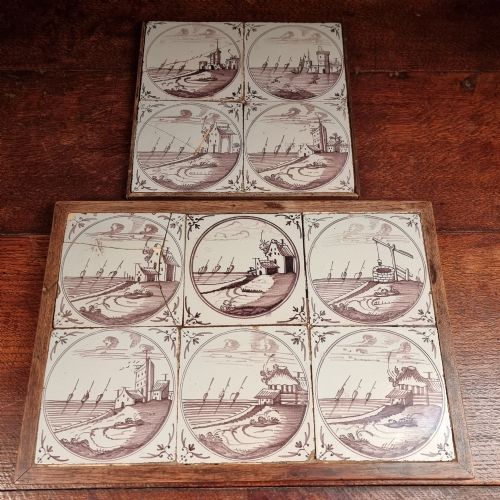
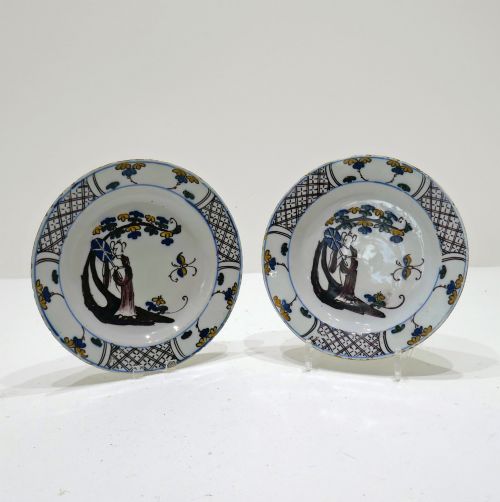
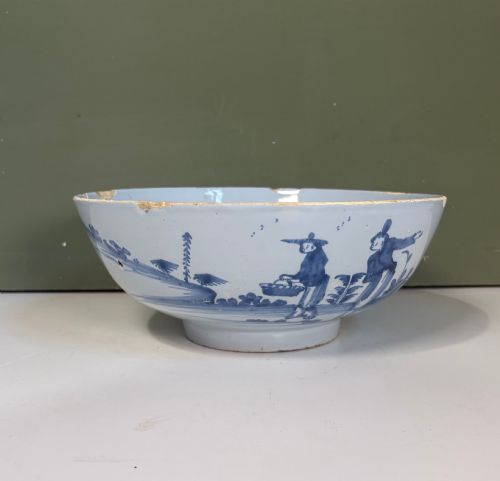
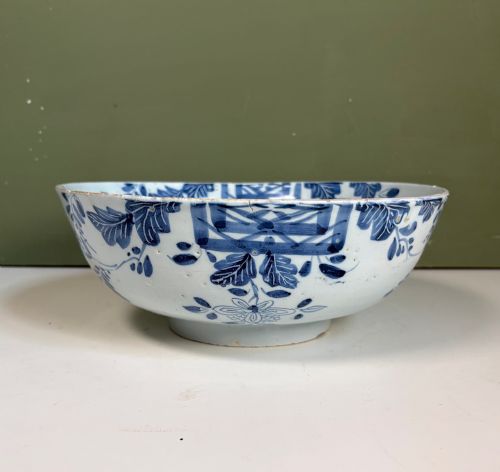
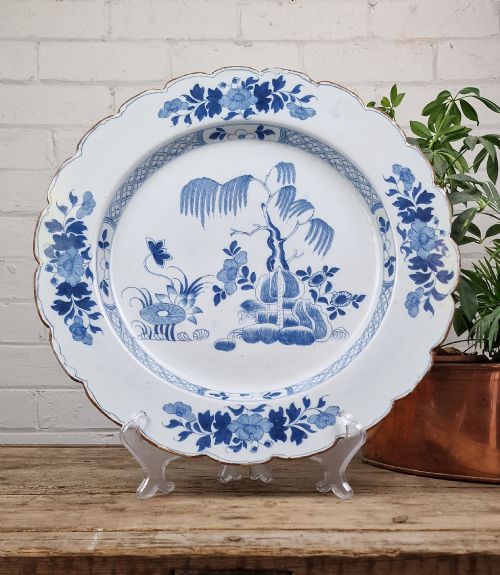
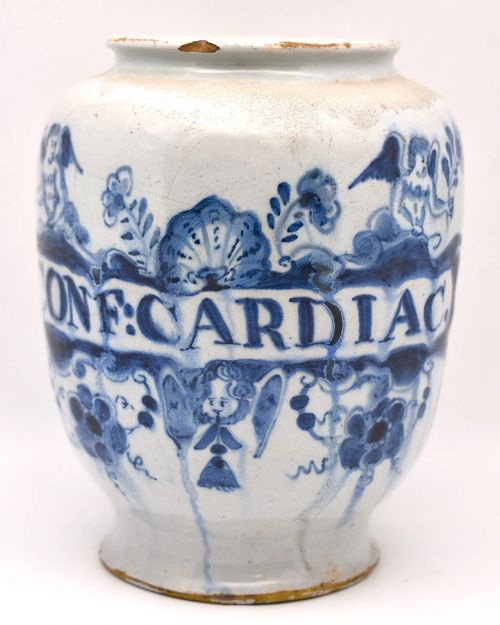
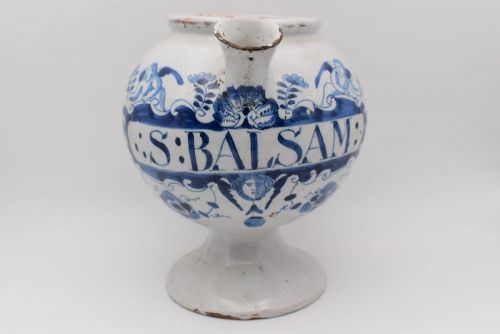
When you search for georgian tin glaze earthenware, you encounter chargers, plates, bowls, drug jars and tiles originating from eighteenth-century English and Dutch kilns. The selection spans domestic tablewares and utilitarian apothecary vessels created under Georgian influence.
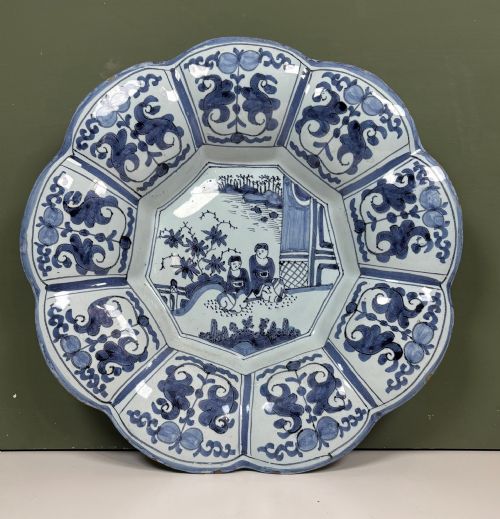
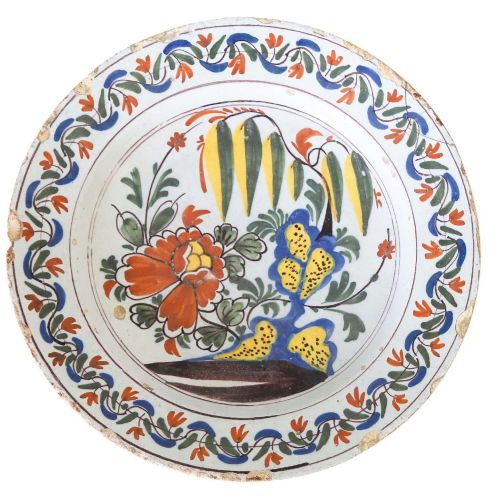
You are most likely to meet large chargers and individual plates bearing blue and white or polychrome hand-painted decoration. These pieces often display floral motifs, Chinoiserie scenes or specific drug inscriptions.
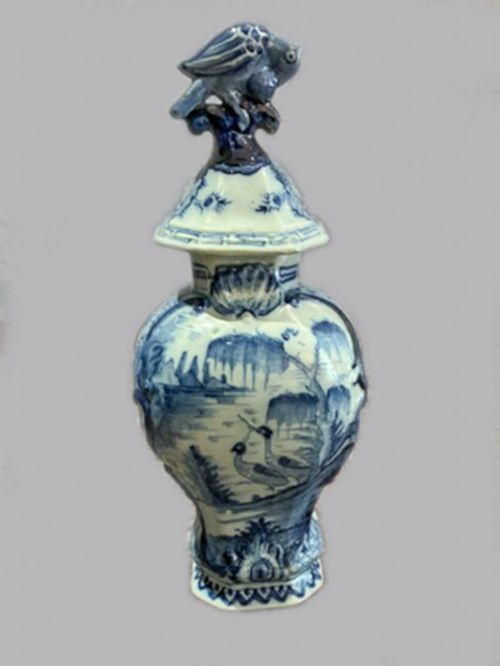
The forms extend from simple salt cellars and inkwells to lidded vases and wet drug jars. Each object reveals the characteristic opaque white glaze typical of delftware production.
Materials and Manufacture
Potters formed these items from earthenware clay, coating the fired body in a tin glaze that produced an opaque white surface. This tin-glazed layer provided a smooth ground for subsequent brushwork.
Painters applied cobalt pigment and various colours directly onto the absorbent unfired glaze before the final kiln firing. This technique caused the pigments to merge slightly with the white coating, softening the hand-painted lines.
Listings feature earthenware ceramics decorated with cobalt pigment, spanning the eighteenth and nineteenth centuries in both English and Dutch styles.
Assessing Quality and Execution
The precision of the hand-painted decoration separates standard domestic vessels from superior examples. Master painters achieved fluid lines and vibrant palettes using cobalt oxide and polychrome pigments.
The smoothness and opacity of the tin glaze itself dictate the visual success of the piece. An even, glossy coating without excessive crazing or pitting elevates the ceramic form.
Lambeth Pottery·Bristol Delft
The Georgian Tin Glaze Earthenware Glossary
- Tin-Glazed Earthenware
- Pottery coated in a lead glaze rendered opaque by the addition of tin oxide. This foundational layer creates the characteristic white background for painted designs.
- Delftware
- Earthenware produced in England, the Netherlands and elsewhere, decorated with tin glaze. The style often emulates imported Chinese porcelain or local European motifs.
- Charger
- A large decorative plate intended for display on a wall or dresser rather than everyday dining. These sizeable surfaces frequently showcase elaborate hand-painted scenes.
- Polychrome
- Decoration employing multiple colours rather than a single pigment. In these ceramics, makers combined hues such as red, green and yellow alongside cobalt.
- Apothecary Jar
- A ceramic vessel used by chemists and pharmacists to store dry drugs, wet medicines or syrups. Many feature painted labels identifying specific medicinal contents.
Georgian Tin Glaze Earthenware: Frequently Asked Questions
What is the difference between delftware and faience?
Delftware generally refers to tin-glazed earthenware made in England and the Netherlands during the seventeenth and eighteenth centuries. The term encompasses both blue and white and polychrome domestic wares.
Faience is the broader continental European term for tin-glazed earthenware produced in France, Spain and other regions, sharing the same underlying ceramic technique.
How do I display a charger safely?
Chargers require sturdy wall hangers specifically designed for heavy earthenware plates to distribute the weight evenly. Alternatively, secure wire display stands support the base safely on a flat surface.
Position pieces away from direct sunlight and high traffic areas to protect the tin glaze and hand-painted pigments from accidental impact.
Are these pieces safe for food?
Eighteenth-century tin-glazed earthenware contains historic glazes that are unsuited for modern food use. The porous ceramic body and surface glazes can absorb liquids and degrade over time.
Enjoy these items strictly as decorative objects or part of a historic ceramic collection rather than for everyday dining.