

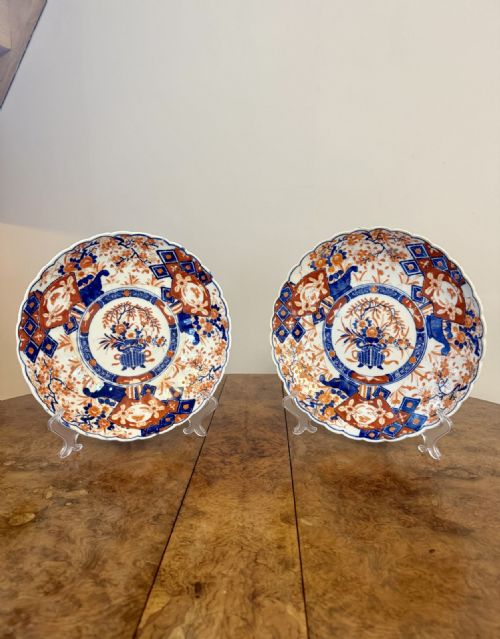


Asian Porcelain Wall Dish
These asian porcelain wall dish items bring together centuries of Chinese and Japanese ceramic traditions for decorative display.
Asian Porcelain Wall Dish
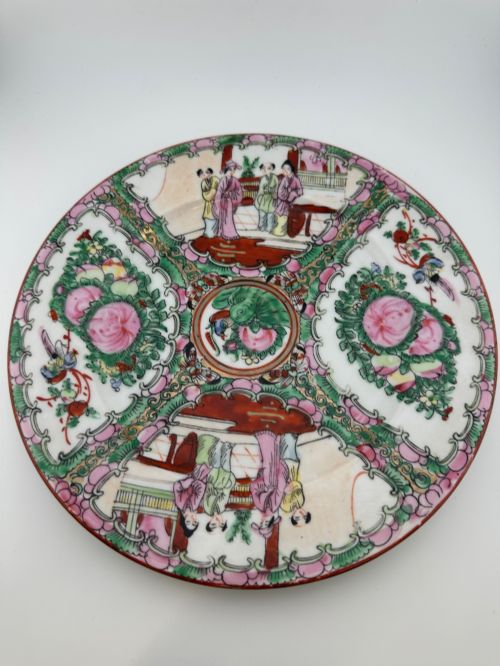
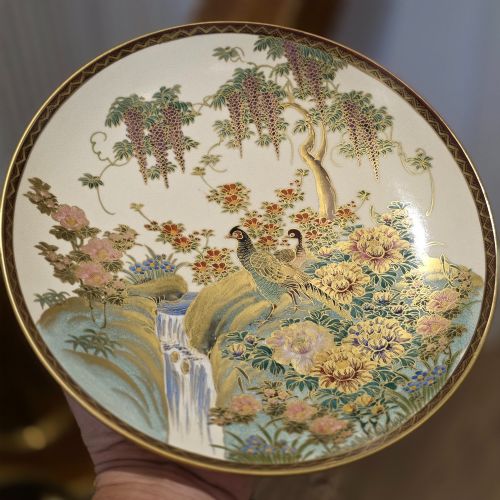
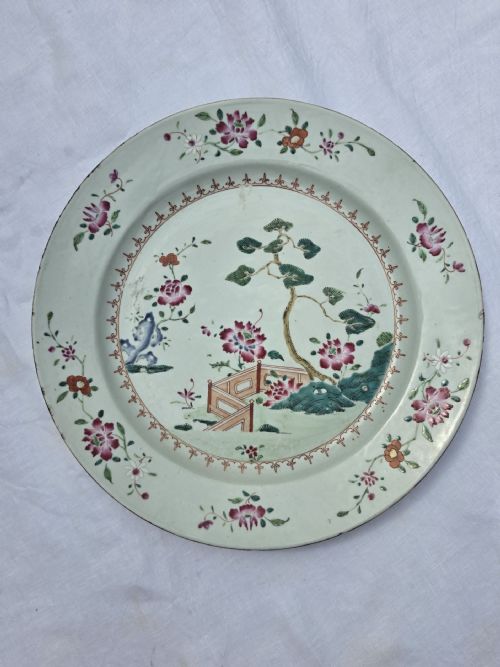
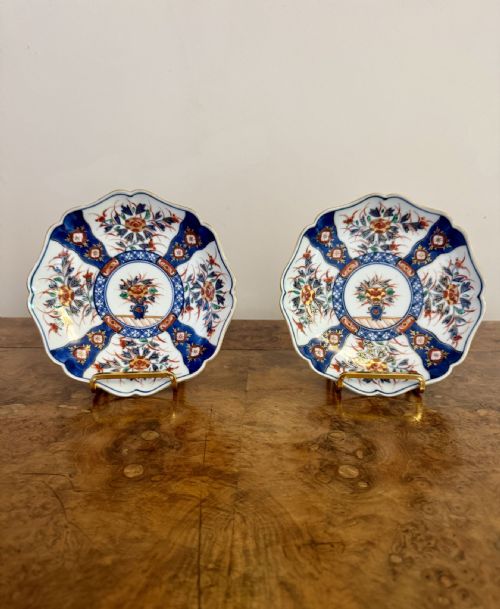
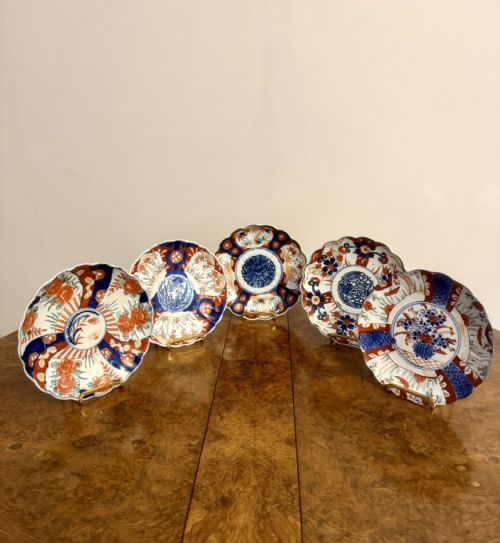
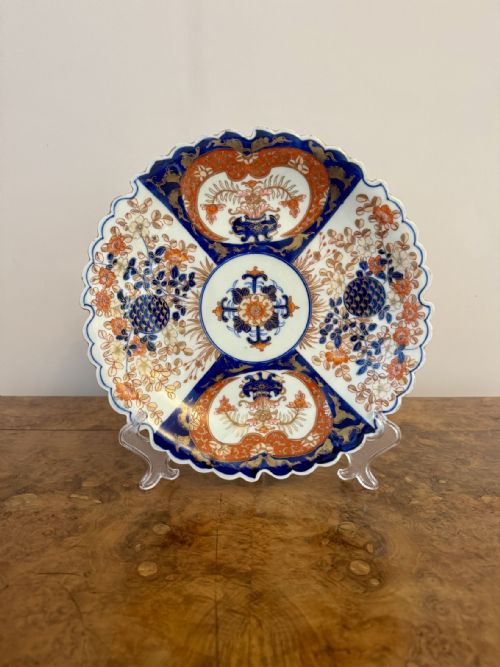
An asian porcelain wall dish encompasses large chargers, decorative plates, and platters originating from China and Japan. The pieces available span from the Edo and Meiji periods through to the early twentieth century.
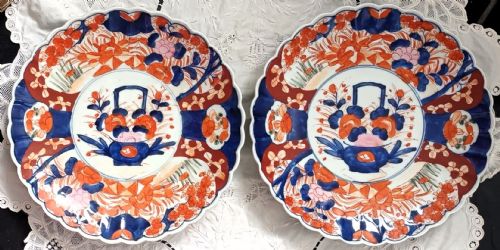
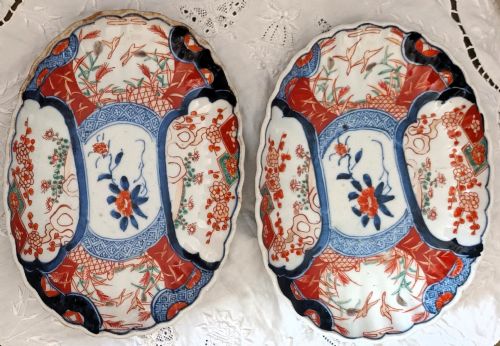
Japanese Imari and Kutani wares dominate the selection alongside Chinese export porcelains such as Famille Rose and blue and white pieces. Chargers and plates appear both individually and in matched pairs.
Formats range from standard circular chargers to square, scalloped, and shell-shaped dishes intended for visual impact.
Materials and construction
The body consists of porcelain, ceramic, or earthenware shaped into plates and chargers. Cobalt underglaze provides deep blue foundations beneath clear or coloured glazes.
Enamel pigments, gilt, and gold leaf are applied over or under the glaze to create detailed hand-painted pictorial scenes, botanical motifs, and figural subjects. Kiln-fired techniques lock these colours permanently into the ceramic surface.
Several plates depict the Seven Lucky Gods sharing space with exotic birds on a single ceramic surface.
Judging the standard
The standard of an asian porcelain wall dish depends upon the precision of the hand painting and the complexity of the design. Multi-figure compositions and intricate depictions of mythological subjects demonstrate superior artisan skill.
The crispness of cobalt underglaze work and the careful application of gold leaf and enamel separate standard production pieces from finer studio and kiln outputs.
Koshida·Meizan
The Asian Porcelain Wall Dish Glossary
- Imari
- A style of Japanese porcelain decorated in underglaze blue, iron red, and gold. This palette creates a rich contrast across plates and chargers.
- Kutani
- Japanese coloured porcelain known for bold pictorial designs and vibrant enamel palettes. These wares often depict natural scenes or traditional figures.
- Charger
- A large decorative plate utilised historically for presentation or wall display rather than everyday dining.
- Famille Rose
- A Chinese ceramic palette characterised by opaque pink enamel colours. It gained prominence during the Qing dynasty.
- Cobalt underglaze
- A blue pigment applied to the raw ceramic body before glazing and firing. It yields a permanent rich blue decoration beneath a glassy surface.
Asian Porcelain Wall Dish: Frequently Asked Questions
How do I hang a heavy charger safely?
Large plates require specialised spring-loaded wall hangers designed to distribute weight evenly around the rim without causing stress to the ceramic.
Ensure the fixing is secured directly into a wall stud or utilises a heavy-duty wall plug suitable for the weight of the porcelain.
Are these dishes meant for dining use?
Most of these pieces function primarily as decorative chargers and display plates rather than tableware. Their historical and delicate enamel surfaces mean they are best preserved through visual presentation.
Using them for food risks damaging historical glazes and gold leaf decorations.
How do I tell Imari from Kutani?
Imari porcelain relies on a distinct palette of underglaze blue, iron red, and supplementary gold, often featuring geometric and floral panel layouts. Kutani wares tend to emphasise pictorial scenes rendered in heavier green, purple, and red enamels.
Examining the underside and brushwork style helps clarify the specific Japanese kiln tradition.
How should I clean antique porcelain?
Dusting gently with a soft, dry cloth is sufficient for routine maintenance of wall-hung pieces. Moisture can harm vulnerable overglaze enamels and gold leaf if applied directly.
Avoid chemical cleaning products and submersing antique ceramics in water.