



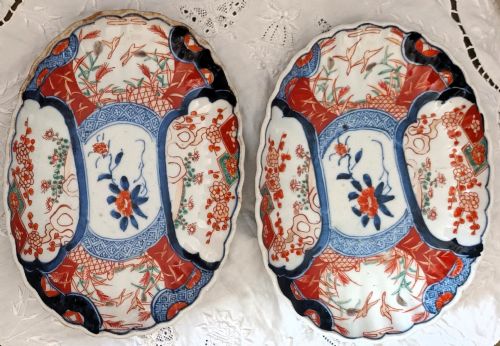


Iron Red Imari Platter
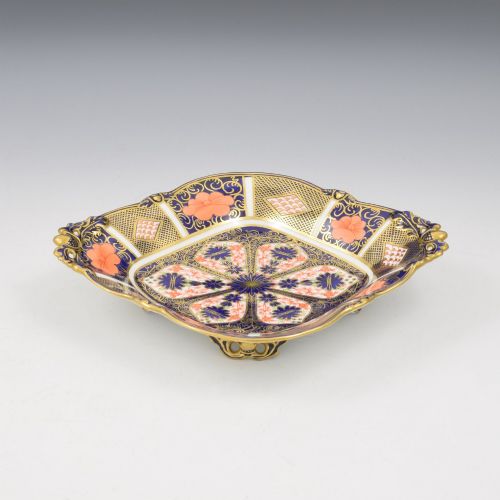
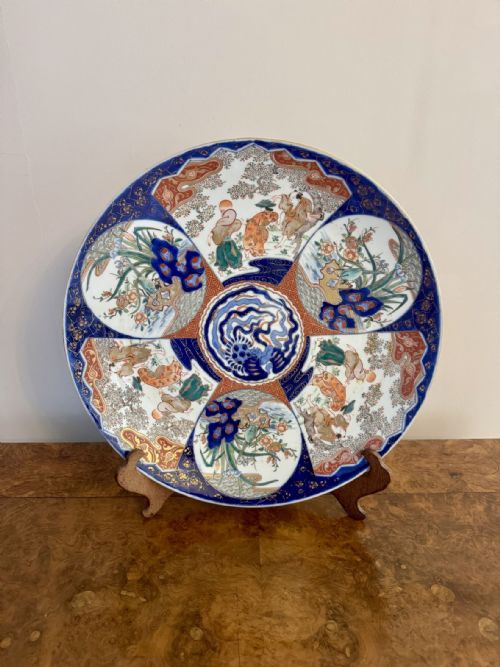
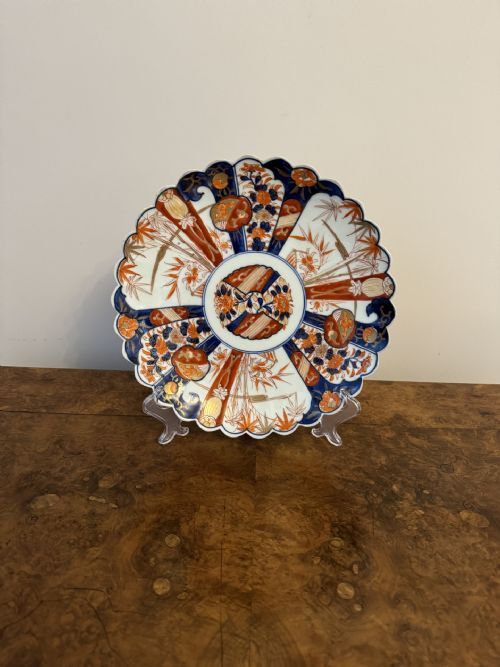
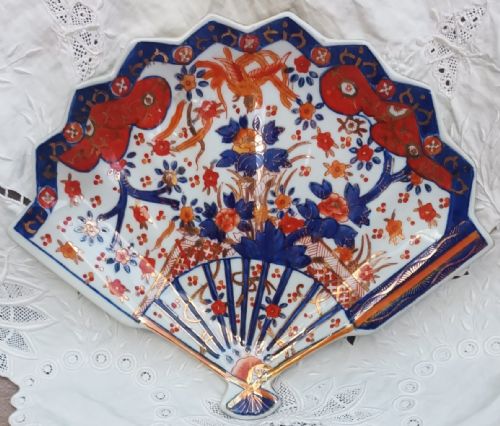
An iron red imari platter brings together dense hand-painted cobalt blue, copper-rich iron red, and gilt highlights on porcelain.

Iron Red Imari Platter
An iron red imari platter encompasses large decorative chargers, scalloped plates, square dishes, and pierced serving trays produced across the eighteenth, nineteenth, and early twentieth centuries.
The objects stem predominantly from Japanese kilns of the Meiji period alongside Chinese export workshops and English porcelain factories like Royal Crown Derby.
Buyers encounter substantial round chargers depicting birds, florals, and the Seven Lucky Gods, alongside smaller serving dishes and shaped trays intended for display.
How they were made
Potters shaped ceramic and porcelain bodies by hand or mould before applying cobalt underglaze pigments directly to the raw clay.
Artisans fused the initial blue decoration during a primary high-temperature kiln firing, establishing the foundational underglaze blue elements.
Workers added overglaze enamels, notably iron red and gold leaf or gilding, in subsequent lower-temperature firings to achieve the characteristic rich palette.
The selection includes Japanese imari alongside Chinese export porcelain and English imari patterns by Royal Crown Derby.
What varies in quality
Quality rests upon the crispness of the hand-painted brushwork, particularly in the definition of floral motifs, bird plumage, and figural details like the Seven Lucky Gods.
The vibrancy and saturation of the cobalt underglaze contrasted against the iron red enamel and gold leaf determine the visual depth of the plate.
Purity of the porcelain body and precision in moulding square, scalloped, or pierced edges separate standard production wares from superior examples.
Royal Crown Derby
The Iron Red Imari Platter Glossary
- Imari
- A style of ceramic originating from the port of Imari in Japan, featuring a distinct palette of cobalt underglaze blue, iron red, and gilt highlights. This aesthetic was later emulated by Chinese export and English potteries.
- Charger
- A large decorative plate or dish historically used for ceremonial display or serving at grand meals. These substantial pieces typically exceed standard plate diameters.
- Cobalt Underglaze
- A blue pigment applied to pottery before glazing and firing at high temperatures. The glass glaze melts over the pigment, protecting the colour permanently.
- Enamel
- Opaque or translucent coloured glass fused to the porcelain surface in a muffle kiln during secondary firings. Iron red is the primary enamel used in this tradition.
- Gilding
- The application of gold leaf or powdered gold mixture onto the ceramic surface for decorative accents. This final layer receives a gentle heat fix.
Iron Red Imari Platter: Frequently Asked Questions
How were iron red imari platters used?
These large chargers and dishes served primarily as decorative table centerpieces or wall display pieces in formal rooms. Some smaller shaped trays functioned as serving dishes for special meals.
Over time, collectors shifted these items toward dedicated wall mounting or cabinet display to protect the delicate hand-painted enamel and gilt surfaces from daily wear.
How do I tell Japanese from Chinese imari?
Japanese Meiji period and nineteenth-century pieces often feature denser, more vibrant iron red and heavier application of gold leaf over stark white porcelain. Chinese export items from the eighteenth century typically display finer, thinner potting and slightly softer blue underglaze.
Examining the foot ring and paste density helps reveal the origin, as Japanese clay bodies from the later periods tend to feel heavier and denser in the hand.
How do I care for antique imari porcelain?
Wash these pieces strictly by hand using lukewarm water and mild soap, avoiding abrasive sponges or modern dishwashers that can damage the delicate overglaze enamels and gold leaf.
Display the platters securely on padded stands or professional wall hangers to prevent accidental slips, keeping them away from direct, harsh sunlight.
How do I date a nineteenth century charger?
Nineteenth-century chargers often exhibit the heavy potting and characteristic busy floral or figural compositions associated with the Victorian era and the Meiji period. Glaze pooling on the unglazed foot rim and minor kiln imperfections offer clues to their age.
Comparing the weight, brushwork precision, and specific shade of iron red against dated examples helps narrow the production window.