







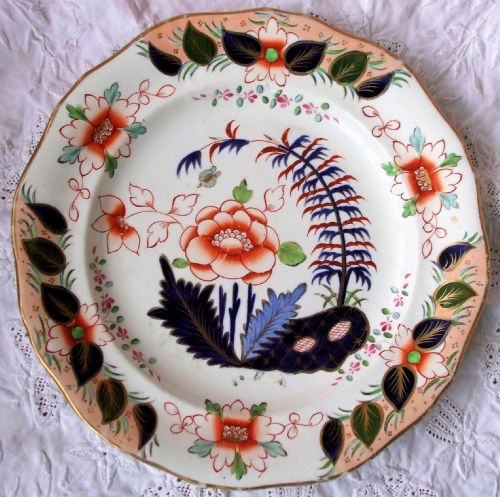

Blue and Orange Porcelain Plate
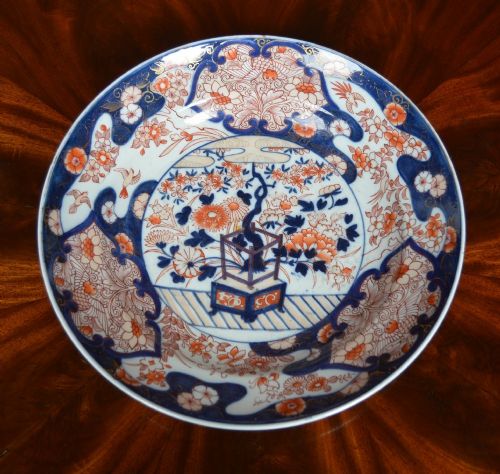
A blue and orange porcelain plate brings together rich cobalt and vibrant iron-red ironstone or porcelain surfaces, offering striking contrast for any interior.
Blue and Orange Porcelain Plate
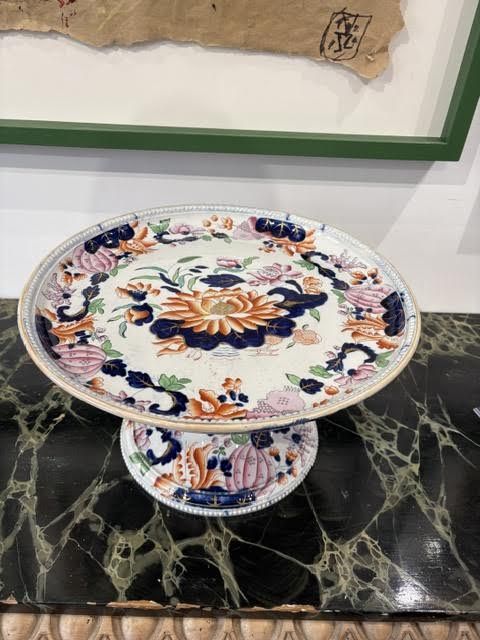
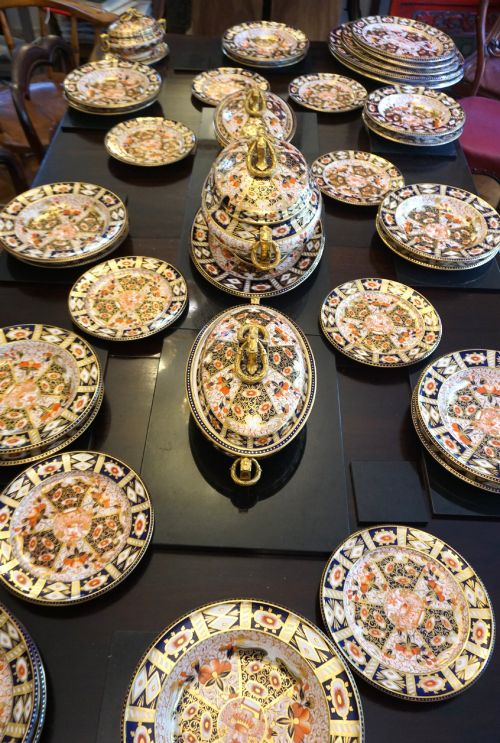
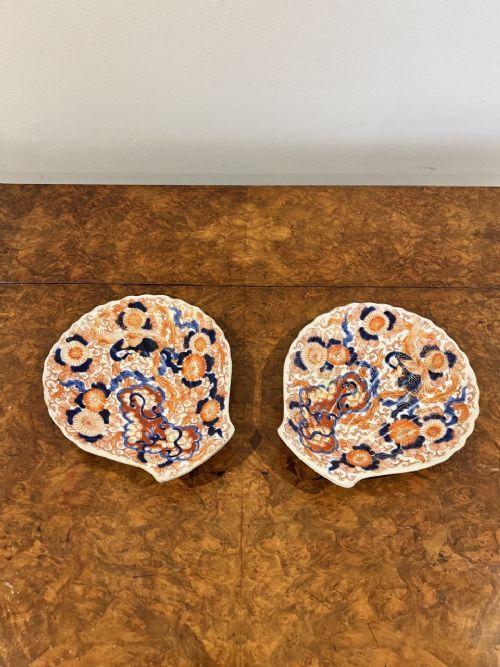
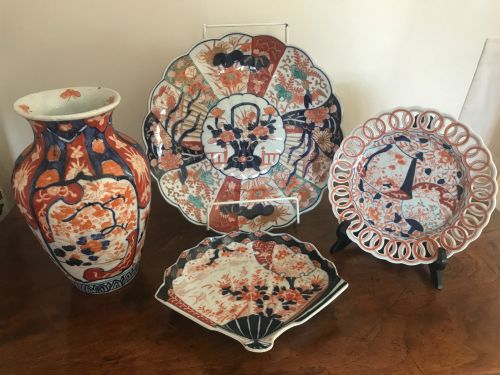
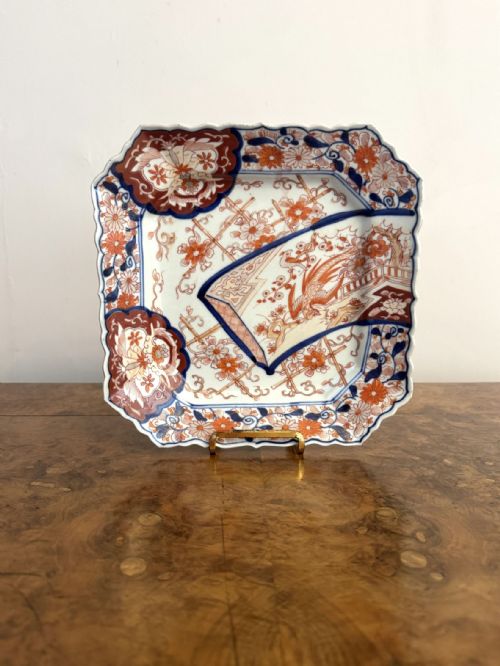
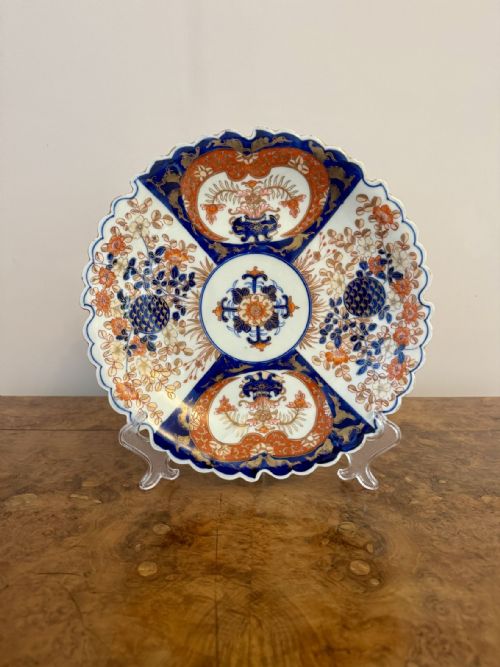
A blue and orange porcelain plate typically follows the classic Imari palette, originating in Japan and later interpreted by English makers. These pieces range from standard round decorative plates to more elaborate chargers, shell shapes, fan shapes, and square forms.
Buyers will most frequently encounter Japanese export pieces dating from the Meiji period and around nineteen hundred, alongside English ironstone interpretations from the Georgian and nineteenth-century eras. Chinese export examples from the mid-eighteenth century also appear, offering early porcelain bodies and hand-painted decoration.
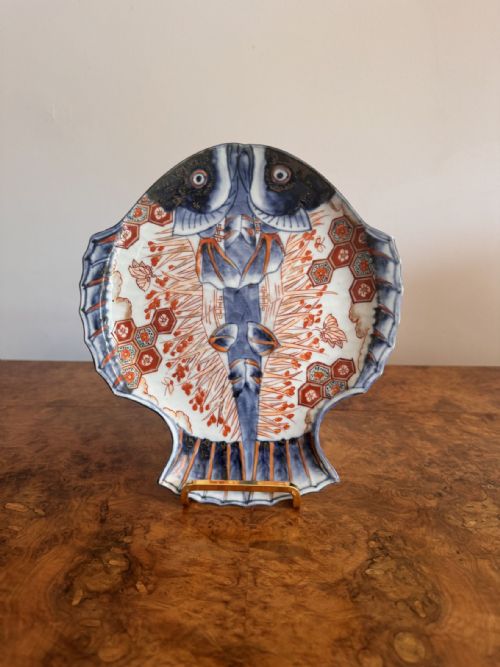
The forms extend beyond flat surfaces into deep dishes, scalloped edges, and large chargers designed for wall display or cabinet grouping. Distinctive moulding gives some examples the silhouette of fish, ribbons, or sea shells, departing from the standard circular format.
Materials and methods
Potters relied on fine ceramic and porcelain bodies, shaping them by hand or mould before applying underglaze cobalt blue. Overglaze enamel in vivid orange and red tones was then added, frequently accented with gilding or gold leaf.
Firing took place in high-temperature kilns to fuse the glaze and pigments, a technique mastered by Japanese kilns and later adopted by English potteries such as John Davenport of Longport. The resulting hard paste porcelain and dense ironstone provided durable bases for intricate hand-painted motifs.
Blue and Orange Porcelain Plate Retail Price Guide 2026
Typical asking prices for blue and orange porcelain plate among the pieces listed under this phrase on Sellingantiques today, from the lower quarter to the upper quarter. They describe what is for sale here now, not the wider market.
Potters occasionally shaped stubborn porcelain into the form of a swimming fish, proving that dinnerware could have a distinct sense of humour.
Assessing quality and execution
The crispness of the hand-painted brushwork distinguishes the finer examples from standard production ware, particularly in the rendering of figures like the Seven Lucky Gods or complex floral panels. Cobalt tones that remain deep and even without blurring indicate superior kiln control.
Unusual moulding, such as fish or fan shapes paired with scalloped rims, demonstrates greater skill by the potter than simple circular platters. The preservation of the overglaze orange enamel and gold leaf without heavy rubbing marks out well-kept display pieces.
John Davenport of Longport
The Blue and Orange Porcelain Plate Glossary
- Imari palette
- A traditional decorative style utilising underglaze blue, iron-red or orange enamel, and gilt highlights. This distinctive colour scheme originated in Japan and influenced European potteries.
- Charger
- A large decorative plate or dish intended for display on a wall or sideboard rather than dining use. These pieces often measure twelve inches or more across.
- Ironstone
- A heavy, durable type of ceramic developed in the nineteenth century as a robust alternative to porcelain. It readily accepted transfer printing and hand-painted enamel decoration.
- Meiji Period
- The era in Japanese history spanning from eighteen sixty-eight to nineteen twelve, known for prolific porcelain production and export to Western markets.
Blue and Orange Porcelain Plate: Frequently Asked Questions
Were these plates used for dining?
While many started as functional tableware, the larger chargers and elaborately shaped pieces served primarily for display in dining rooms and parlours.
Over time, collectors valued them chiefly as decorative art objects rather than for daily service at the table.
How do I date an Imari plate?
Dating relies on stylistic clues, ceramic bodies, and historical periods such as the Edo or Meiji eras, alongside nineteenth-century English factory marks.
Examining the foot ring, glaze texture, and hand-painted brushwork helps distinguish eighteenth-century export pieces from later nineteenth-century revivals.
Can I hang these chargers on the wall?
Large chargers and decorative plates were frequently produced with display in mind, though appropriate hardware must be selected with care.
Using coated wire hangers that distribute weight evenly across the rim protects the ceramic body during wall mounting.
Why do some pieces feature gold leaf?
Gilding and gold leaf were applied over the fired glaze to enhance the richness of the blue and orange palette for wealthy export markets.
Master artisans added these metallic highlights to accent floral borders, geometric panels, and central motifs.