





Scalloped Imari Charger
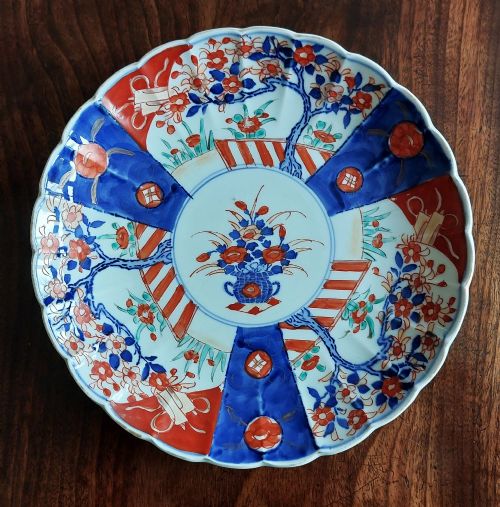
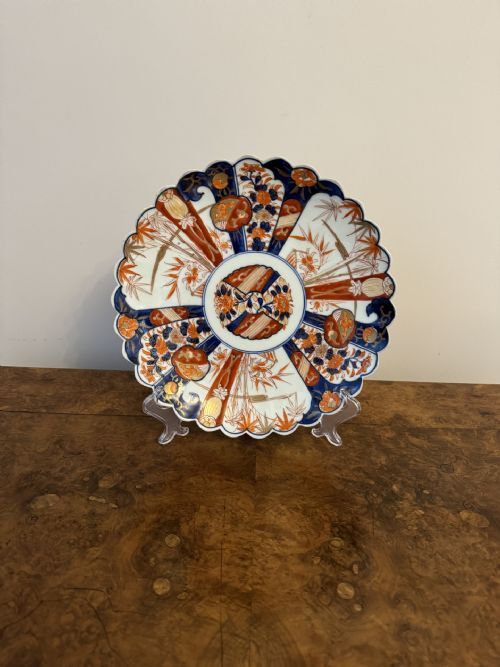
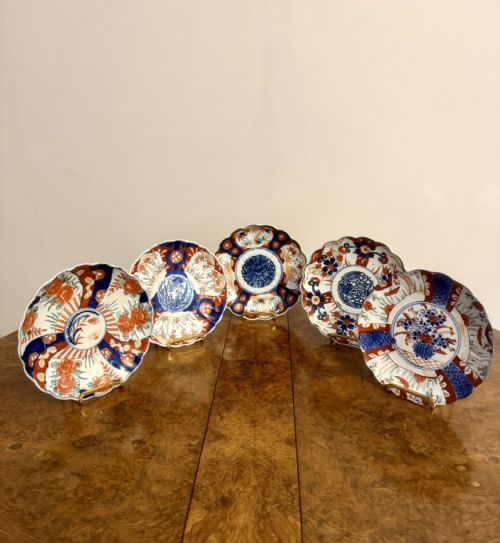
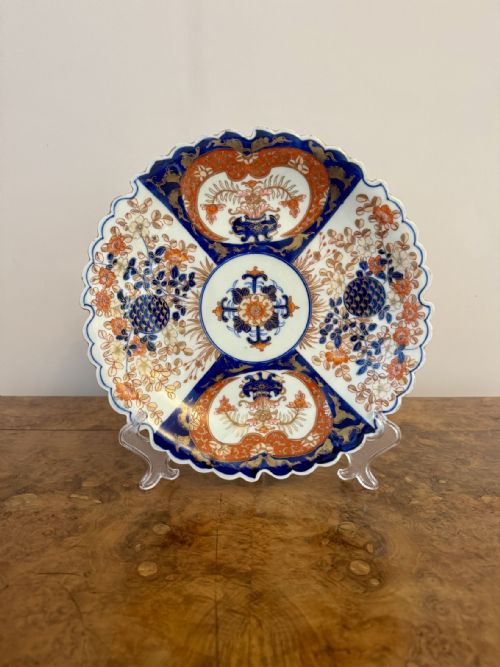
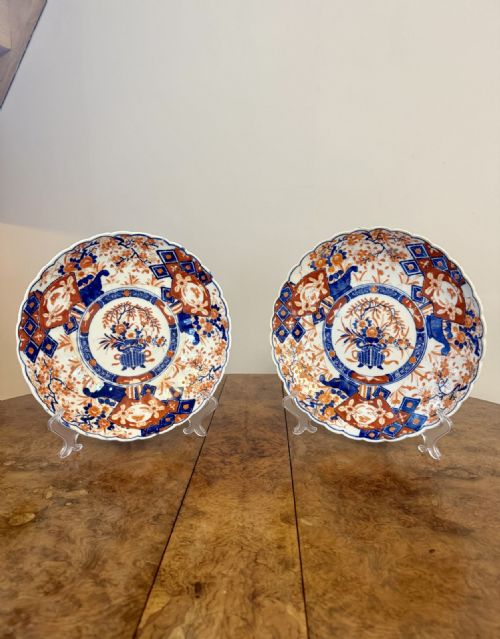
A scalloped imari charger brings bold cobalt and iron red porcelain into a room, made for display on a wall or dresser.
Scalloped Imari Charger
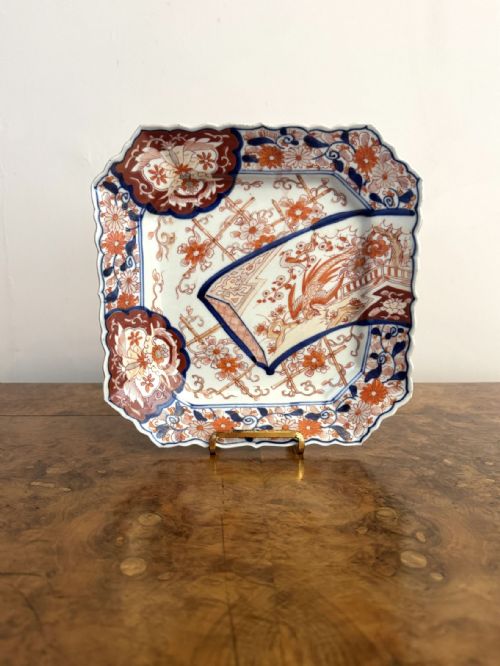
A scalloped imari charger is a large decorative ceramic plate featuring a fluted or shaped rim rather than a simple circular edge. These pieces emerge predominantly from the nineteenth century, including the Meiji period and Victorian eras, drawing on Japanese ceramic traditions.
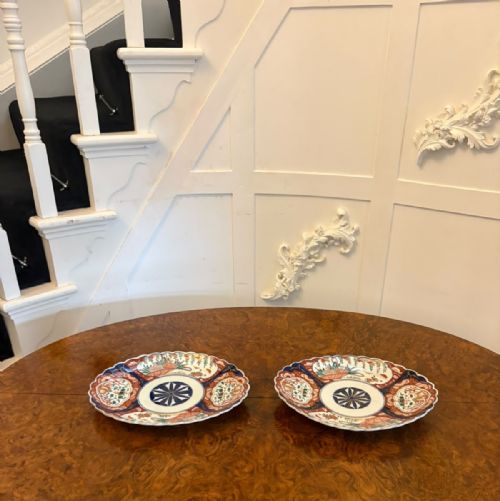
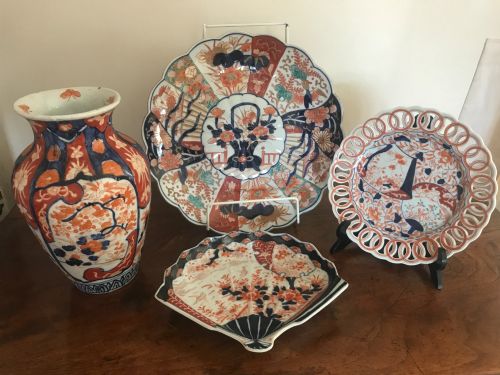
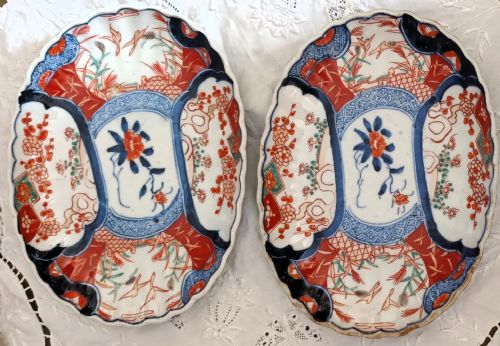
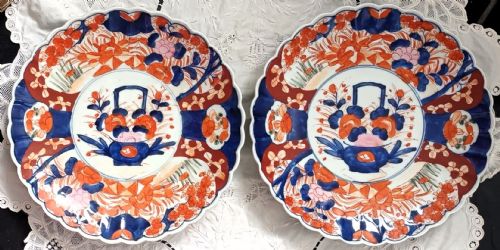
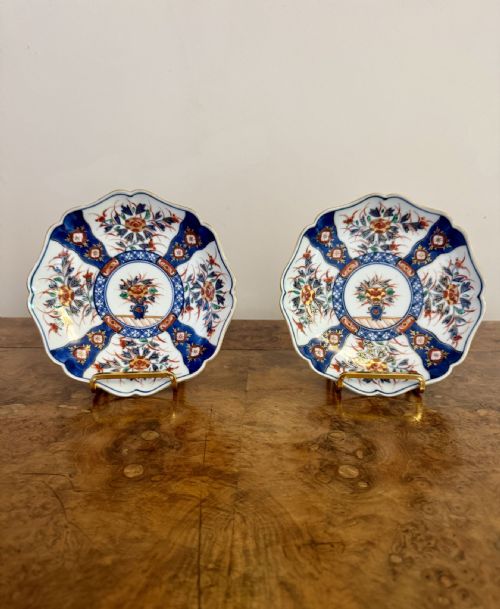
While the archive and current listings include smaller dishes, bowls, and pairs of plates, the charger remains the focal point for its broad surface area. The designs typically incorporate floral motifs, exotic birds, and figural scenes such as the Seven Lucky Gods.
Most examples found here span from eighteen-eighty through nineteen-twenty, reflecting both late Edo and Meiji aesthetics. Buyers encounter everything from single large display pieces to coordinated pairs and larger collections.
Materials and construction
These chargers and plates consist of porcelain bodies finished with cobalt underglaze, enamel, and occasionally gilding or gold leaf. The ceramic material provides a sturdy white ground capable of holding complex painted compositions.
Painters applied cobalt blue beneath the clear glaze before firing, then added iron red and enamel details in subsequent stages. This multi-stage firing process locks the colours permanently into the ceramic surface.
Among the deities painted on these plates, the Seven Lucky Gods occasionally appear crowded together on a single porcelain charger.
Judging quality in Imari ware
Quality rests in the precision of the hand painting and the crispness of the porcelain moulding around the scalloped edges. Pieces with sharply defined fluting and carefully detailed bird or floral motifs stand apart from simpler production work.
The richness of the palette also dictates distinction, particularly where enamel and gilding retain their depth and vibrancy across the surface. Strong cobalt underglaze work provides the structural foundation for the entire composition.
The Scalloped Imari Charger Glossary
- Charger
- A large decorative plate intended primarily for display on a wall, sideboard, or cabinet rather than for serving food.
- Imari
- A style of Japanese export porcelain originating from Arita, traditionally characterised by a palette of cobalt blue, iron red, and gold.
- Meiji Period
- The era of Japanese history lasting from eighteen-sixty-eight to nineteen-twelve, noted for prolific export ceramics.
- Cobalt Underglaze
- Pigment applied directly to the raw porcelain body before the application of glaze and firing, ensuring permanence.
- Scalloped Edge
- A decorative rim shaped into a series of continuous curves or indentations resembling the edge of a scallop shell.
Scalloped Imari Charger: Frequently Asked Questions
How do I hang a charger?
Use a specialised spring-loaded wall plate hanger that grips the scalloped rim securely without damaging the porcelain.
Ensure the wall fixing is anchored properly because these ceramic chargers carry substantial weight.
Were these made for export?
Japanese kilns produced these chargers specifically for Western markets during the late nineteenth and early twentieth centuries.
European and American buyers prized the vibrant palettes for domestic display in Victorian interiors.
Can I use them for dining?
These decorative pieces serve primarily as visual display items rather than functional tableware for daily meals.
Historical enamels and gilt highlights can wear down with frequent washing and cutlery contact.
How do I date an Imari piece?
Examine the style of the painting, the weight of the porcelain body, and any associated period markers like Meiji or Victorian designations.
Nineteenth-century examples often display denser floral compositions and deeper cobalt tones than later twentieth-century work.