






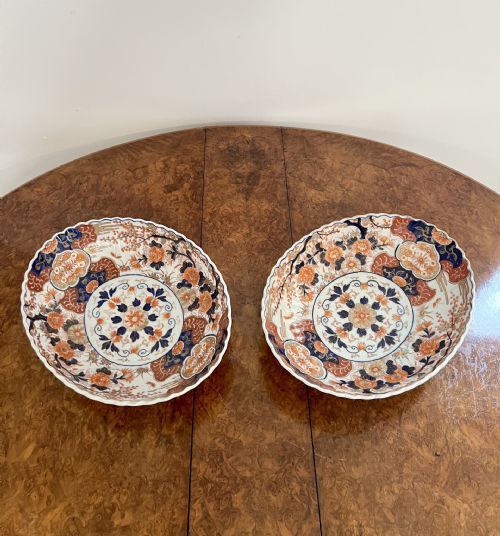

Floral Imari Display Charger
A floral imari display charger brings bold hand-painted colour and intricate ceramic artistry into a room.
Floral Imari Display Charger
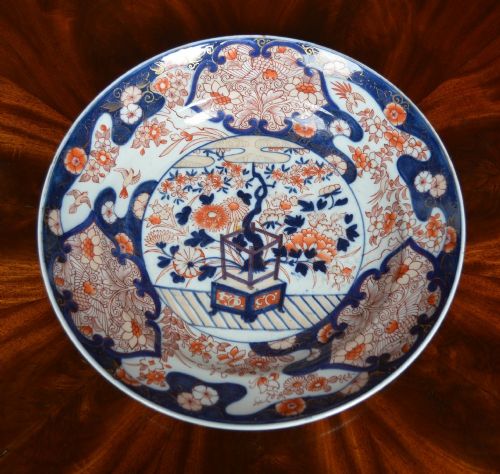
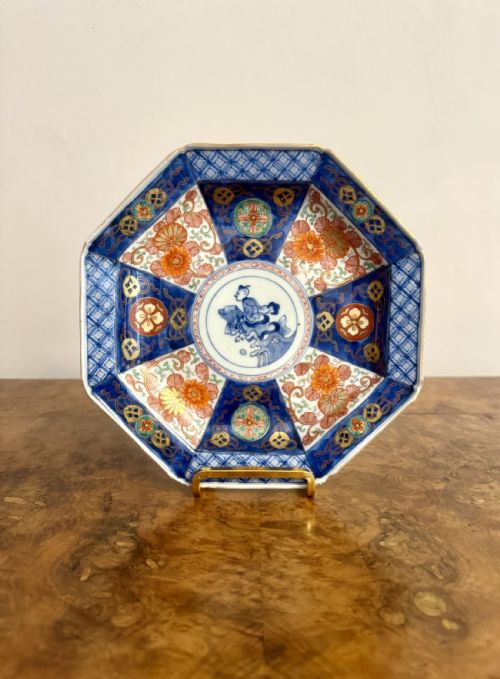
A floral imari display charger is a large decorative plate or charger designed primarily for visual impact rather than dining. The pieces gathered here stem largely from the late nineteenth century and the Meiji period, alongside earlier eighteenth-century Chinese export wares and mid-nineteenth-century Edo pieces.
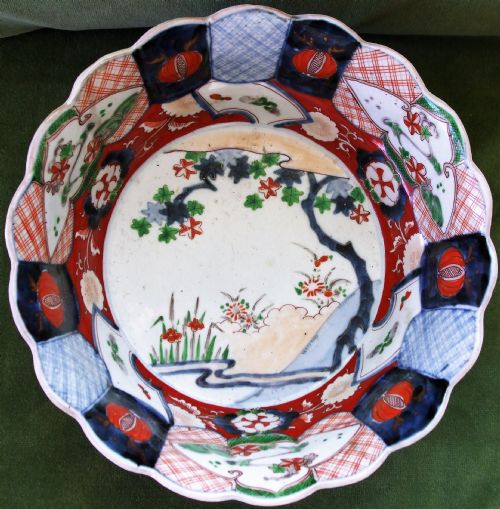
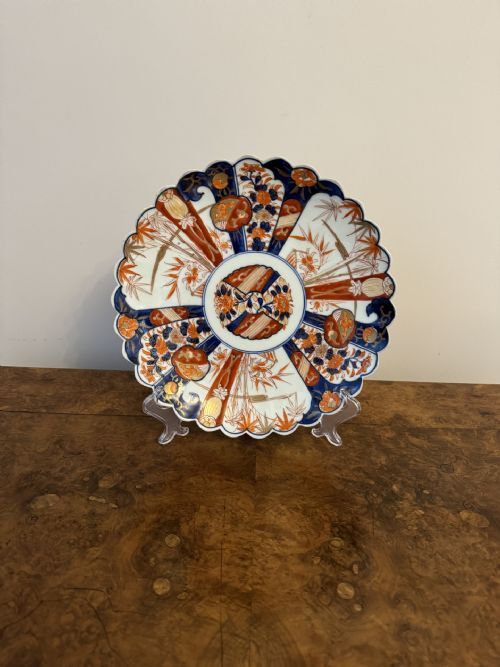
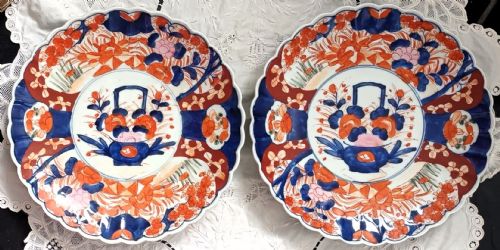
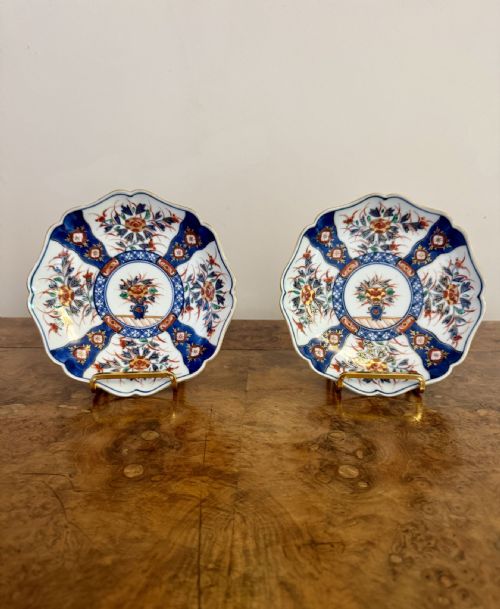
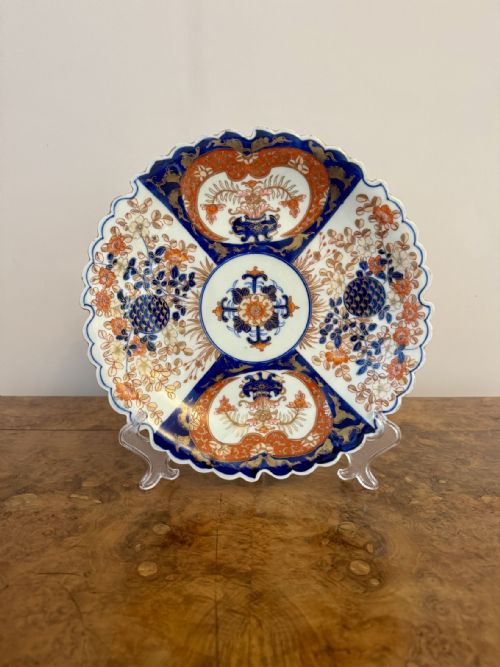
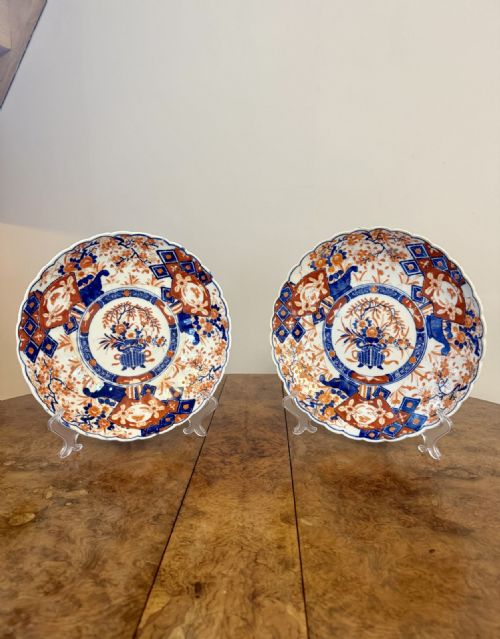
Most examples encountered on this page take the form of broad chargers, circular plates, or scalloped dishes intended for wall display or placement on stands. Their primary decoration centres on floral and bird motifs executed in the distinctive imari palette.
The selection spans individual decorative plates through to matched pairs and sets, offering varied geometric formats including hexagonal and square plates alongside traditional round bowls and chargers.
Materials and construction methods
The foundation of these pieces is white porcelain and ceramic, shaped into heavy chargers and plates with smooth or scalloped edges. Artisans then applied cobalt underglaze beneath a clear protective finish to establish the primary blue details of the design.
Enamel colours and gold leaf or gilding were subsequently added over the glaze to build up the rich floral and bird patterns characteristic of imari ware. Firing these decorated ceramics required careful kiln work to fix the multiple layers of colour and metallic leaf onto the porcelain surface.
The listings span multiple centuries, uniting eighteenth-century Chinese export examples with nineteenth-century Victorian and Meiji period Japanese porcelain chargers.
Distinctions in quality and execution
The refinement of the hand-painted brushwork dictates the visual strength of each charger, separating finely detailed floral and bird compositions from simpler repetitive patterns. Precision in the application of cobalt underglaze and the preservation of original gilding and enamel colours also mark out superior examples.
Structural variety, such as cleanly cut scalloped edges or unusual hexagonal and square formats, points to higher ambition in the original ceramic moulding. The crispness of the porcelain body and the depth of the glaze further define the standing of individual plates within the broader range.
The Floral Imari Display Charger Glossary
- Imari
- A style of ceramic decoration originating in Japan, characterised by a palette of cobalt blue, iron red, and gold on a white porcelain ground. The name derives from the port from which these wares were shipped.
- Charger
- A large ornamental plate used traditionally for presentation or wall hanging rather than for serving food at the table. These substantial ceramics form the focal point of many decorative displays.
- Cobalt underglaze
- A blue pigment applied to the raw ceramic body before glazing and firing, capable of withstanding high kiln temperatures. This technique produces deep, permanent blue tones beneath the clear surface.
- Meiji Period
- The era in Japanese history spanning from 1868 to 1912, associated with a surge in fine porcelain production for export. Many decorative chargers on this page originate from this specific period.
- Scallop edge
- A decorative rim shaped into a series of rounded curves resembling the edge of a scallop shell. This treatment appears frequently on plates and bowls within the imari selection.
Floral Imari Display Charger: Frequently Asked Questions
What is an imari charger used for?
These large plates were created primarily for visual presentation and display rather than everyday dining use. Owners typically placed them on sideboards or hung them on walls to showcase the colourful patterns.
Their robust porcelain construction and striking floral designs made them ideal decorative centrepieces in traditional interiors.
How do I date an antique imari piece?
Dating relies on stylistic markers, ceramic weight, and the specific tones of the cobalt blue and enamel colours used in the decoration. Pieces from the Meiji period often exhibit distinct brushwork compared to earlier Edo or eighteenth-century Chinese export wares.
Examining the foot ring and the texture of the porcelain glaze also helps determine the likely era of manufacture.
Are imari plates made of porcelain?
Yes, traditional imari wares are formed from fine white porcelain or dense ceramic bodies. The material provides a smooth, durable canvas for the underglaze blue and overglaze enamel painting.
This vitrified body allows the plates to maintain their structural integrity over centuries of display.
How should I display a heavy charger?
Due to their substantial weight, chargers require sturdy wall hooks or secure display stands designed specifically for heavy ceramics. Placing them on a dedicated plate stand ensures the rim and base take the weight evenly.
Positioning them away from high-traffic areas protects the delicate overglaze enamels and gold leaf from accidental knocks.