


Iron Red Imari Vase
An iron red imari vase brings vibrant cobalt and cinnabar tones to a room, offering striking pattern and rich historic character.
Iron Red Imari Vase
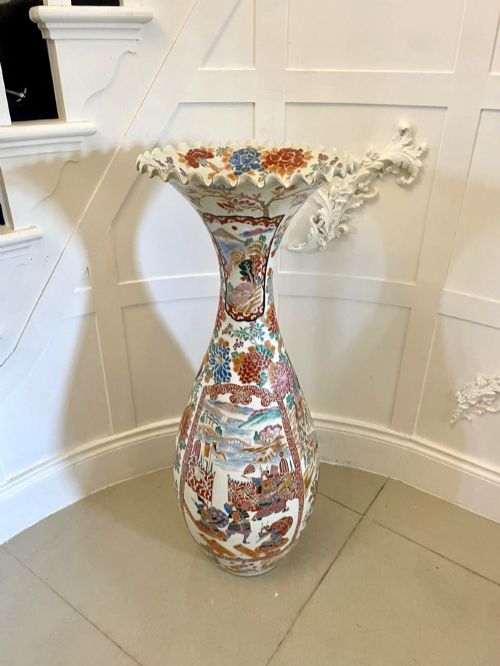
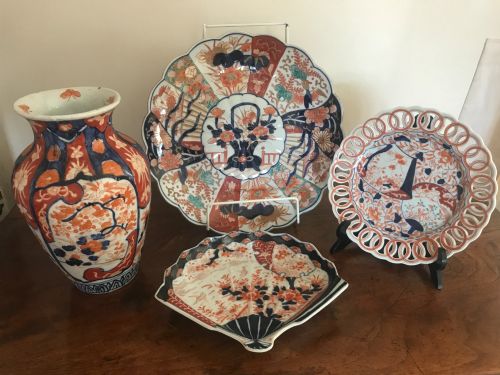
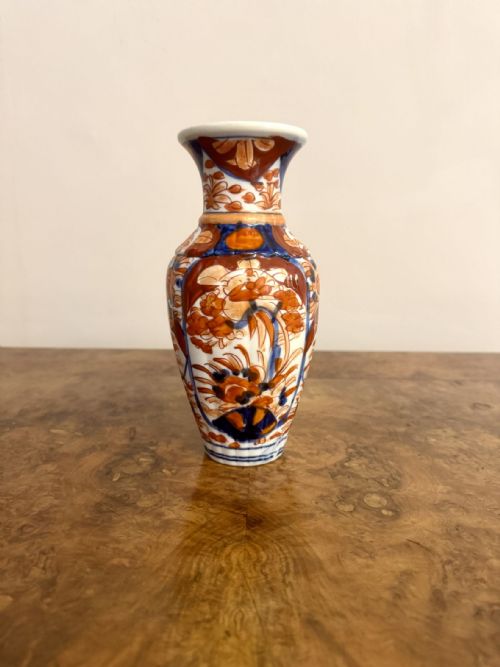
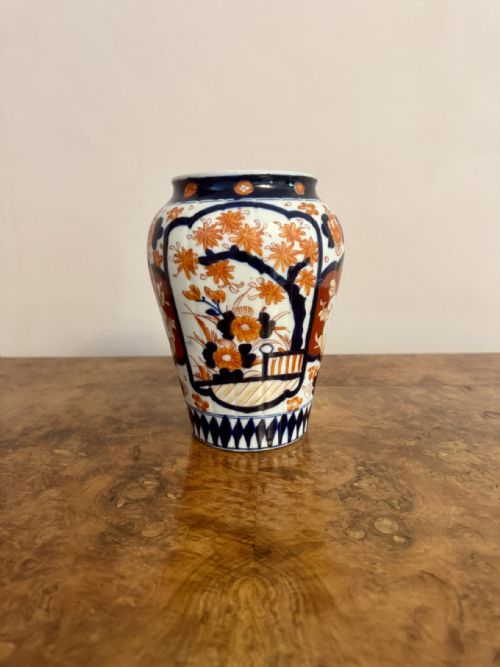
An iron red imari vase bridges Eastern and Western decorative traditions through striking polychrome palettes. When searching for an iron red imari vase, buyers encounter forms ranging from diminutive bud holders to large floor-standing vessels.
Most examples originate from the Meiji period and the nineteenth century, alongside earlier seventeenth-century Arita pieces and later Edwardian interpretations. Makers employed diverse silhouettes including baluster, fluted, hexagonal, and lidded forms.
British pottery traditions also appear via nineteenth-century Victorian works from factories such as Stevenson and Hancock. These pieces provide collectors with both traditional Japanese export aesthetics and domestic ceramic adaptations.
Distinguishing quality across examples
Superior vessels display precise hand-painted brushwork and crisp definition within the cobalt and iron red enamel. Finer pieces often feature delicate gold leaf work and well-balanced proportions across complex fluted or hexagonal bodies.
Scale and complexity also separate standard items from exceptional garnitures and large floor-standing pairs. The clarity of the ceramic glaze and the preservation of the surface gilding indicate the level of craftsmanship.
Listings feature items spanning the seventeenth century through the Edwardian period, executed in porcelain, ceramic glaze, and gold leaf.
Stevenson and Hancock
The Iron Red Imari Vase Glossary
- Imari
- A style of Japanese porcelain decorated in underglaze blue, iron red, and gold. This aesthetic originated in Arita and became widely exported to Europe.
- Meiji Period
- The era in Japanese history spanning from 1868 to 1912. Pieces from this time often exhibit intricate hand-painted polychrome decoration.
- Baluster
- A vase form characterised by a rounded body that tapers toward the base and neck. This classic silhouette provides a stable foundation for complex surface patterns.
- Garniture
- A set of matching vases designed to be displayed together on a mantelpiece or sideboard. These sets typically comprise three or more coordinated vessels.
- Arita
- The Japanese town renowned as the birthplace of porcelain production. Artisans here produced many of the earliest export wares.
Iron Red Imari Vase: Frequently Asked Questions
What is an iron red imari vase?
An iron red imari vase is a ceramic vessel decorated with distinctive cobalt blue, iron red enamel, and gold highlights. These pieces originated primarily in Japan as well as nineteenth-century British potteries.
Collectors prize them for their rich polychrome patterns and diverse forms, ranging from small bud vases to large floor-standing items.
How do I date an imari vase?
Dating relies on stylistic clues, ceramic bodies, and historical periods such as the Meiji era or the nineteenth century. Examining the base, glaze texture, and painting technique helps establish the manufacturing period.
Earlier pieces often trace back to seventeenth-century Arita production, while later examples extend into the Edwardian era.
How should I display an imari vase?
These vases suit placement on sturdy sideboards, tables, or mantelpieces where their vibrant colours can be appreciated. Large floor-standing vessels work well as standalone focal points in a room.
Pairing matching vases or displaying a garniture set creates a balanced and traditional decorative arrangement.