


Victorian Royal Crown Derby
Victorian royal crown derby brings together fine bone china and intricate imari palettes, offering collectors rich nineteenth-century porcelain.
Victorian Royal Crown Derby
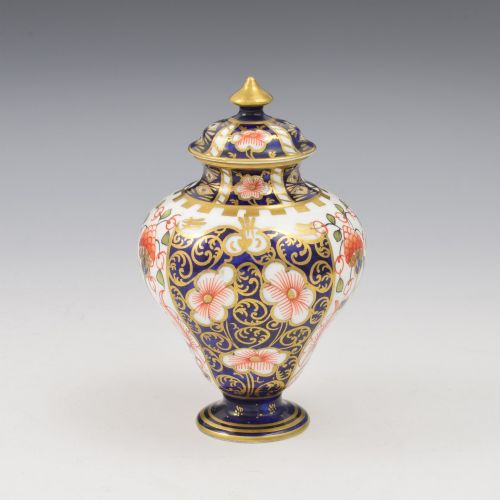
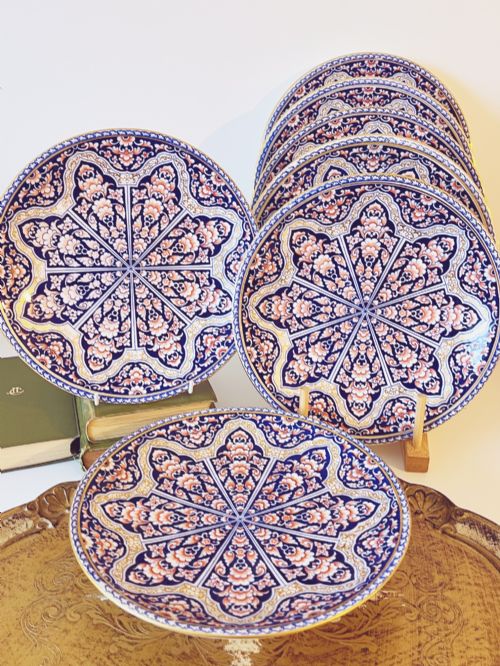
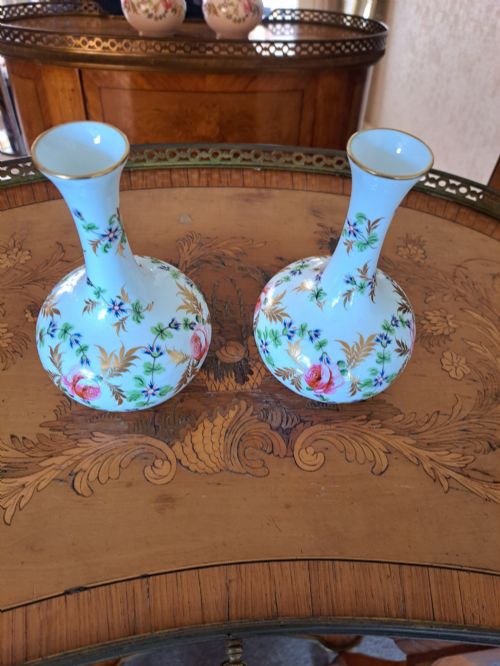
When you search for victorian royal crown derby, you encounter a range of ceramics spanning dessert services, miniature vases, ewers, and tea wares produced during the nineteenth and early twentieth centuries. The pieces on this page lean heavily toward decorative vessels and tableware, including biscuit barrels, garnitures, and dessert plates marked by distinct historical patterns.
The objects stem predominantly from the Victorian period, alongside adjacent Edwardian and early twentieth-century examples that maintain traditional motifs. You will frequently meet intricate Imari patterns such as the Witches design or pattern numbers 6299 and 2451 across cups, saucers, and urns. Formats range from large centrepieces signed by painters to diminutive flat irons and solitaire sets.
How they were made
Potters shaped these objects from porcelain, ceramic, and bone china, applying hand-painted enamel colours and detailed gilding over the fired body. Many items utilise gold leaf and raised gold decor to accentuate the borders and motifs.
Artisans executed traditional hand techniques alongside factory production methods, evident in the date-marked pieces and signed work from named decorators. Gilding and enamel work require precise kiln firings to fuse the metallic and ceramic surfaces securely.
Victorian makers produced miniature porcelain flat irons on stands, proving that even laundry implements deserved elaborate gold gilding.
What varies in quality
Quality rests upon the crispness of the hand-painted enamel and the precision of the gilding applied to the porcelain body. Pieces bearing the signatures of known artists or specific pattern numbers demonstrate higher execution standards than standard unmarked wares.
The complexity of the form also dictates the tier of the piece, with hexagonal tea canisters, garniture sets, and ewers requiring advanced potting skills compared to simple plates. Preserved surface detail on raised gold decoration distinguishes superior examples from simpler production.
The Victorian Royal Crown Derby Glossary
- Imari
- A decorative style inspired by Japanese export porcelain, utilising a palette of cobalt blue, iron red, and gilt. This aesthetic defines many key patterns found on these ceramics.
- Gilding
- The application of gold leaf or gold paint to ceramic surfaces for ornamental effect. Artisans often raised this gold work to create tactile relief on vases and ewers.
- Bone china
- A type of soft-paste porcelain containing animal bone ash, producing a durable and slightly translucent body. It forms the base for numerous teawares and miniature items.
- Garniture
- A set of three or more matching vases or urns designed to be displayed together on a mantelpiece or sideboard. These matched groups represent more elaborate decorative commissions.
- Ewer
- A large jug with a wide spout and scrolled handle, typically used historically for pouring water or as a purely decorative vessel. Paired ewers appear frequently in nineteenth-century displays.
Victorian Royal Crown Derby: Frequently Asked Questions
How do I date these ceramics?
Dating relies on factory marks stamped or painted on the underside, alongside specific pattern numbers and registered design shapes.
Comparison with documented painter signatures helps narrow the production window to specific decades.
Are these items safe for daily use?
Most pieces carry delicate hand-painted enamels and gold leaf that degrade under modern dishwashing conditions.
Gentle hand washing preserves the fragile surface decoration and historic glaze.
What is the Imari pattern?
The Imari style copies traditional Japanese export wares using a distinct iron red and cobalt blue colour scheme.
Gold highlights typically unify the contrasting hues across plates and tea services.
How should I display a garniture?
Garnitures look best arranged symmetrically on a mantelpiece or sideboard, placing the central vessel between matching smaller pieces.
Spacing allows the painted motifs and gilded details to catch natural light.