



Blue Porcelain Jardiniere
These blue porcelain jardiniere pieces are substantial plant vessels bringing cobalt colour and pattern to interiors, valued for their decorative presence.
Blue Porcelain Jardiniere
A blue porcelain jardiniere is a large plant vessel designed to house potted greenery or function as a freestanding centrepiece bowl. When searching for a blue porcelain jardiniere, buyers encounter pieces spanning the eighteenth, nineteenth and early twentieth centuries.
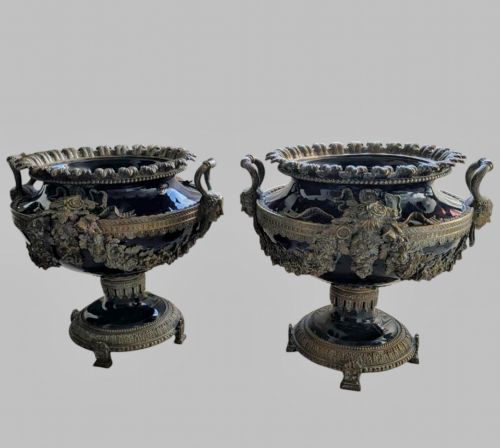
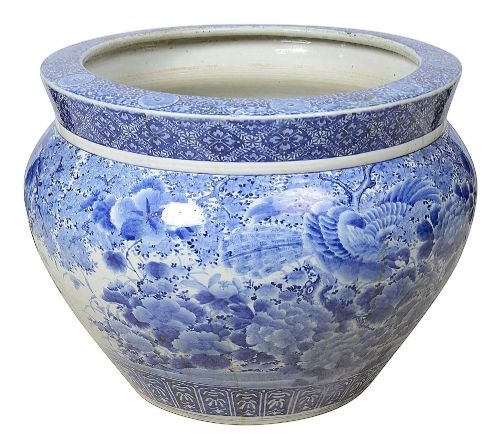
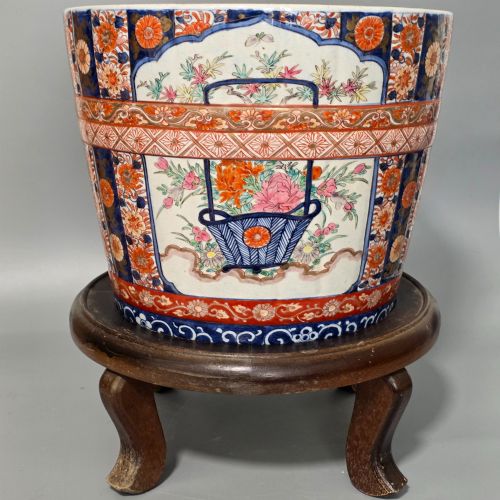
The selection ranges from Chinese export wares and fish bowls to Japanese Imari planters and European interpretations. Forms include traditional jardiniere shapes, cachepots and planters accompanied by associated hardwood stands.
Nineteenth century examples appear frequently alongside eighteenth century exports and later productions. These vessels serve practical horticultural purposes while displaying varied stylistic influences from Chinoiserie to French Rococo Revival.
How they were made
These pieces utilise ceramic and porcelain bodies coated in glaze to create durable vessels. Cobalt blue pigment provides the foundational colour for painted decoration beneath or upon the glaze layer.
Certain examples incorporate enamel detailing and gold leaf accents to enrich the surface pattern. Mounts of gilt bronze and hardware such as hardwood stands complement the ceramic bodies on select pieces.
What varies in quality
Quality rests in the precision of the blue and white painting and the depth of the glaze. Finer examples display crisp botanical or figurative motifs executed with confident brushwork across the porcelain surface.
The weight and consistency of the ceramic body distinguish superior vessels. Additional craftsmanship appears in the application of enamel details, gold leaf highlights and associated hardwood stands.
Royal Doulton·Royal Crown Derby·Coalport
The Blue Porcelain Jardiniere Glossary
- Jardiniere
- An ornamental pot or stand for holding plants or flowers. These vessels often sit directly on furniture or floor stands.
- Imari
- A style of Japanese porcelain decorated in underglaze blue, iron red, gold and auxiliary colours. Originating in the Edo period, this palette gained significant popularity in export markets.
- Chinoiserie
- A European artistic style reflecting Chinese motifs and techniques. Applied to ceramics and decorative arts during the eighteenth century.
- Cachepot
- An ornamental container used to conceal a plain flower pot. These decorative pots typically lack drainage holes in the base.
Blue Porcelain Jardiniere: Frequently Asked Questions
What is a jardiniere?
A jardiniere is a decorative pot designed to hold a plant or floral arrangement. These vessels function as interior display pieces rather than direct planting containers.
They often sit within living spaces on tables, floors or dedicated stands to showcase foliage.
How do I date a piece?
Dating relies on stylistic markers, materials and manufacturing techniques visible across the ceramic body. Eighteenth century pieces often display specific export characteristics while nineteenth century examples show varied Japanese and European influences.
Maker marks and glaze composition further assist in establishing the period of origin.
Can these hold plants directly?
Many of these vessels were designed to house potted plants inside a protective inner container. Placing soil directly into antique ceramics can introduce moisture issues over time.
Utilising a separate nursery pot inside the jardiniere preserves the interior glaze and ceramic body.
What is a fish bowl?
A fish bowl is a large, deep ceramic basin historically used for keeping aquatic life or displaying floating flowers. These pieces share similar proportions and decorative schemes with standard jardinieres.
Their substantial capacity makes them suitable for floor placement and large botanical displays.