





Meiji Period Ceramic Planter
These meiji period ceramic planter pieces are heavy vessels shaped for interior display, combining dense clays with careful brushwork.
Meiji Period Ceramic Planter
When you search for a meiji period ceramic planter, you encounter large jardinieres, decorative bowls, and oval planters designed to hold potted plants indoors. These vessels arrive from Japan during the nineteenth century and the early twentieth century, showing a direct connection to traditional domestic horticulture and interior decoration.
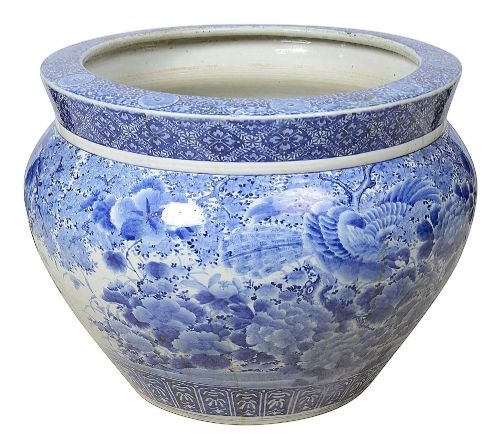
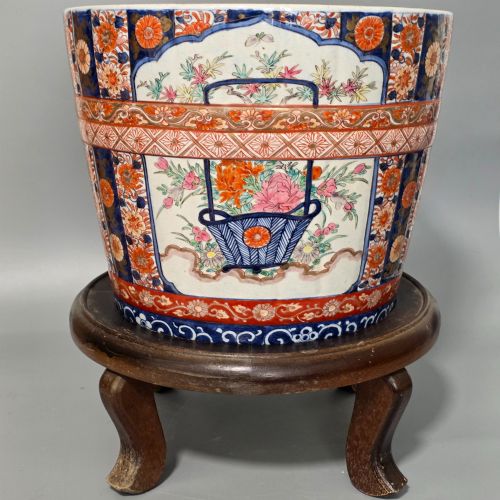
The versions most frequently met on this page include Imari palette jardinieres, blue and white porcelain bowls, and Satsuma wares with rich surface decoration. Makers also produced specialised forms such as suiban and brush washers alongside standard planters, often accompanied by matching wooden stands.
The period covers works spanning the late nineteenth century into the early twentieth century, incorporating influences that stretch across Meiji and Taishō transitions. Each piece reflects the scale and decorative ambition characteristic of Japanese export ceramics intended for Western drawing rooms.
How they were made
Potters shaped these vessels from dense bodies of porcelain, earthenware, and stoneware, frequently employing cobalt underglaze for deep blue motifs beneath a clear protective surface. Workshops also utilised terracotta and heavy ceramic pastes to build substantial walls capable of holding damp soil and large root systems.
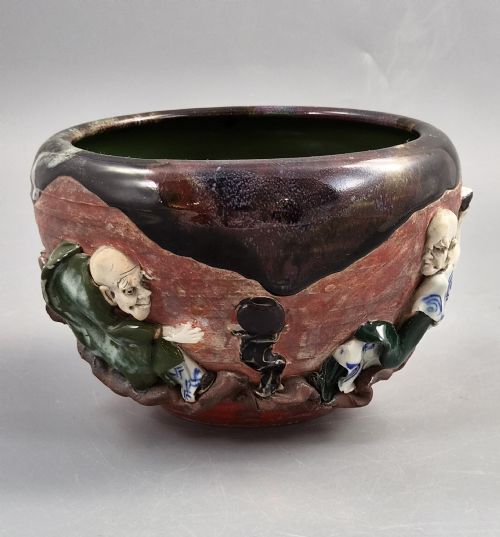
Surface enrichment relied heavily on detailed enamel work and raised figures in relief, applied directly to the biscuit or glazed body before a secondary firing. Signed pieces display the personal touch of identified makers through precise brush control and modelled sculptural additions climbing the exterior walls.
Meiji Period Ceramic Planter Retail Price Guide 2026
Typical asking prices for meiji period ceramic planter among the pieces listed under this phrase on Sellingantiques today, from the lower quarter to the upper quarter. They describe what is for sale here now, not the wider market.
Several pieces feature small ceramic figures climbing the exterior walls as if attempting to peer over the rim.
What varies in quality
Quality rests in the crispness of the cobalt underglaze, the complexity of the enamel palette, and the structural integrity of large walls fired without warping. Superior examples show precise control over heavy glazes and crisp definition in relief figures rather than blurred or muddy transitions.
The presence of a signature from a recognised workshop or individual maker elevates a piece, as does the survival of original components such as matching stands. Scale and condition further separate standard decorative bowls from exceptional large jardinieres retaining unrubbed surface decoration.
Inoue Ryōsai·Kōko·Makuzu Kozan II
The Meiji Period Ceramic Planter Glossary
- Jardiniere
- A large ornamental pot or planter designed to hold a live plant, typically displayed on the floor or a low stand.
- Imari
- A traditional style of Japanese export porcelain featuring a distinctive palette of underglaze blue, iron red, and gilt highlights.
- Satsuma
- A type of Japanese earthenware characterised by a crackle-glaze finish and intricate overglaze enamel and gilt decoration.
- Suiban
- A shallow ceramic basin traditionally used for arranging cut flowers or displaying stones in water.
- Cobalt Underglaze
- Pigment applied to a ceramic body before glazing and firing, producing deep blue designs protected beneath the surface.
Meiji Period Ceramic Planter: Frequently Asked Questions
How do I clean a ceramic planter?
Wash the interior and exterior gently with warm water and a soft cloth, avoiding harsh chemical cleaners that might damage old glazes.
Dry the surface thoroughly afterward, and avoid soaking pieces with unglazed bases or historical crackle patterns.
Can I plant directly inside them?
Placing soil directly against nineteenth-century ceramic walls risks moisture absorption and staining through unglazed interior areas.
Utilise a separate plastic nursery pot inside the vessel to contain soil and water safely.
How do I date a Meiji piece?
Examine the weight of the clay, the depth of the underglaze cobalt, and any visible signatures or studio marks on the base.
Compare the decorative style against documented export patterns from the late nineteenth and early twentieth centuries.
Were these made for export?
Japanese kilns produced these large jardinieres and decorative bowls specifically to satisfy Western demand for elaborate interior ornamentation.
Export pieces frequently combined traditional motifs with robust proportions suited to European and American homes.
What is the difference between stoneware and earthenware?
Stoneware is fired at higher temperatures until the clay body vitrifies, making it dense and non-porous without heavy glazing.
Earthenware remains more porous and requires a complete glaze layer to hold water, often exhibiting a characteristic surface crackle.