


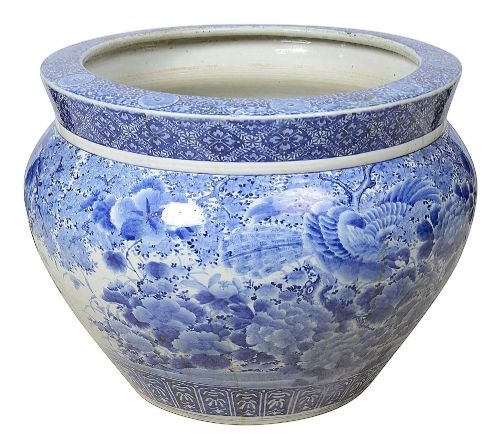
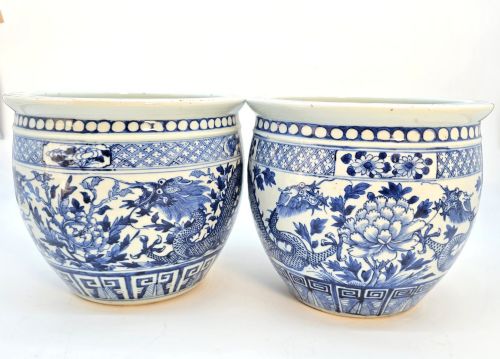


Oriental Blue White Planter
Oriental blue white planter pieces bring hand-painted cobalt botanical scenes into a room, offering deep traditional craft.
Oriental Blue White Planter
An oriental blue white planter takes the form of a large ceramic vessel designed to hold potted plants or display decorative fish. These pieces span centuries of Asian ceramic traditions, featuring prominently in Chinese and Japanese domestic interiors.
Buyers meet vessels ranging from eighteenth-century Arita Imari wares to late nineteenth-century Chinese fish bowls and Japanese jardinieres. Forms vary from deep cylindrical planters to wide bowls, occasionally accompanied by associated hardwood stands.
The aesthetic centres on cobalt underglaze decoration applied to white ceramic bodies. These vessels function as striking interior focal points, combining robust utility with intricate historical ornamentation.
How oriental blue white planter pieces were made
Potters shaped these heavy vessels from ceramic and porcelain bodies, applying cobalt pigment directly onto the unglazed surface before firing. This cobalt underglaze technique required immense skill to prevent the blue pigment from running during high-temperature kiln firings.
Following the primary cobalt firing, certain pieces received supplementary details in enamel colours. Artisans then applied transparent glaze over the entire ceramic surface to achieve the characteristic glossy finish.
Oriental Blue White Planter Retail Price Guide 2026
Typical asking prices for oriental blue white planter among the pieces listed under this phrase on Sellingantiques today, from the lower quarter to the upper quarter. They describe what is for sale here now, not the wider market.
Some large vessels double as fish bowls, proving that goldfish once enjoyed remarkably palatial housing.
What varies in quality across oriental blue white planter items
Quality rests in the clarity and depth of the cobalt pigment against the white ceramic ground. Superior examples display sharp, hand-painted brushwork with distinct tonal gradations within the blue motifs.
The weight, wall thickness, and symmetry of the porcelain or ceramic body dictate the structural integrity of the vessel. Finer pieces demonstrate careful kiln control during firing, resulting in a smooth glaze free from major surface distortions.
The Oriental Blue White Planter Glossary
- Cobalt Underglaze
- Pigment applied to the ceramic body before glazing and firing. This method ensures the blue decoration remains permanently sealed beneath a glassy protective layer.
- Jardiniere
- A large ornamental pot or bowl designed to hold growing plants. These vessels often sit directly on floors or low tables.
- Imari
- A style of Japanese porcelain featuring cobalt blue and iron red, often highlighted with gold. It originated in the Hizen province and gained immense popularity in Europe.
- Chinoiserie
- European artistic style reflecting Chinese motifs and techniques. Artisans in the West reinterpreted these elements in furniture, ceramics, and textiles.
Oriental Blue White Planter: Frequently Asked Questions
What is an oriental blue white planter used for?
These large ceramic vessels serve primarily as jardinieres for housing potted plants or as decorative fish bowls within interior spaces. Their robust construction accommodates substantial soil and root systems.
Historically, wealthy households utilised these decorative bowls in reception rooms and courtyards to display aquatic life or botanical arrangements.
How do I care for my planter?
Protect the glazed ceramic surface by placing a plastic liner inside the vessel before adding soil and plants. This prevents moisture from seeping into the porous ceramic body over time.
Clean the exterior gently using a soft, damp cloth without harsh chemical detergents. Handle heavy pieces with care to protect the rim and base from impact.
How do I date a blue and white planter?
Examine the ceramic body, glaze characteristics, and painting style to establish the period of manufacture. Eighteenth-century pieces often show distinct potting traits and cobalt tones compared to late nineteenth-century examples.
Reference the specific motifs, such as traditional Japanese Meiji or Qing Dynasty designs, to narrow down the era of production.
Are these planters waterproof?
Most antique ceramic and porcelain vessels are mostly dense, but unglazed interior areas or historical hairline fractures can allow slow moisture seepage. Using a protective internal liner safeguards fine furniture surfaces.
Inspect the interior glaze before direct planting to ensure the vessel holds water safely without risking leakage onto wooden floors or stands.