



Victorian Imari Ceramic Vase
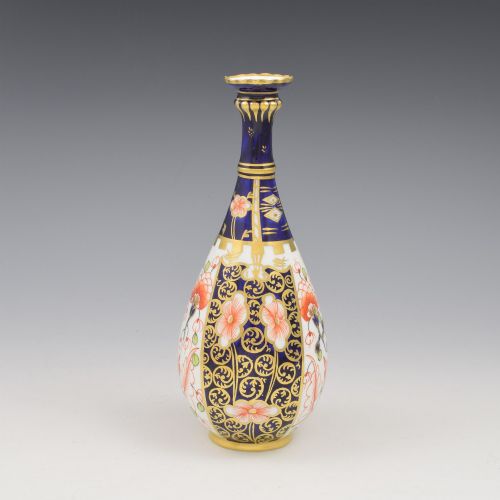
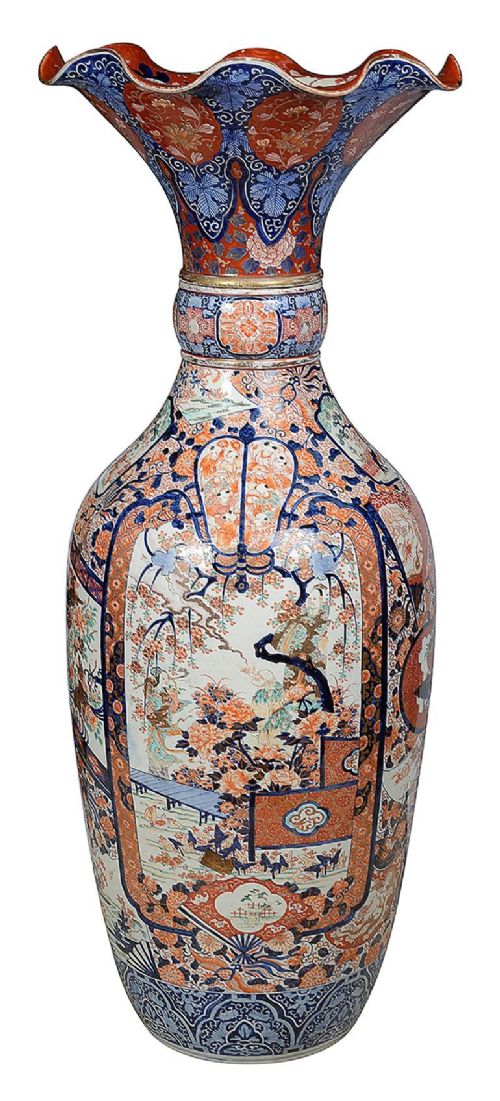
These Victorian imari ceramic vase pieces combine rich iron-red and cobalt blue pigments with gilded highlights for a striking decorative statement.
Victorian Imari Ceramic Vase
Buyers seeking a victorian imari ceramic vase typically encounter striking pieces originating from the nineteenth century, including large floor vases, spill vases, and lidded jars. These items draw heavily on Japanese Meiji period aesthetics and English adaptations such as Mason's ironstone china and Royal Crown Derby productions.
The selection ranges from large floor-standing examples standing nearly five feet tall down to cabinet pairs and double gourd vessels. Alongside traditional Japanese imports, English potteries created robust ironstone variants featuring characteristic imari palettes and chinoiserie motifs.
Materials and manufacture
Potters utilised durable ceramic, porcelain, and heavy ironstone bodies as the foundational structure for each vessel. These surfaces received underglaze cobalt blue painting and vibrant overglaze enamel work.
Artisans applied intricate gold leaf and gilt details by hand over the fired glaze to accentuate specific panels and borders. Brass mountings occasionally appear on pieces converted later into table lamps.
Victorian Imari Ceramic Vase Retail Price Guide 2026
Typical asking prices for victorian imari ceramic vase among the pieces listed under this phrase on Sellingantiques today, from the lower quarter to the upper quarter. They describe what is for sale here now, not the wider market.
The listings feature nineteenth-century items incorporating ceramic, porcelain, ironstone, enamel, and gold leaf across English and Japanese origins.
Assessing quality and finish
The standard of a victorian imari ceramic vase rests upon the crispness of the hand-painted cobalt underglaze and the precision of the iron-red enamel details. Superior examples exhibit dense, carefully controlled gilding that remains intact across raised surface contours.
Scale and form dictate much of the desirability, with tall double gourd shapes and large lidded pairs representing significant manufacturing achievements. The clarity of the ceramic body, whether fine porcelain or sturdy ironstone, further defines the grade of the piece.
Royal Crown Derby·Mason's
The Victorian Imari Ceramic Vase Glossary
- Imari
- A style of ceramic decoration originating in Japan, characterised by a palette of cobalt blue, iron red, and gold.
- Ironstone
- A dense, durable type of earthenware developed in nineteenth-century England as a robust alternative to porcelain.
- Double Gourd
- A vase shape featuring two rounded bulbous sections stacked vertically, resembling traditional Asian water gourds.
- Potpourri
- A vessel designed with a pierced or vented cover to hold dried scented plant materials for room fragrance.
- Gilt
- A thin layer of gold applied to the ceramic surface to provide decorative metallic highlights.
Victorian Imari Ceramic Vase: Frequently Asked Questions
What is an imari vase?
An imari vase is a ceramic vessel decorated in a distinctive palette featuring underglaze blue, iron red, and gold highlights.
This style originated in Japan before being widely emulated by English potteries during the nineteenth century.
How do I identify a Victorian imari piece?
You can identify these pieces by their characteristic red and blue colour scheme, often enriched with gold leaf over a ceramic or ironstone body.
Many examples also incorporate traditional Japanese motifs or Victorian interpretations of Eastern designs.
Were these vases used for flowers?
While some forms like spill vases held cut stems, many larger lidded jars and double gourd vessels served purely as decorative ornaments.
Potpourri variants were specifically utilised to hold scented dried materials to freshen interior spaces.
How do I care for my ceramic vase?
Keep the vessel away from direct sunlight to protect the overglaze enamels and delicate gold leaf highlights from fading.
Dust the surface gently with a soft, dry cloth and avoid using chemical cleaning agents.