


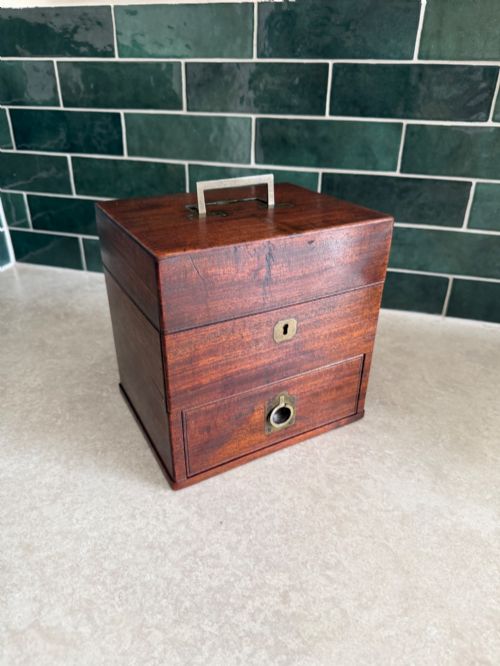
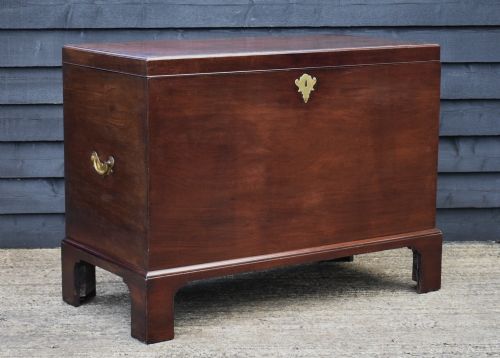
Antique Wooden Campaign Box
An antique wooden campaign box is a portable piece of officers' furniture designed for travel, offering sturdy storage and fold-out writing surfaces for life on the move.
Antique Wooden Campaign Box
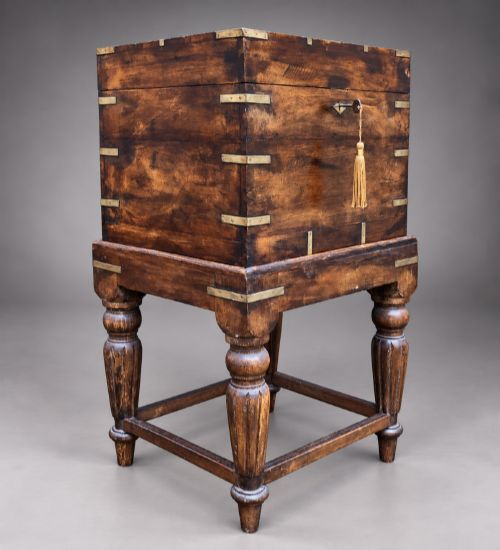
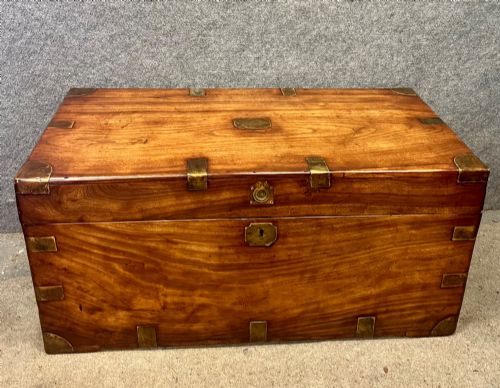
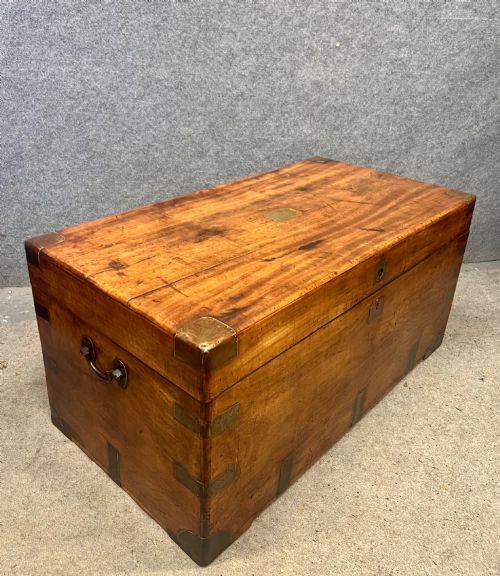
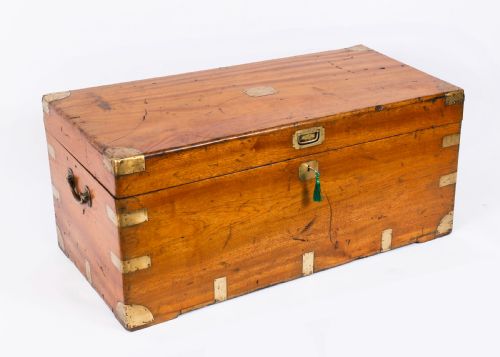
An antique wooden campaign box is encountered primarily in the form of large trunks, storage chests, and fitted writing slopes used by military officers during the Georgian, Regency, and Victorian periods. These pieces were built for constant transit across the British Empire, functioning as both desk and luggage.
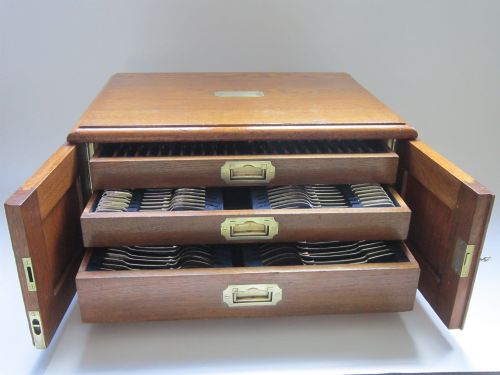
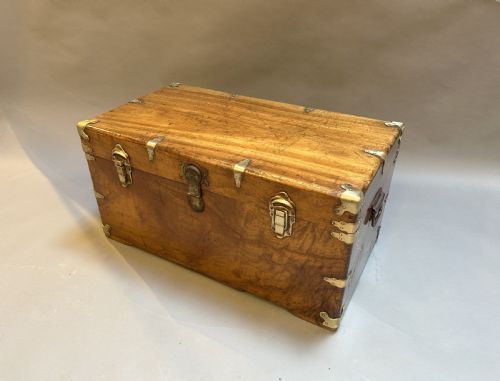
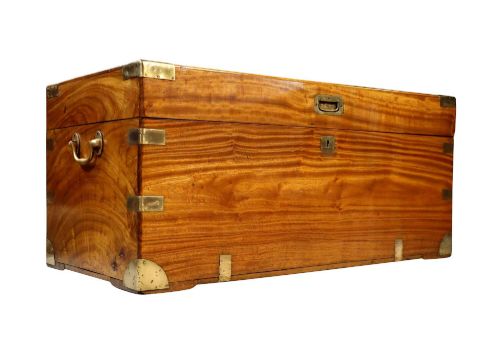
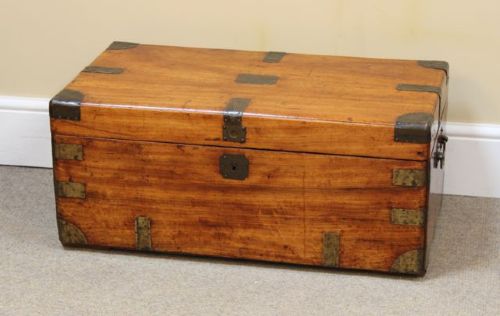
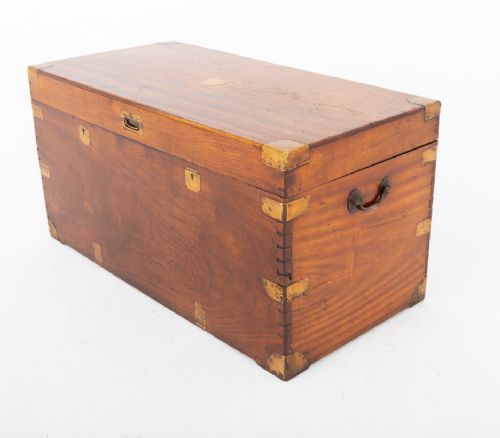
The inventory on this page consists heavily of chests and trunks rendered in dense timbers alongside smaller writing boxes and correspondence stations. Many examples reflect military deployment through inset brass handles and reinforced corners designed to withstand rough handling.
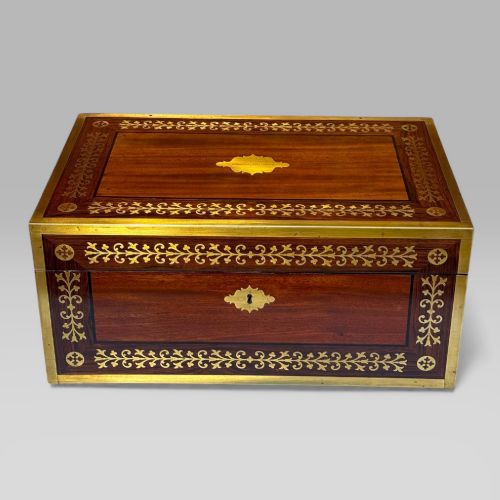
Originating from colonial postings and sea voyages, these items range from heavy camphorwood chests to refined mahogany and rosewood writing slopes inlaid with brass. Buyers select them for their combination of robust utilitarian construction and compact interior compartments.
Materials and Construction
Constructed to endure tropical climates and sea journeys, campaign boxes rely on durable timbers such as camphorwood, teak, mahogany, padouk, and rosewood. Camphorwood was especially favoured for chests due to its insect-repellent properties.
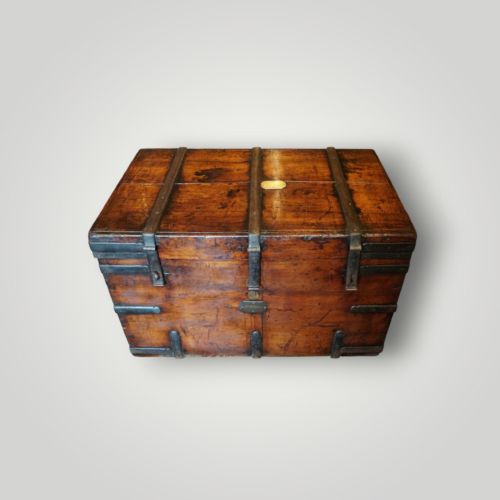
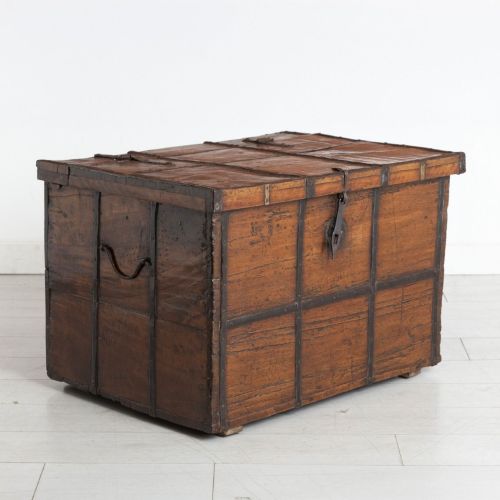
Strength is reinforced through heavy brass binding, recessed carrying handles, and iron straps that protect the edges and corners from impact during transport. Joints and fittings are engineered to withstand humidity and constant movement without warping.
Several trunks carry the ghosts of former voyages, built rugged enough to survive Waterloo commissary generals and colonial postings.
Distinctions in Quality
Quality in a campaign box rests upon the grade of timber selected and the precision of the brass hardware integration. Superior pieces feature flush-fitting brass straps, secret drawers, and complex internal mechanisms that operate smoothly despite the wood's natural response to climate.
Finer boxes display superior joinery, carefully matched wood grains, and complete original interior fittings such as inkwells, pen trays, and velvet-lined writing surfaces. Lesser examples show simpler construction, plain pine secondary woods, or replaced hardware.
The Antique Wooden Campaign Box Glossary
- Campaign box
- A portable chest or box constructed for military officers or travellers, featuring protective brass corners and recessed hardware. These pieces dismantle or fold for ease of transport.
- Writing slope
- A portable box with a hinged, slanted lid that opens to reveal a desk surface and storage compartments for paper and ink. They often include secret drawers activated by hidden catches.
- Brass bound
- Furniture edged or reinforced with brass strips and corner pieces to prevent splitting during transit. This technique also provides a decorative contrast to dark tropical hardwoods.
- Camphorwood
- An aromatic timber native to Asia, prized for its distinct scent and natural resistance to moths and dampness. It was widely used for trunks transported on long sea voyages.
- Apothecary box
- A fitted wooden chest containing small glass bottles, scales, and medical supplies for travelling physicians or officers. These interior compartments are precisely sized for medicinal vials.
Antique Wooden Campaign Box: Frequently Asked Questions
What is an antique wooden campaign box?
An antique wooden campaign box is a portable storage chest or writing desk designed for military officers on active service during the eighteenth and nineteenth centuries. These items were built to withstand arduous travel by land and sea.
They typically feature reinforced corners, recessed brass handles, and robust hardwoods like mahogany, teak, or camphorwood. Their primary function was to transport personal belongings, documents, and writing materials securely.
How were campaign boxes used?
Campaign boxes served dual purposes as luggage and working furniture for officers stationed abroad or on naval vessels. Trunks held uniforms and equipment, while smaller boxes functioned as portable desks for correspondence and record-keeping.
The hinged lids and fold-out writing surfaces allowed officers to write letters and review maps in temporary encampments or cabins without standard furniture. Many included specialised compartments for inkwells, stationery, and valuables.
How do I tell Georgian campaign pieces from Victorian ones?
Georgian campaign pieces, dating from the mid-eighteenth century into the early nineteenth century, frequently employ dense mahogany with robust iron or brass bindings. They often emphasise simple, heavy-duty utility designed for military transport.
Victorian examples, produced from the mid-nineteenth century onward, often feature refined finishes in burr walnut, rosewood, or camphorwood with more elaborate brass inlay. They frequently incorporate sophisticated internal locking mechanisms and fitted stationery compartments.
How should I care for camphorwood furniture?
Camphorwood furniture benefits from placement away from direct sunlight and extreme temperature fluctuations, which can cause the timber to dry out. Maintaining stable indoor humidity preserves the natural oils in the wood.
Dusting with a dry, soft cloth is generally sufficient for maintenance. Avoid harsh chemical polishes that might damage the natural finish or diminish the characteristic aroma of the wood.