



19th Century Collectors Box
A 19th century collectors box organises small treasures and curiosities with fitted drawers, compartments, and secure desktop portability.
19th Century Collectors Box
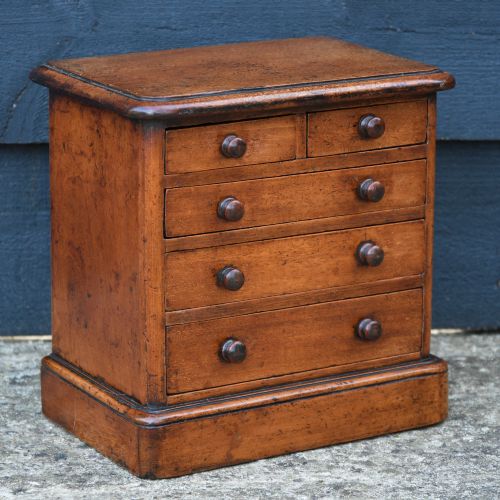
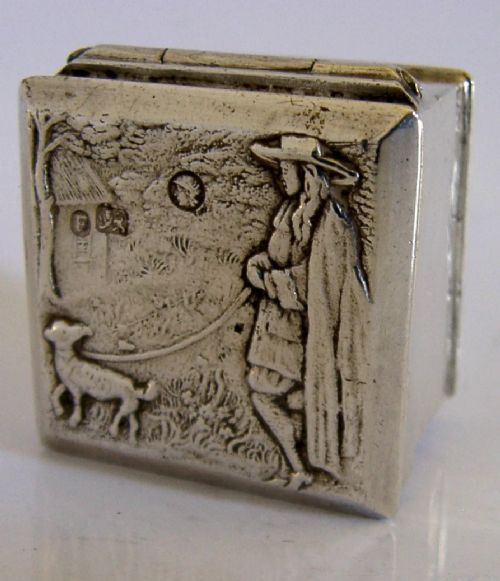
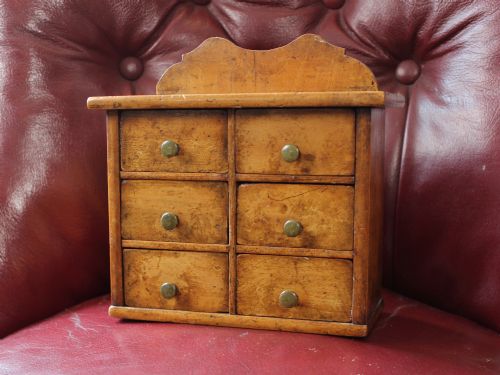
A 19th century collectors box serves specialised storage needs, ranging from miniature chests of drawers and tabletop cabinets to letter boxes, snuff containers, and microscope slide cases. These pieces reflect the Victorian and Regency fascination with classification, housing everything from natural history specimens and coins to jewellery and documents.
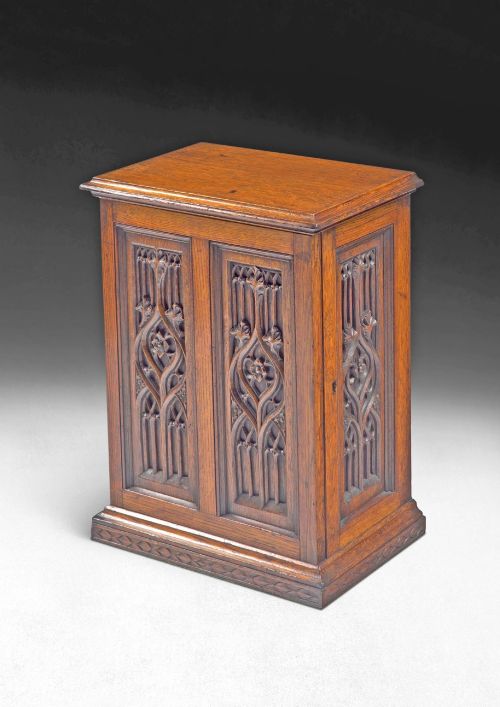
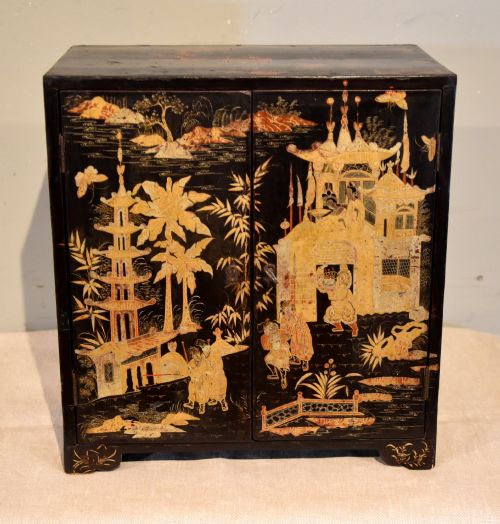
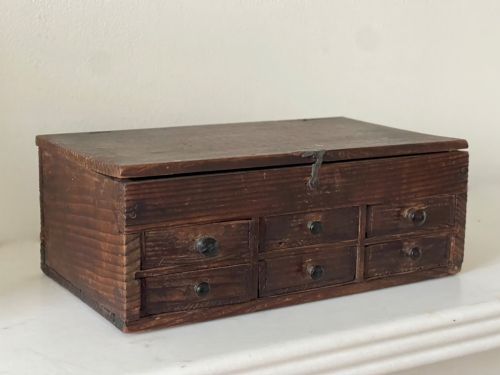
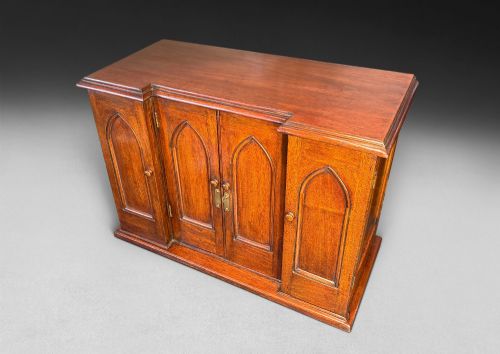
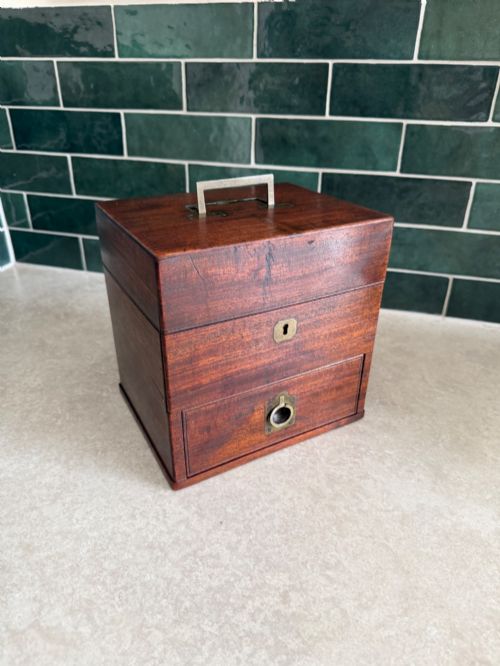
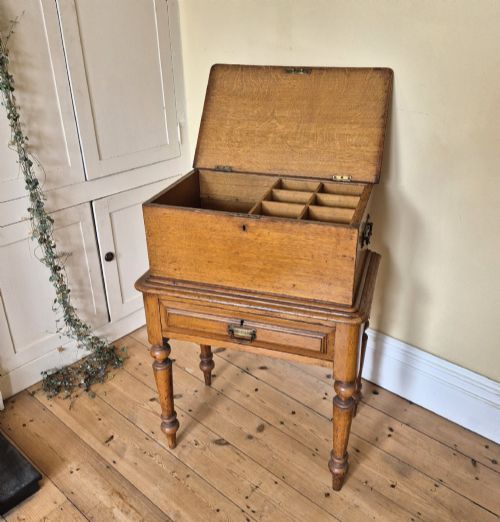
The most common formats met on this page include tabletop mahogany, burr walnut, and oak cabinets alongside small apprentice chests and treen containers. Many items feature multi-drawer configurations or fitted interiors designed for specific objects like apothecary supplies, cigars, or watchmaker parts.
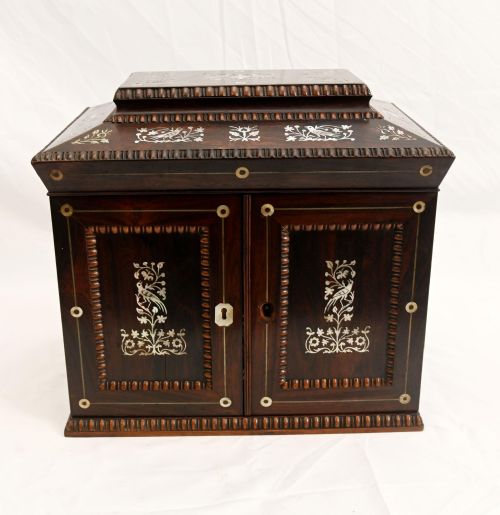
Origins span English, Scottish, and French workshops, utilising regional timbers and decorative inlays such as mother of pearl and brass. Buyers choose these objects for their practical tabletop footprint and the intricate craftsmanship visible in small-scale cabinetry.
How they were made
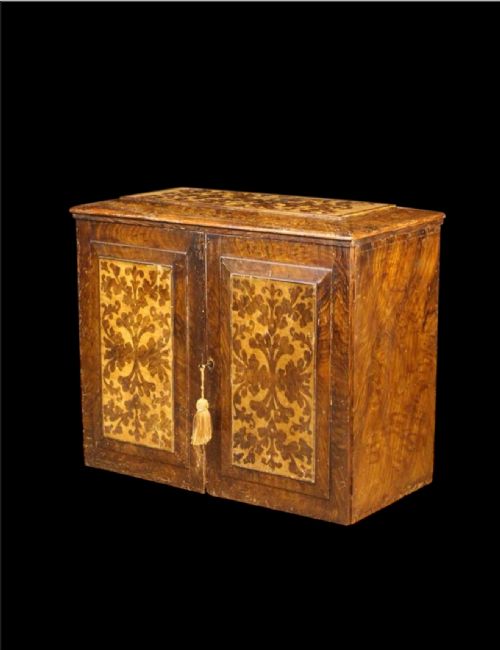
Cabinet makers utilised dense hardwoods like mahogany, walnut, burr walnut, rosewood, oak, and fruitwood, often selecting veneers to create figured exterior surfaces on carcases of solid timber. Brass handles, escutcheons, and lock plates reinforce corners and secure lids or fall fronts, while glass panels protect specimen cases and display sections.
Surface decoration relies on natural grain patterns, contrasting stringing, and mother of pearl inlay rather than heavy carving, though Gothic Revival and Arts and Crafts examples display more architectural moulding. Small turned elements, secret compartments, and dovetailed drawer construction demonstrate precision woodworking scaled down for desktop use.
19th Century Collectors Box Retail Price Guide 2026
Typical asking prices for 19th century collectors box among the pieces listed under this phrase on Sellingantiques today, from the lower quarter to the upper quarter. They describe what is for sale here now, not the wider market.
Listings feature mahogany, walnut, burr walnut, oak, and rosewood alongside specialised fruitwood and boxwood treen.
What varies in quality
Quality depends on the integrity of the timber selection, the tightness of the joinery, and the preservation of original fitted interiors rather than mere age. Superior examples retain working locks with matching keys, smooth-running miniature drawers, and intact linings of velvet, leather, or silk.
Finer pieces demonstrate harmonious grain matching across drawer fronts and lids, restrained inlay work, and robust carcass construction that prevents warping. Lesser examples show mismatched replacement hardware, clumsy repairs to delicate mouldings, or missing internal trays and dividers.
The 19th Century Collectors Box Glossary
- Treen
- Small wooden objects made by turning or carving, ranging from snuff boxes to small containers. These items display the natural grain of woods like boxwood and fruitwood.
- Escutcheon
- A protective plate surrounding a keyhole, usually fashioned from brass or bone. It prevents the timber around the lock from wearing during daily use.
- Dovetailed
- A joint formed by interlocking wedge-shaped fingers of wood glued together at right angles. This method provides robust construction for small drawer corners.
- Humidor
- A specialised storage box designed to maintain humidity for cigars, frequently lined with Spanish cedar or fine hardwoods. These often double as tabletop cabinets.
- Specimen case
- A shallow cabinet or box fitted with glass or multiple small drawers for displaying natural history samples. Microscope slides and insects formed common contents.
19th Century Collectors Box: Frequently Asked Questions
What did people store inside a 19th century collectors box?
Owners stored miniature curiosities, postage stamps, coins, jewellery, documents, and natural history specimens including microscope slides and minerals.
Specialised boxes accommodated specific items like cigars, apothecary bottles, watchmaker tools, or railway tickets.
How do I tell a Regency box from a Victorian one?
Regency pieces often display cleaner classical proportions, satinwood or rosewood veneers, and understated brass mounts reflecting earlier neoclassical tastes.
Victorian examples frequently introduce heavier timber choices like burr walnut and oak, with Gothic Revival, Arts and Crafts, or heavily figured decorative elements.
Are the locks and keys usually original?
Many boxes retain their original brass lever locks and working keys, though frequent use over generations led to replacements or lost keys.
Inspecting the interior mechanism and the fit of the escutcheon plate helps determine if the hardware dates to the original construction period.
How should I clean and care for wooden desktop boxes?
Dust regularly with a dry, soft cloth and maintain natural moisture levels in the wood by avoiding direct sunlight and extreme temperature shifts.
Occasional applications of appropriate wax nourish hardwood surfaces like mahogany and burr walnut without damaging antique finishes.
Can I use these cabinets for modern storage?
These compact pieces adapt easily to modern desks or dressing tables for organising small stationery, rings, watches, or keepsakes.
Fitted interior compartments and shallow drawers protect delicate items while offering a practical display surface.