



Antique Asian Jewellery Box
An antique asian jewellery box offers a tangible fragment of distant craftsmanship, holding precious ornaments within hard cabinets and lacquered surfaces.
Antique Asian Jewellery Box
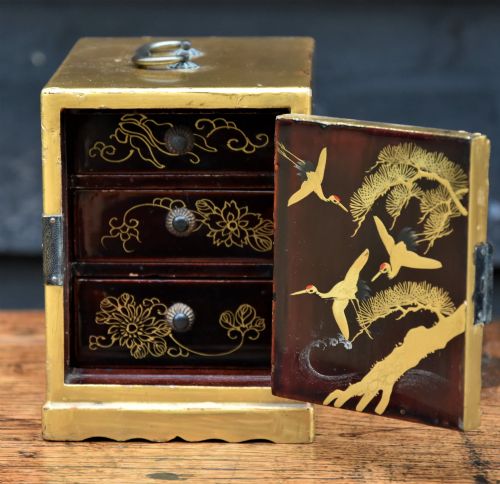
When you search for an antique asian jewellery box, you encounter a variety of tabletop chests, keepsake cases, and lacquered containers spanning the nineteenth and early twentieth centuries. These pieces originate from Japanese, Chinese, and Indian workshops, reflecting diverse regional aesthetics and export traditions.
The most common examples on this page are Japanese lacquered table cabinets and Chinese hardwood boxes inlaid with mother of pearl. These objects served utilitarian storage purposes for valuables while displaying intricate decorative schemes suited for domestic display.
Materials and construction methods
The construction relies heavily on native hardwoods such as elm and hongmu, often finished with deep black or gilt lacquer. Artisans built these small containers with traditional joinery to support the application of delicate surface treatments.
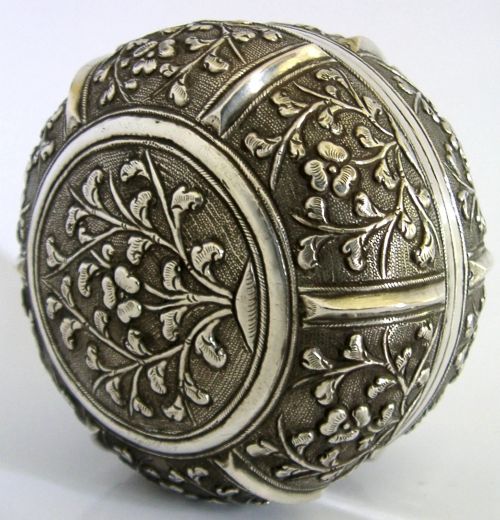
Decoration frequently incorporates mother of pearl inlay, brass hardware, and gold leaf applied to lacquer grounds. Silver is also utilised in specific export pieces, shaped into ornate trinket boxes and sharing cases.
Antique Asian Jewellery Box Retail Price Guide 2026
Typical asking prices for asian jewellery box among the pieces listed under this phrase on Sellingantiques today, from the lower quarter to the upper quarter. They describe what is for sale here now, not the wider market.
Current listings feature items from the 1800s through the 1920s, constructed in wood, lacquer, silver, and mother of pearl.
Distinctions in craftsmanship and finish
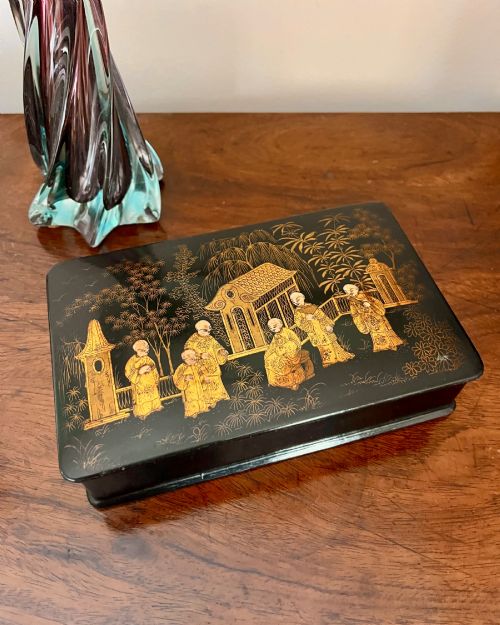
Quality in these pieces rests upon the precision of the joinery and the depth of the lacquer work. Superior examples show meticulous attention to detail in the placement of mother of pearl inlay and the execution of hand-painted chinoiserie motifs.
The integrity of the metal mounts, including brass hinges and swing-out mechanisms, differentiates standard utility items from finer decorative table cabinets.
The Antique Asian Jewellery Box Glossary
- Kodansu
- A small Japanese tabletop cabinet with multiple internal drawers, traditionally used for storing personal documents or small valuables. These miniature chests frequently feature elaborate lacquer and metal fittings.
- Chinoiserie
- A European artistic style reflecting Chinese motifs and techniques, often applied to nineteenth-century British furniture and decorative boxes. This style reinterprets Asian visual themes through Western design sensibilities.
- Hongmu
- A dense, dark tropical hardwood used in traditional Chinese furniture and box making. The material is prized for its natural lustre and ability to hold fine carved detail.
- Meiji
- A period in Japanese history spanning from 1868 to 1912, known for opening international trade and producing highly decorative export wares. Pieces from this era often combine traditional lacquer techniques with ornate metalwork.
Antique Asian Jewellery Box: Frequently Asked Questions
What is a kodansu box?
A kodansu is a small Japanese tabletop cabinet fitted with internal drawers and compartments. These pieces were designed to organise personal valuables and letters.
They often feature delicate black lacquer finishes and detailed metal hardware, making them distinct from simpler lidded trinket boxes.
How were travelling boxes used?
Travelling boxes provided secure, portable storage for personal items during journeys in the nineteenth century. Swing-out cases and small chests allowed owners to transport keepsakes safely.
Their compact dimensions made them practical accessories for domestic use or transit.
What distinguishes Chinese export silver?
Chinese export silver boxes display traditional Eastern motifs executed to satisfy Western aesthetic preferences. Artisans combined intricate repoussé work with solid silver construction.
These pieces typically date from the late nineteenth or early twentieth century.
How do I care for lacquer boxes?
Lacquered surfaces require gentle dusting with a soft, dry cloth to protect the delicate finish. Avoid exposure to direct sunlight and extreme humidity fluctuations to prevent cracking.
Proper environmental conditions preserve the integrity of both the wood base and the surface decoration.