

Antique Wine Cooler Box
An antique wine cooler box holds bottles in formal dining settings through periods spanning the eighteenth to the twentieth centuries.
Antique Wine Cooler Box
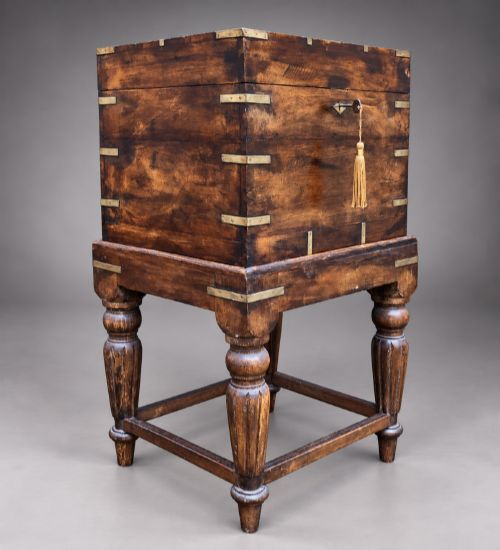
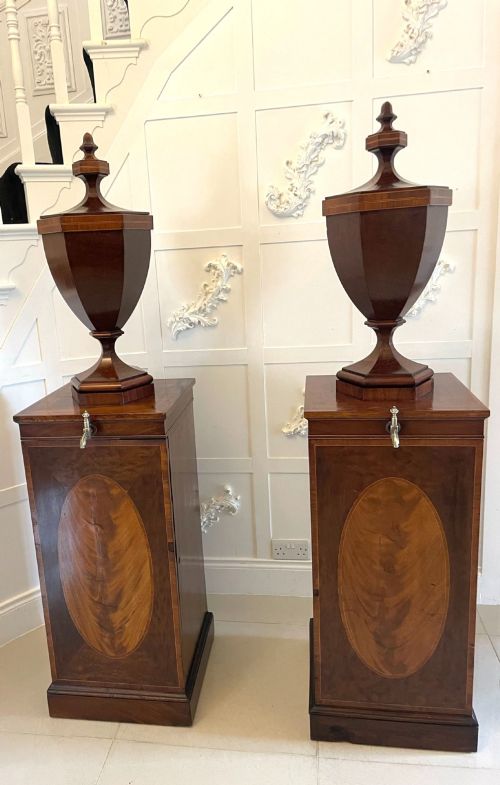
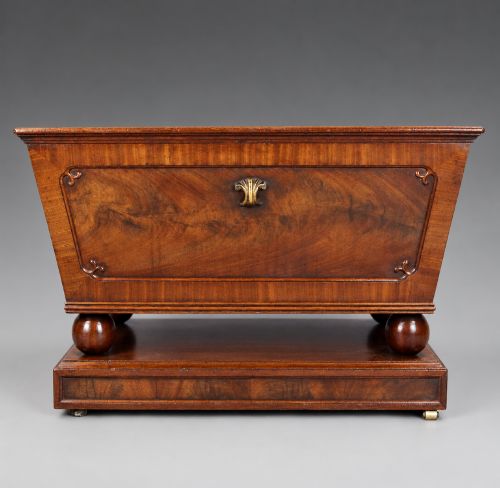
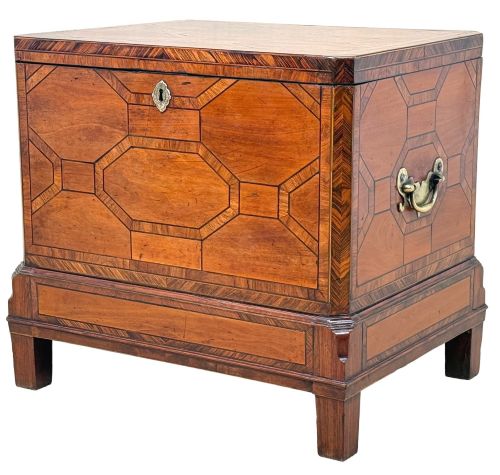
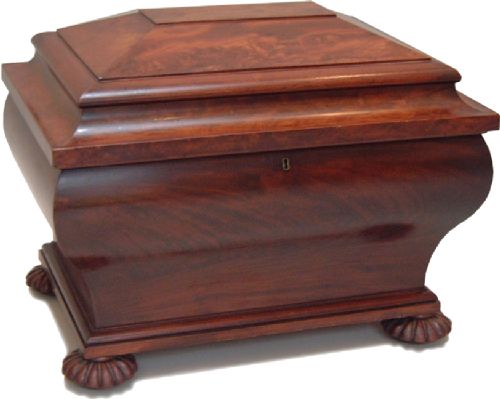
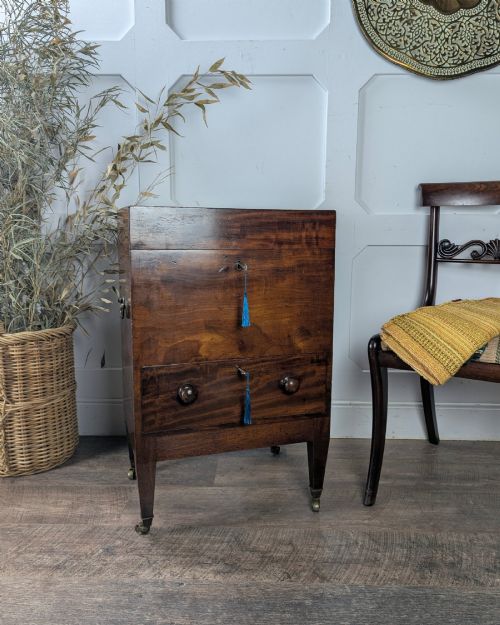
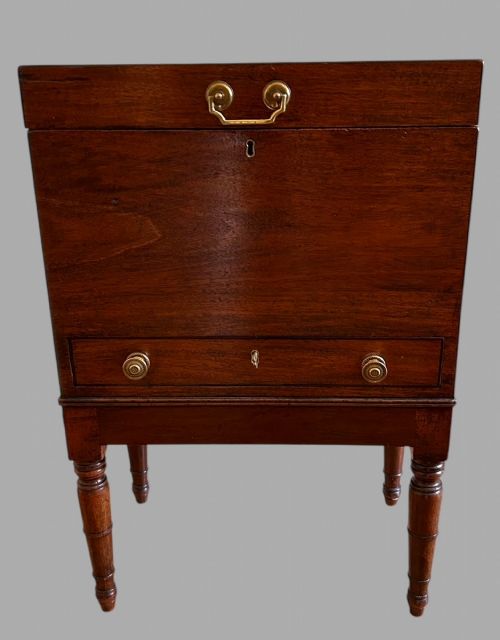
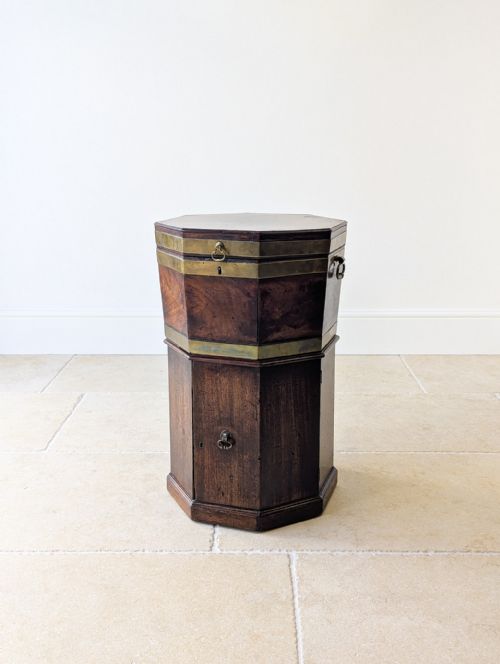
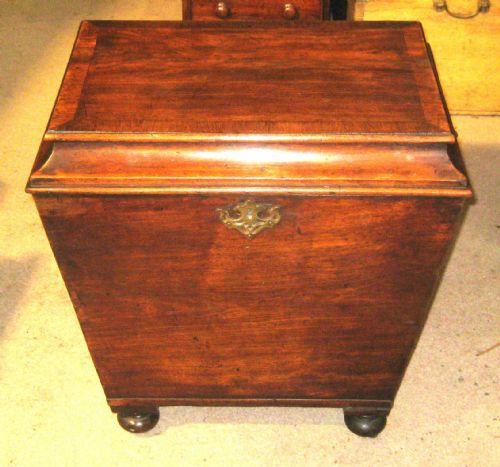
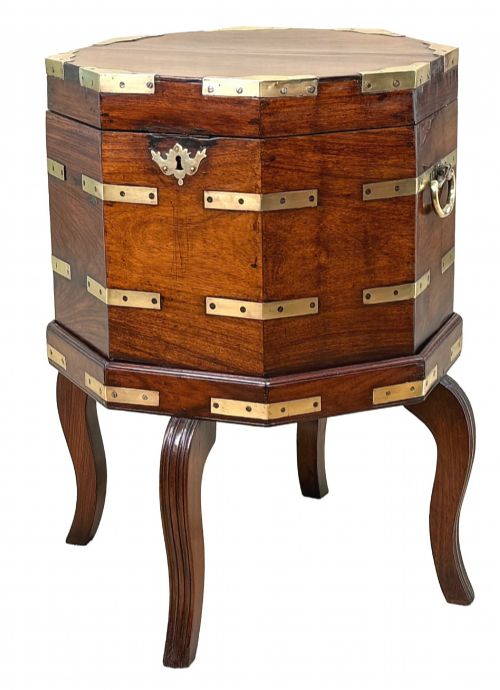
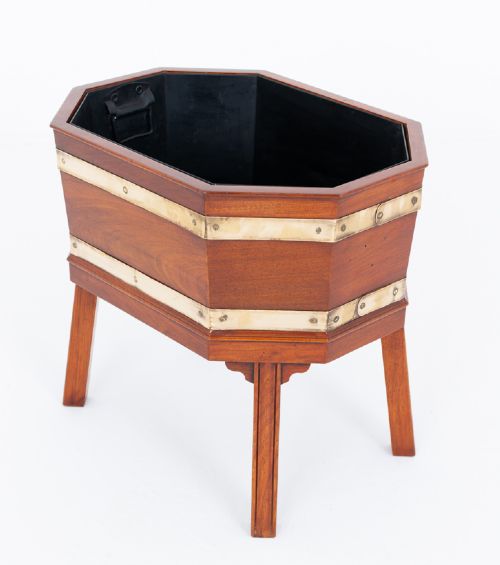
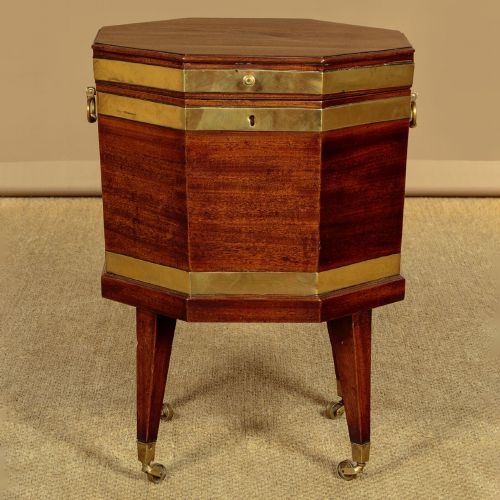
An antique wine cooler box functions as a specialised storage chest designed to chill or hold wine bottles during formal meals. Buyers searching for an antique wine cooler box encounter diverse regional forms, ranging from octagonal shapes to sarcophagus styles and tall pedestals with urns. The vast majority of examples on this page date from the Georgian and Regency eras through the nineteenth century, constructed primarily in mahogany.
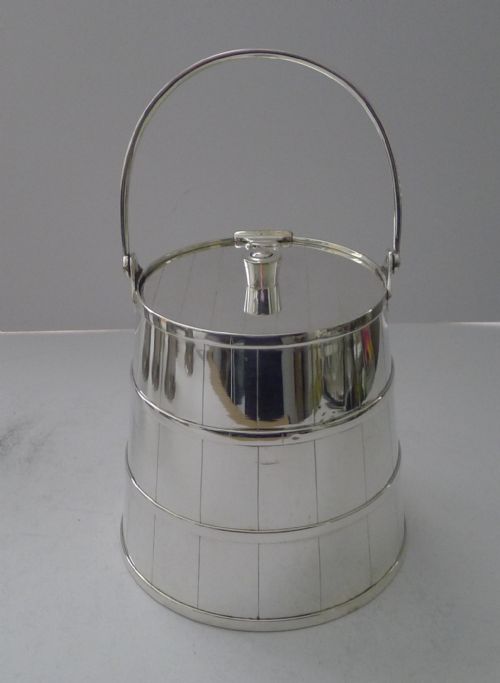
The objects frequently appear under various historical names including cellarettes, wine chests, and biscuit barrels, depending on their exact period and proportions. Many versions rest upon independent stands or legs, while others sit directly on the floor as freestanding units. The materials reflect the cabinet-making standards of their respective decades, incorporating decorative inlays and structural metals alongside primary timber frames.
What varies in quality
The distinction between tiers rests upon the choice of timber figure, the crispness of inlaid details, and the survival of original supporting stands. Examples displaying highly figured flame mahogany or richly contrasting satinwood and kingwood command higher regard among collectors. The presence of original hardware, such as brass binding and internal lead liners, marks a superior standard of preservation.
Manner of construction and attribution to notable cabinet-making firms influence the standing of individual boxes. Pieces retaining their matching original pedestals or stands demonstrate greater coherence in design than adapted or married units. Subtle decorative elements like finely cast ormolu mounts or intricate boxwood stringing separate standard utility containers from high-status dining room furniture.
Mahogany is the dominant timber across these listings, appearing alongside brass, boxwood inlay, flame mahogany, satinwood, pollard oak, and ormolu.
Edwards and Roberts·Gillingtons
The Antique Wine Cooler Box Glossary
- Cellarette
- A lockable container or box designed specifically for holding bottles of wine beneath a dining table or sideboard. These pieces evolved from simple wooden buckets into elaborate architectural furniture during the eighteenth century.
- Sarcophagus
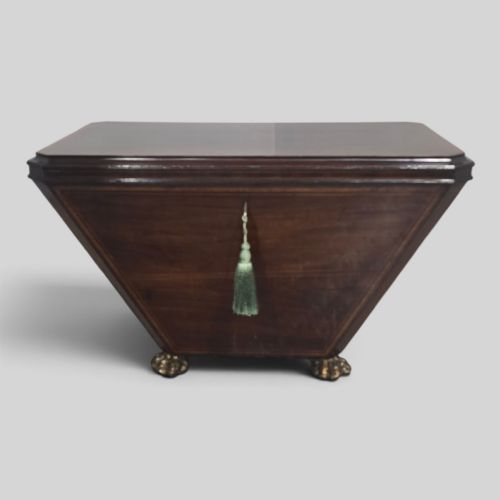
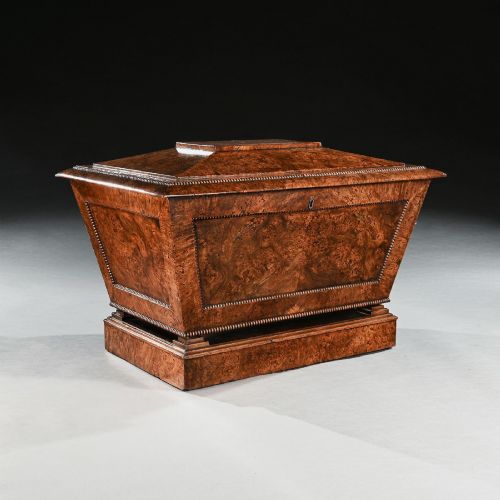
- A monumental container shape featuring a steeply pitched lid and curved or panelled sides, popular during the Regency period. This classical form draws inspiration from ancient stone tombs.
- Ormolu
- Gilded bronze mounts applied to furniture for decorative effect, common on French and English pieces from the late eighteenth century onward. The technique involves applying a gold amalgam to a bronze base.
- Padouk
- A heavy tropical hardwood with a reddish hue, utilised in Anglo-Indian and Georgian cabinet-making. This material provides exceptional durability and a deep natural lustre.
- Inlay
- A decorative technique where contrasting woods or metals are inserted into recesses carved into the primary wood surface. Boxwood and satinwood serve as common contrasting materials in these designs.
Antique Wine Cooler Box: Frequently Asked Questions
What is an antique wine cooler box?
An antique wine cooler box is a lidded container built to hold bottles and ice during dining occasions. These items served as portable cellars before fitted sideboards became common in dining rooms.
Craftsmen built them in various geometric and classical shapes using dense hardwoods. They functioned to keep wine accessible and chilled close to the dining table.
How were these boxes used historically?
Servants filled the internal compartments with ice and water to chill wine bottles before or during dinner service. The lockable lids ensured that expensive spirits and wines remained secure.
After meals, the boxes stored remaining bottles safely away. Their substantial weight meant they typically remained stationary in the dining room or hall.
How do I identify a Regency wine cooler?
Regency examples frequently adopt the sarcophagus shape with bold mahogany veneers, lion paw feet, and heavy brass ring handles. They reflect a classical architectural influence popular in the early nineteenth century.
Many feature substantial proportions and restrained classical ornament. The use of flame mahogany and Pollard oak is particularly characteristic of this period.
Do these coolers still contain lead liners?
Some surviving examples retain their original internal lead linings designed to hold melting ice. Other pieces have had their lead removed or replaced during past centuries for alternative storage use.
The presence of an original lead liner adds to the historical completeness of the object. Collectors look closely at the interior condition when assessing authenticity.