
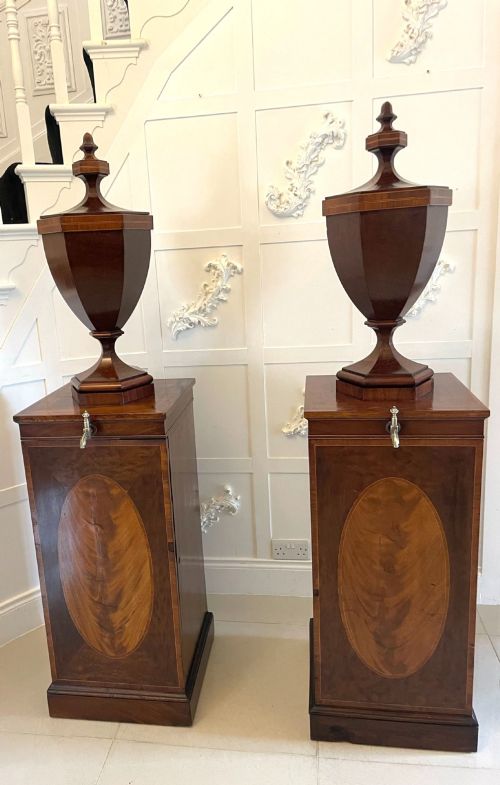
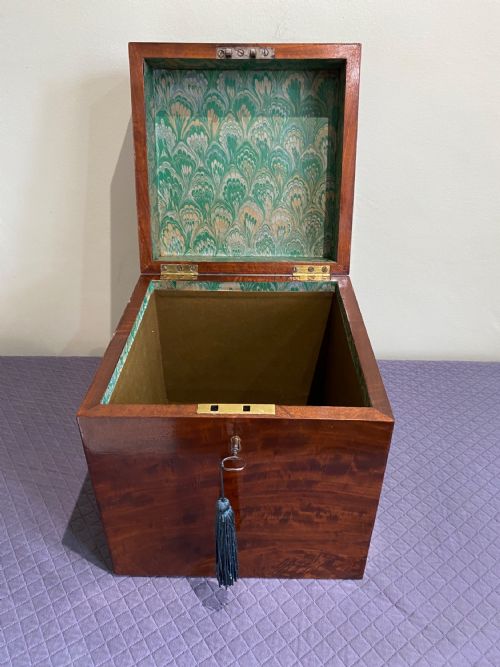
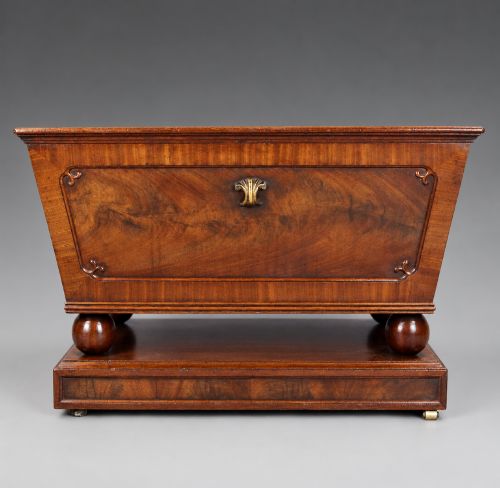
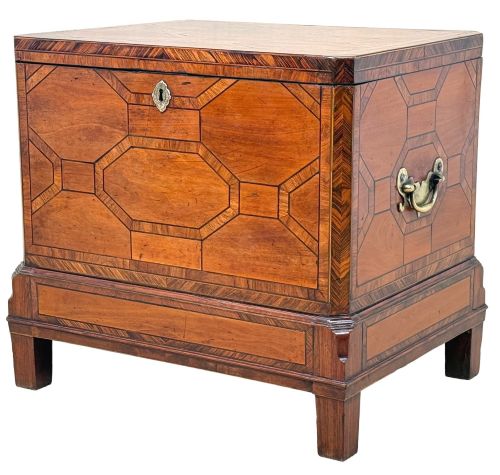
Georgian Cellarette Box
A georgian cellarette box is a robust storage container built to hold bottles safely at table, offering both architectural presence and practical service.
Georgian Cellarette Box
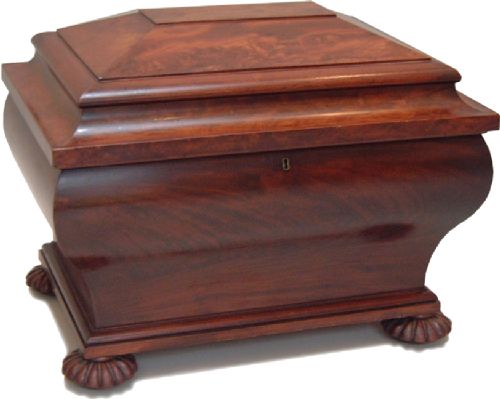
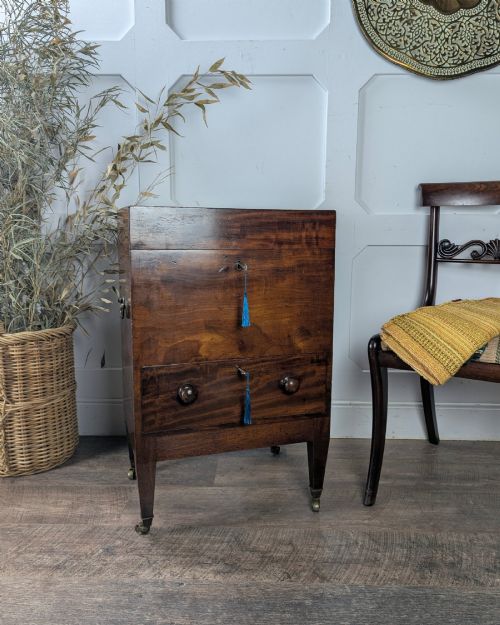
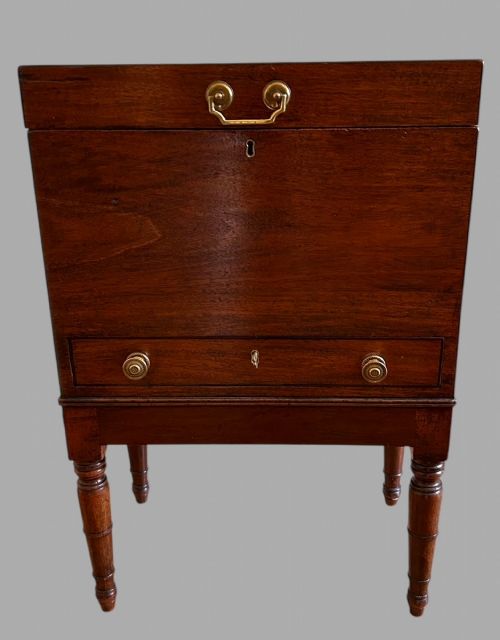
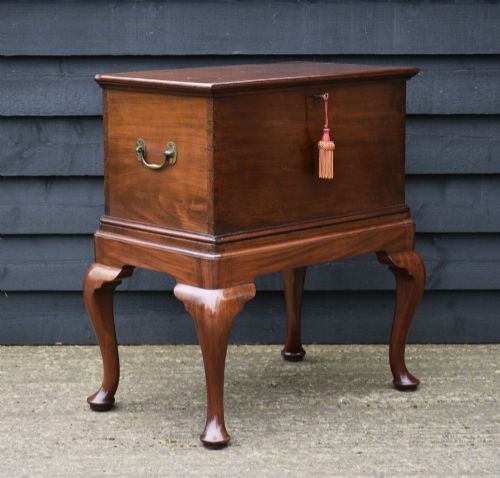
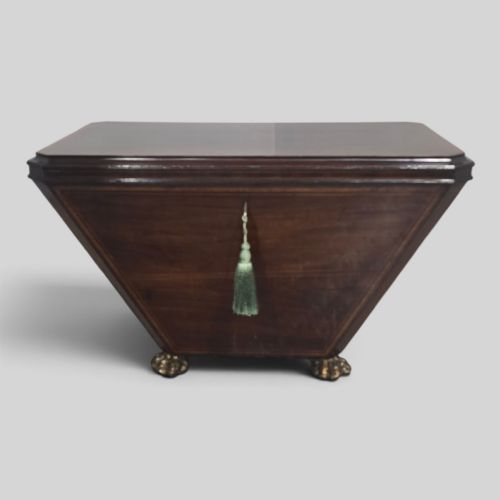
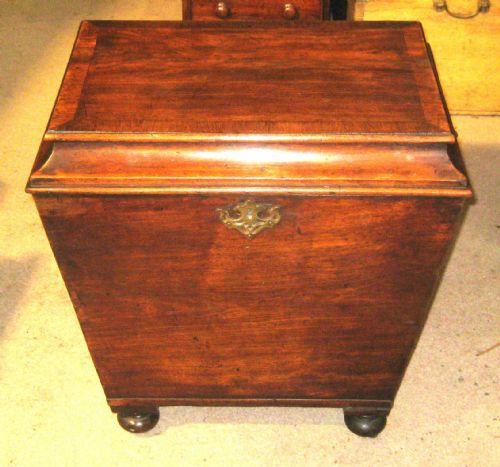
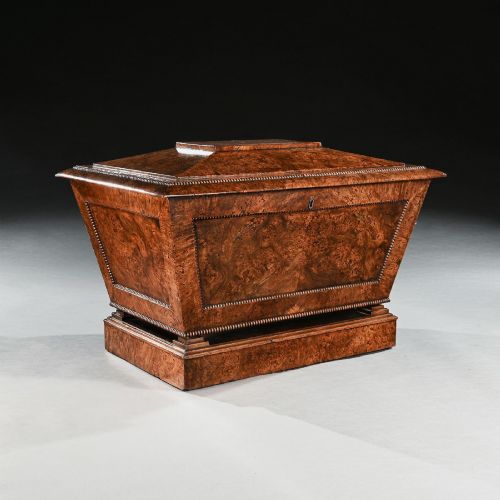
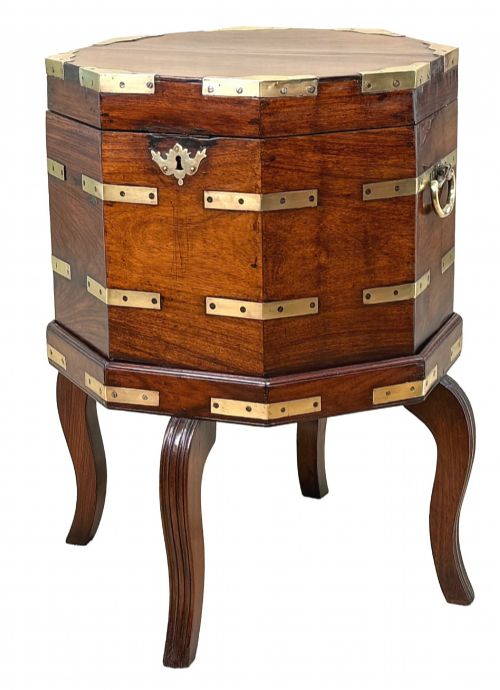
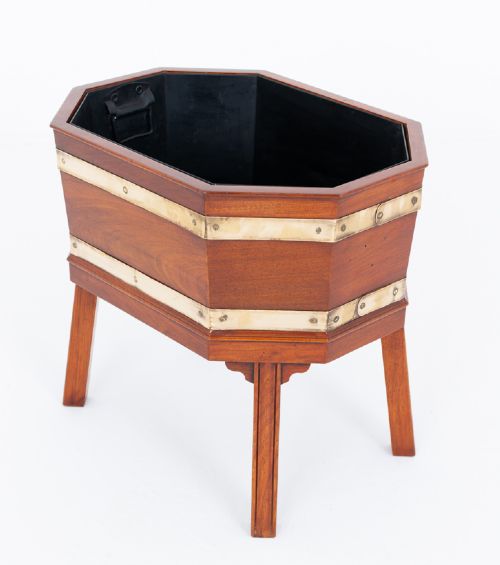
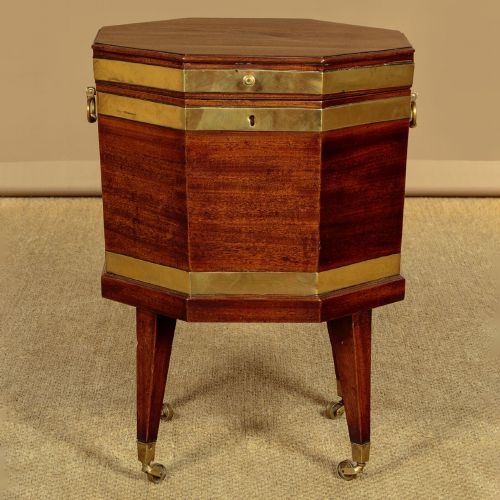
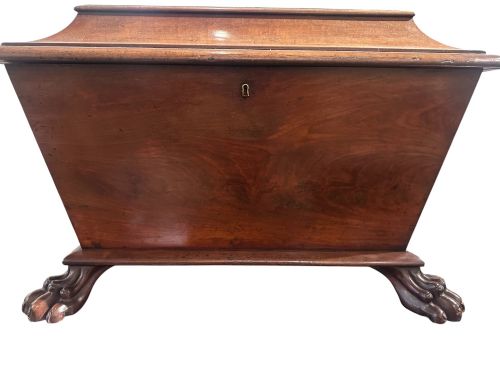
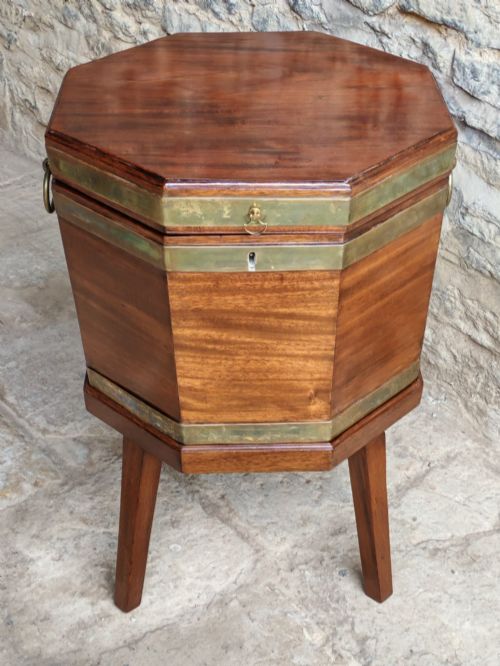
The georgian cellarette box category encompasses a variety of wine coolers and storage chests originating from the eighteenth and nineteenth centuries. Buyers frequently encounter sarcophagus shapes, octagonal forms, and rectangular boxes mounted on original stands or pedestals. These pieces served a distinct domestic purpose in large dining rooms, housing bottles of wine and spirits close to the dining table.
Most items on this page date from the Georgian and Regency periods, constructed in forms ranging from simple mahogany boxes to elaborate urns and sarcophagi. Makers employed timber such as flame mahogany, pollard oak, and satinwood to create substantial containers often lined with lead. The selection balances functional drink storage with the formal cabinet-making standards of the era.
Materials and Technique
Cabinet-makers relied heavily on solid and veneered mahogany, frequently selecting figured stocks such as flame mahogany and pollard oak to create striking exterior surfaces. Boxwood inlay, satinwood banding, and kingwood veneers added contrast and decorative detail to the primary timber bodies. Metal fittings, including brass bands, handles, and castors, provided structural reinforcement and mobility to heavy containers.
Internal construction often featured fitted wooden partitions or original lead linings designed to hold ice and bottles securely. Joinery techniques prioritized durability and weight management, accommodating the heavy loads of glass and liquid without compromising the exterior proportions. Skilled workshops also incorporated ormolu mounts and brass lion paw feet on higher-status examples.
Georgian Cellarette Box Retail Price Guide 2026
Typical asking prices for georgian cellarette box among the pieces listed under this phrase on Sellingantiques today, from the lower quarter to the upper quarter. They describe what is for sale here now, not the wider market.
Some nineteenth-century examples feature concealed compartments originally intended to hide private spirit decanters from thirsty household servants.
Judging Quality
Quality in a georgian cellarette box rests primarily on the selection of timber and the crispness of the secondary veneers and inlays. Superior pieces display carefully matched grain patterns across the main panels, alongside refined brass hardware that appears integral to the design rather than later addition. The survival of original internal components, such as lead linings and bottle dividers, significantly elevates a piece.
Proportion and architectural styling also dictate the standing of a container, with well-balanced sarcophagus curves and well-executed pedestals commanding greater attention. The depth of the timber's patina and the precision of the boxwood or satinwood stringing reveal the standard of the workshop that produced it. Finer examples maintain structural integrity without excessive timber replacement or clumsy restoration.
Edwards and Roberts·Gillingtons·Thomas Hope
The Georgian Cellarette Box Glossary
- Cellarette
- A lockable container or box designed specifically for holding bottles of wine and spirits in the dining room. They range from simple tabletop chests to large floor-standing sarcophagi.
- Sarcophagus form
- A stylistic shape featuring a domed lid and flared or tapered body resembling an antique stone coffin. This design became popular during the Regency period for large wine coolers.
- Lead lining
- A protective metal interior fitted inside wine coolers to hold ice and water without damaging the surrounding timber. Original linings remain valued indicators of authenticity.
- Flame mahogany
- A decorative veneer cut from the fork of a mahogany tree where the branch meets the trunk. It creates a distinctive, fiery flame-like pattern across the wood surface.
- Stringing
- A thin inlay of contrasting wood, such as boxwood, set flush into the primary timber surface to create linear borders and geometric panels.
Georgian Cellarette Box: Frequently Asked Questions
What is a georgian cellarette box used for?
These boxes were designed to hold wine bottles and spirits safely inside the dining room. They kept drinks cool, often utilising ice within lead-lined interiors.
Servants placed them beneath sideboards or beside dining tables during large meals. Today, buyers repurpose them as side tables or log storage beside fireplaces.
How do I spot a Regency period piece?
Regency pieces often feature heavier architectural forms, such as sarcophagus shapes with carved paw feet or classical brass ring handles. They frequently employ flame mahogany or exotic woods like pollard oak.
In contrast, earlier George III items lean towards rectilinear or octagonal boxes mounted on slender tapered stands. Mouldings on Regency pieces tend to be bolder and more classical in inspiration.
Are lead linings important?
Original lead linings are highly desirable because they confirm the piece was genuinely utilised as a wet wine cooler. They show how the interior managed ice and melting water.
Many surviving pieces have had their lead removed or replaced over the centuries. Finding one intact adds a layer of untouched authenticity to the object.
Can I use these as regular furniture?
These boxes function exceptionally well as standalone statement pieces in modern living spaces. Their generous proportions make them suitable for storing blankets, books, or magazines.
Placing them on original stands provides a stable surface for lamps or decorative objects. Their sturdy timber construction ensures they handle everyday domestic use without issue.