
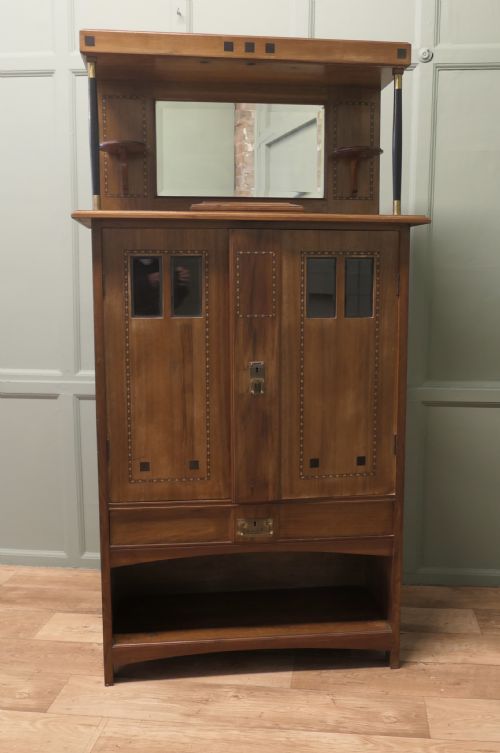
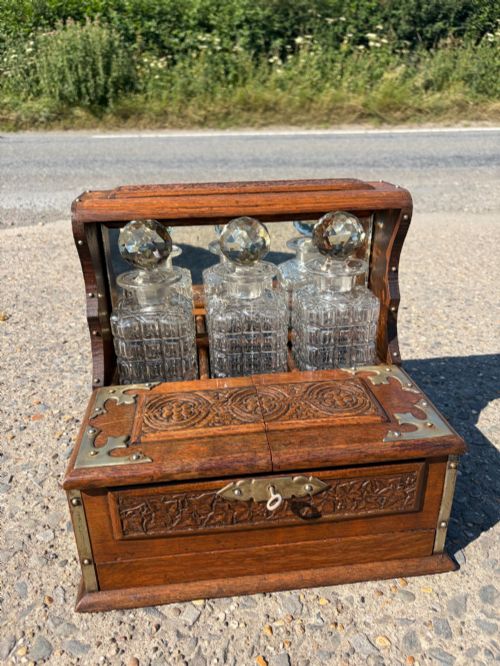


Oak Liquor Cabinet
An oak liquor cabinet holds your spirits securely while bringing solid timber architecture into a dining room or study.
Oak Liquor Cabinet
When you search for an oak liquor cabinet, you encounter a range of drinking furniture including tantalus cabinets, cocktail cabinets, and cellarettes. The examples span from the Georgian period through to the 1930s, encompassing Victorian, Edwardian, and Art Deco design.
The version you are most likely to meet on this page is the tantalus or drinks cabinet, typically fashioned from solid or veneered oak, often fitted with brass mounts and holding cut glass decanters.
How they were made
Cabinetmakers utilised sturdy oak, sometimes selecting pollard oak or burr oak for decorative figuring on the exterior surfaces. Marquetry stringing and brass mountings provided the primary decorative contrast to the warm timber.
Interiors frequently incorporated mirror glass panels to reflect the crystal decanters and glassware. Locks, hinges, and locking mechanisms were fashioned from brass to secure the bottles.
Listings feature oak combined with brass, mirror glass, and cut crystal across Victorian, Edwardian, and Art Deco periods.
What varies in quality
The distinction between tiers rests upon the choice of timber figure, such as pollard oak or burr oak, versus plain quarter-sawn boards. Elaborate marquetry stringing and sophisticated internal mechanisms also signal higher craftsmanship.
Completeness of the original cut glass decanters and the presence of functioning locking mechanisms with their keys determine the desirability of the piece.
Waring & Gillows
The Oak Liquor Cabinet Glossary
- Tantalus
- A locking drink cabinet that displays three decanters while preventing access until the frame is unlocked. The mechanism traps the stoppers securely under a metal bar.
- Cellarette
- A low cabinet or chest designed for holding wine bottles and decanters near the dining table. Georgian examples often utilised pollard oak.
- Marquetry
- Inlaid wood veneers forming decorative patterns on the cabinet surfaces. It requires precise cutting and fitting of contrasting timber slices.
- Secessionist
- An early twentieth century design style breaking away from historic revivalism. It manifests in clean geometric lines and stylised brass mounts.
Oak Liquor Cabinet: Frequently Asked Questions
What is a tantalus?
A tantalus is a locking frame that secures decanters by their stoppers, preventing anyone from pouring a drink without the key. It earned its name from the mythological figure of Tantalus.
Most versions hold three cut crystal decanters inside an oak housing equipped with brass handles and lockable side bars.
How do I use a cocktail cabinet?
Cocktail cabinets serve as dedicated home bars for mixing and serving spirits. They usually feature drop-down flaps that double as mixing shelves.
Mirrored interiors and glass shelving inside provide storage for glassware, shakers, and bottles of various heights.
How do I date an oak drinks cabinet?
Dating relies upon stylistic clues and construction methods. Pieces from the Georgian era display distinct classical proportions, whereas Victorian and Edwardian examples often feature heavier brass mounts and tantalus mechanisms.
Art Deco and 1930s cabinets introduce sleeker geometric forms, sometimes combining oak with burr walnut veneers.
Where should I place a cellarette?
Cellarettes function well in dining rooms or living spaces near entertaining areas. Their compact proportions allow them to sit beneath windows or beside sideboards.
Ensure the timber is kept away from direct heat sources and strong sunlight to protect the polish and prevent the oak from drying out.