




Wooden Spirit Chest
These wooden spirit chest options span Georgian and Victorian periods, offering fitted storage for bottles and crystal decanters.
Wooden Spirit Chest
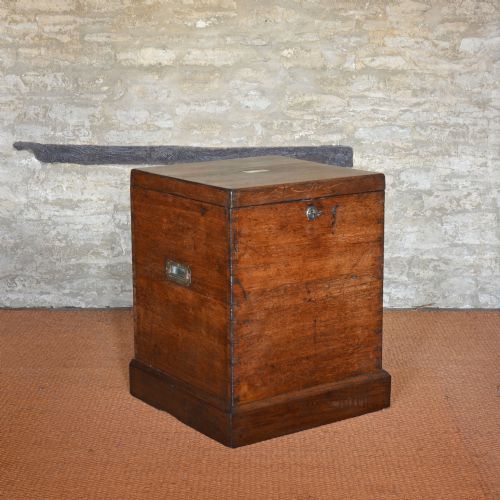
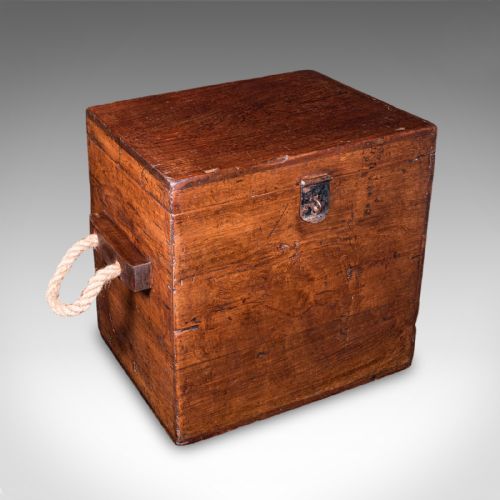
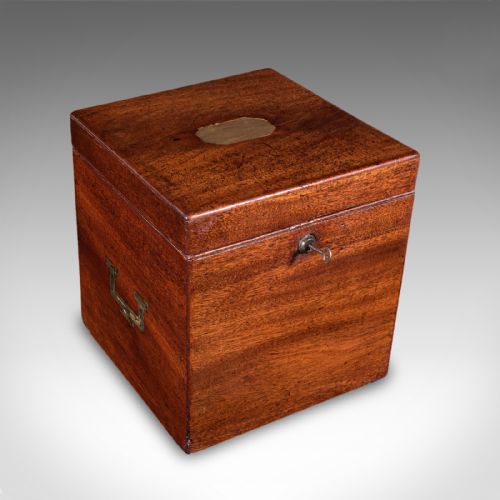
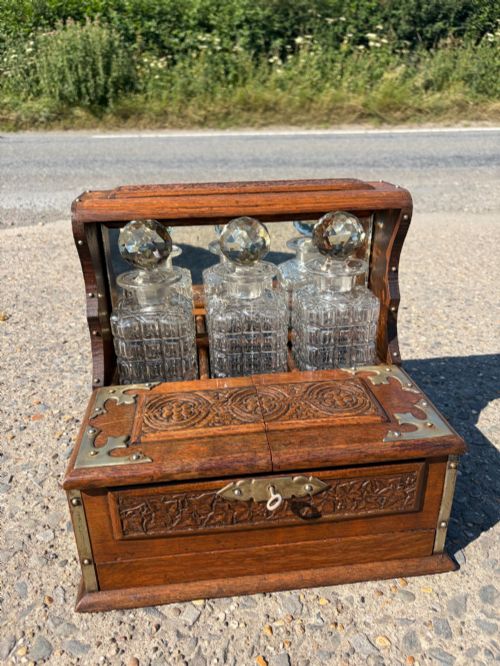
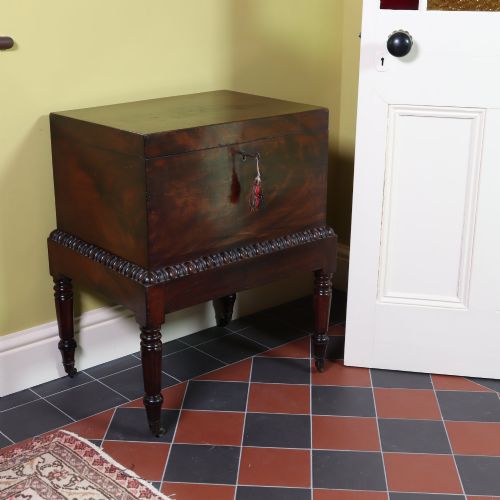
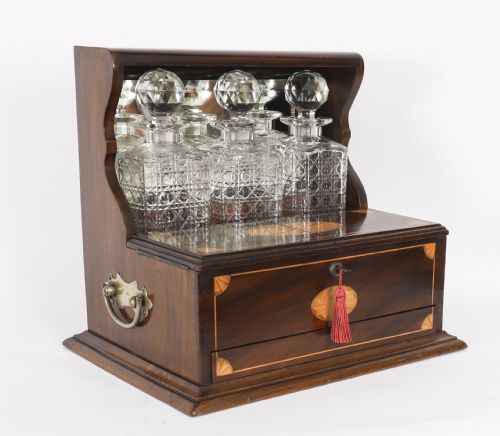
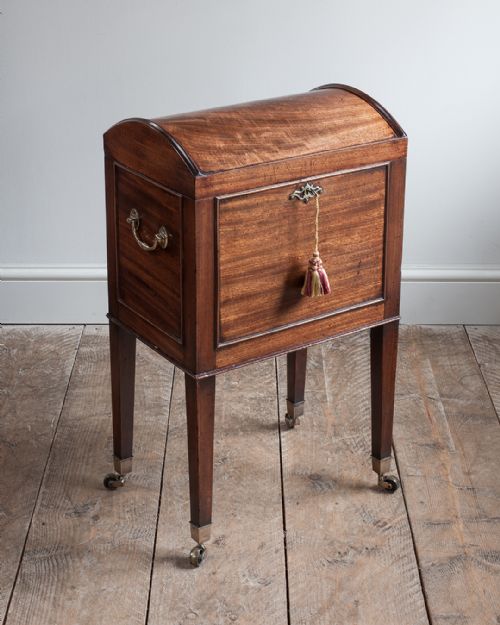
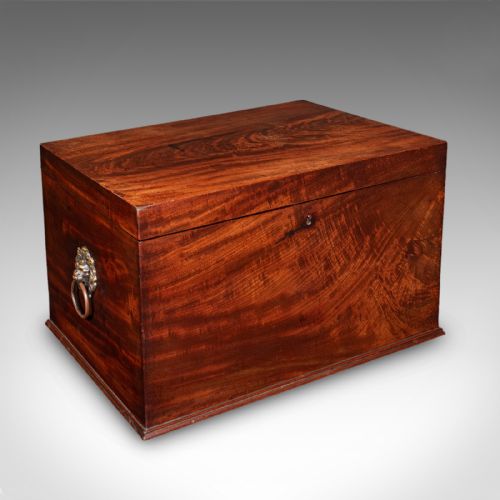
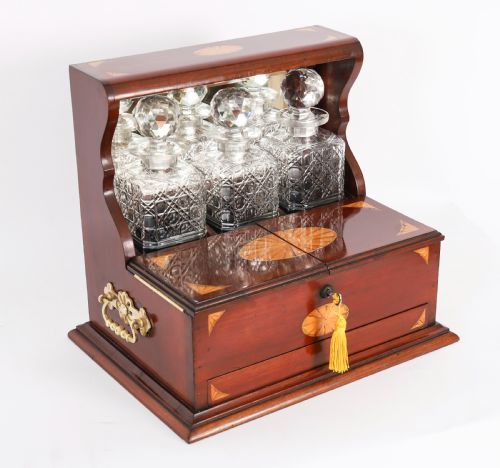
A wooden spirit chest houses beverages securely in fitted compartments, often taking the form of cellarettes, decanter boxes, and tantalus sets. Buyers seeking a wooden spirit chest encounter examples spanning Georgian, Regency, and Victorian eras.
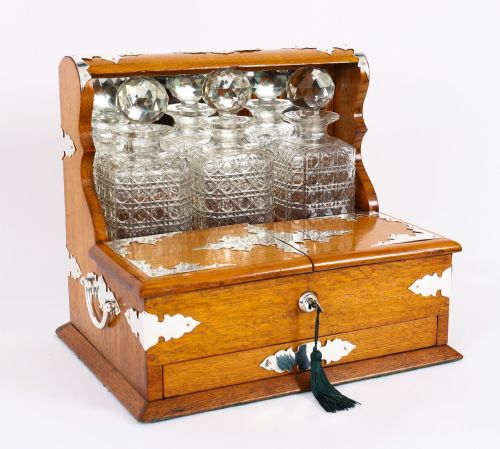
The objects on this page range from George III flame mahogany cellarettes to late Victorian oak tantalus designs incorporating games compendiums. These pieces served practical domestic and maritime storage functions in historic dining rooms and studies.
Interior fittings frequently include cut crystal decanters, glass bottles, and brass hardware alongside dedicated storage for glasses and accessories. Oak and mahogany serve as the primary timber choices across the listed inventory.
Materials and construction
Cabinet makers utilised dense hardwoods including mahogany, oak, walnut, and satinwood to construct sturdy bottle cases and cellarettes. Many pieces incorporate brass binding, inlay work, and specialised locks such as Bramah mechanisms to secure valuable contents.
Interiors were precision-fitted with wooden dividers and lined compartments to hold cut glass decanters and crystal bottles safely during transport or daily use. Joinery techniques from the eighteenth and nineteenth centuries ensure durability across these barware containers.
Wooden Spirit Chest Retail Price Guide 2026
Typical asking prices for wooden spirit chest among the pieces listed under this phrase on Sellingantiques today, from the lower quarter to the upper quarter. They describe what is for sale here now, not the wider market.
Listings feature items spanning from the eighteenth century through the Edwardian period, constructed in mahogany, oak, walnut, and satinwood.
Assessing quality and execution
Superior examples of a wooden spirit chest display fine timber grain selection, such as flame mahogany or marquetry stringing, combined with precise cabinet joinery. The integration of complex mechanisms like locking bars in a tantalus or multi-tier games compendiums indicates higher workshop skill.
The presence of original cut crystal decanters, matching glass sets, and robust brass mounts elevates the completeness and historical integrity of the piece. Subtle details in crossbanding and inlay separate standard storage boxes from exceptional cabinetwork.
The Wooden Spirit Chest Glossary
- Tantalus
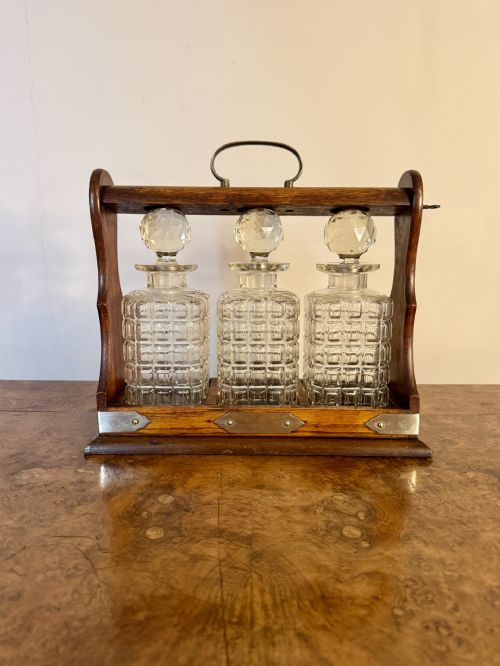
- A locking drink cabinet that secures decanters within a metal bar frame to prevent unauthorized access while displaying the contents. This device typically requires a key to release the bottles.
- Cellarette
- A freestanding or floor-standing wine and spirits cooler used in dining rooms during the Georgian and Regency periods. These containers often feature brass bands and interior partitions for bottles.
- Decanter box
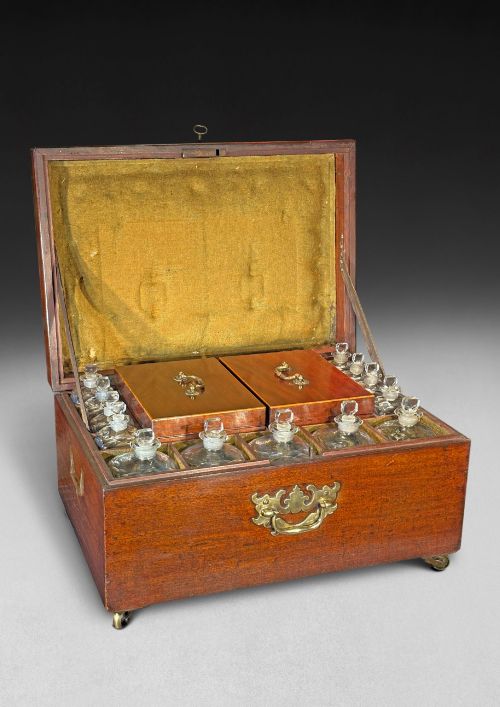
- A portable wooden case fitted with internal slots to transport glass bottles and crystal decanters safely. These boxes frequently include brass carrying handles and secure locks.
- Bramah lock
- A high-security cylinder lock invented by Joseph Bramah in the late eighteenth century, commonly fitted to quality antique storage boxes and spirit chests. Its patented design offered superior tamper resistance.
- Flame mahogany
- A highly figured timber veneer derived from the branch junctions of mahogany trees, prized by cabinet makers for its rippled, flame-like grain pattern.
Wooden Spirit Chest: Frequently Asked Questions
How do I date a wooden spirit chest?
Dating relies on timber choices, construction techniques, hardware styles, and overall design characteristics. Georgian pieces often feature flame mahogany and brass binding, whereas Victorian examples introduce mechanical tantalus frames.
Examining locks, interior linings, and secondary woods helps narrow down the manufacturing period between the eighteenth and early twentieth centuries.
Can I use a vintage tantalus today?
Many collectors utilise antique tantalus sets and decanter boxes for modern entertaining and home bar display. The fitted interiors accommodate standard crystal bottles and retain their practical function.
Careful placement away from direct heat sources helps preserve the historic wood finishes and original metal hardware during daily use.
What is the difference between a cellarette and a decanter box?
A cellarette is a larger floor-standing or heavy cabinet designed to hold multiple wine bottles and spirits near the dining table. They frequently feature deep wooden bodies with brass or metal reinforcement.
Decanter boxes are smaller, portable cases meant to sit on a table or sideboard, containing fitted slots specifically for carrying glass decanters and sometimes drinking glasses.