



Antique Stemware Pair
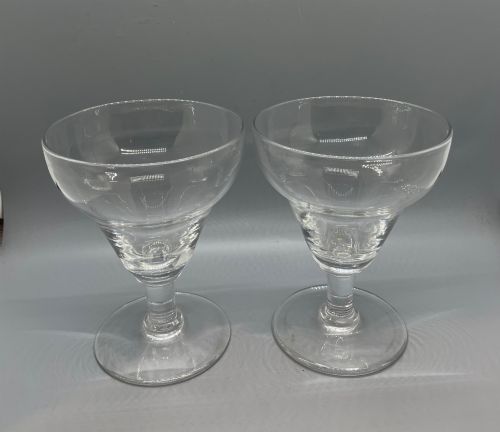
An antique stemware pair brings genuine eighteenth and nineteenth-century craftsmanship to the dining table, offering matching vessels for wine, rum, or champagne.
Antique Stemware Pair
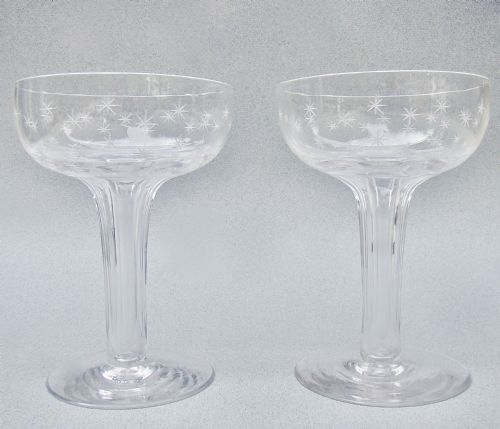
When searching for an antique stemware pair, collectors encounter matching sets of drinking vessels spanning the Georgian, Victorian, and Edwardian periods. These formations include wine glasses, rummers, champagne coupes, hock glasses, and liqueur glasses designed for historical table service.
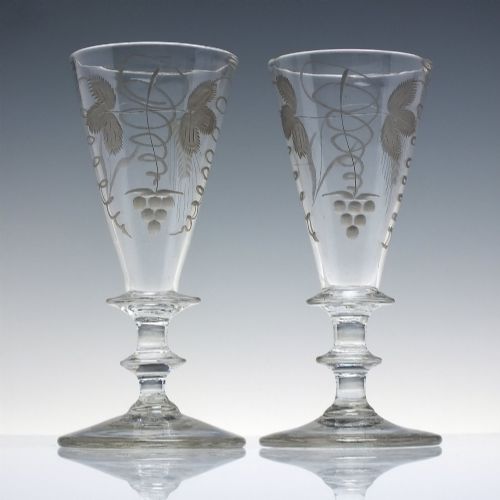
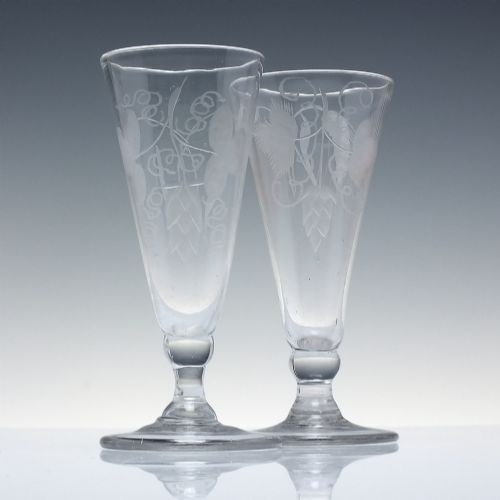
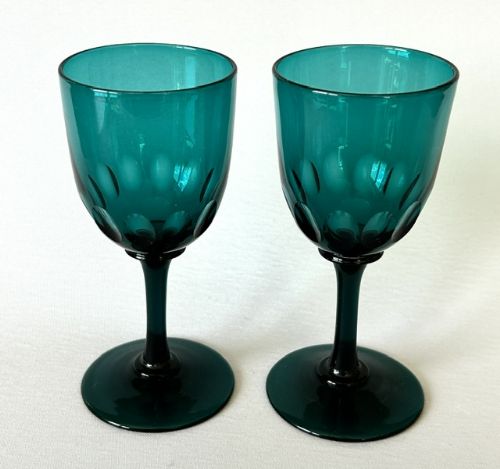
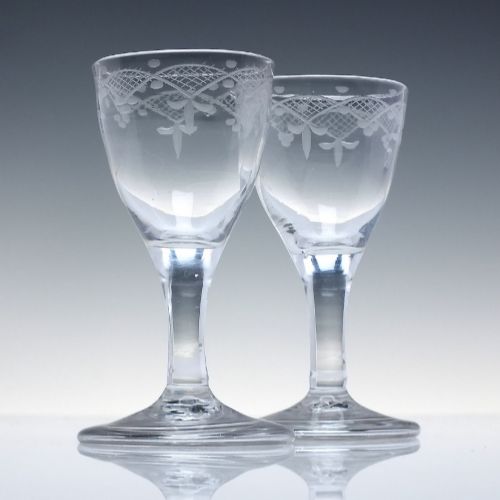
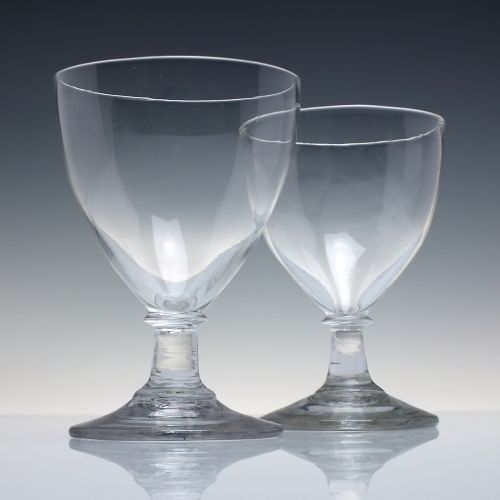
The pieces appearing on this page range from early Georgian ogee rummers and engraved barley wine glasses to colourful Victorian cased glass and Edwardian cut lead crystal. Buyers frequently discover pairs featuring cut, engraved, or enamelled decoration rather than plain bowls.
Origins stretch across English, Italian, German, and Bohemian workshops, reflecting diverse European drinking traditions. The selection centres heavily on matched pairs intended for functional display or historical dining use.
How they were made
Glassmakers utilised lead crystal, flint glass, and heavy lead glass to achieve clarity and weight in these drinking vessels. Cased glass techniques layered coloured glass over clear crystal, allowing artisans to cut through the outer layer to reveal contrasting tones beneath.
Surface ornamentation relied on wheel engraving, star-etching, acid cutting, and enamel decoration applied by hand. Workers often finished the bases with folded feet or intricate facet-cutting on the stems.
Listings feature lead crystal, flint glass, and cased glass across Georgian, Victorian, and Edwardian periods.
What varies in quality
Quality in an antique stemware pair rests upon the crispness of the cutting, the depth of the engraving, and the symmetry between the two vessels. Superior examples display precise wheel-cut facets and intricate botanical motifs without blurring or surface distortion.
The weight and purity of the lead crystal or flint glass dictate the resonance and visual brilliance of the piece. Matching consistency in colour intensity across cased glass layers also separates standard production from exceptional studio work.
Baccarat·Salviati·Stevens & Williams·Theresienthal·Moser
The Antique Stemware Pair Glossary
- Ogee
- A double-curved bell shape curving outward at the rim and inward toward the stem, commonly found on Georgian rummers.
- Cased glass
- A vessel formed from two or more distinct layers of glass of different colours, enabling surface cutting that exposes the underlying tint.
- Folded foot
- A base edge turned under while hot to create a thickened rim for added stability and strength on eighteenth-century drinking glasses.
- Hock glass
- A tall traditional vessel specifically designed for German white wine, often featuring coloured overlay or enamel decoration.
- Rummer
- A capacious eighteenth or nineteenth-century drinking glass with a short, thick stem, originally utilised for rum or heavy wines.
Antique Stemware Pair: Frequently Asked Questions
Can I use antique wine glasses for dining?
Many collectors use their glasses for special occasions, while others prefer to keep them purely for display. The sturdy lead glass of the Georgian and Victorian eras remains structurally sound for careful use.
Hand-washing and mindful handling prevent accidental damage during modern dining. Inspect the rim and base before use to ensure no historical chips exist.
How do I distinguish Georgian from Victorian stemware?
Georgian stemware typically exhibits heavier lead glass, simpler tool marks, and hand-engraved Jacobite or floral motifs. The forms tend toward sturdy rummers and faceted wine glasses with folded feet.
Victorian pieces often introduce brighter colours, cased glass overlays, and elaborate star-etching or acid-cut cameo decoration. The manufacturing techniques shifted toward more complex industrial and studio methods by the mid-nineteenth century.
Why are these glasses sold in pairs?
Matching pairs survived together through generations of family inheritance and careful domestic use. Historic dining customs frequently required symmetrical table settings with matching vessels for guests.
Finding a true pair from the eighteenth or nineteenth century remains a primary goal for collectors. Individual pieces often get separated over centuries, making matched pairs scarcer.