
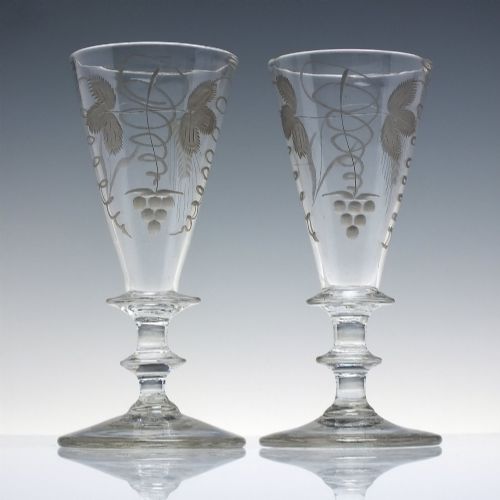
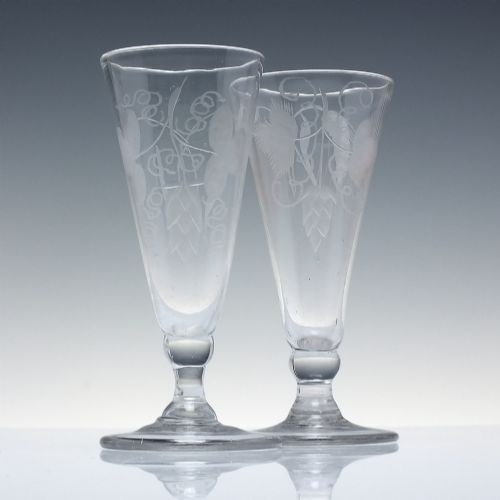


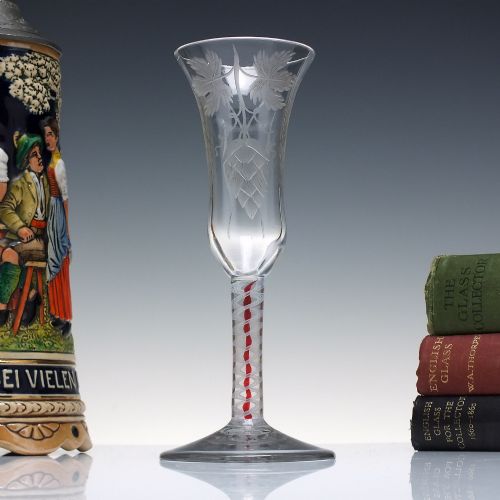


Hops and Barley Glass
These hops and barley glass pieces are tactile remnants of English tavern and dining traditions, sought after for their robust wheel-engraved motifs.
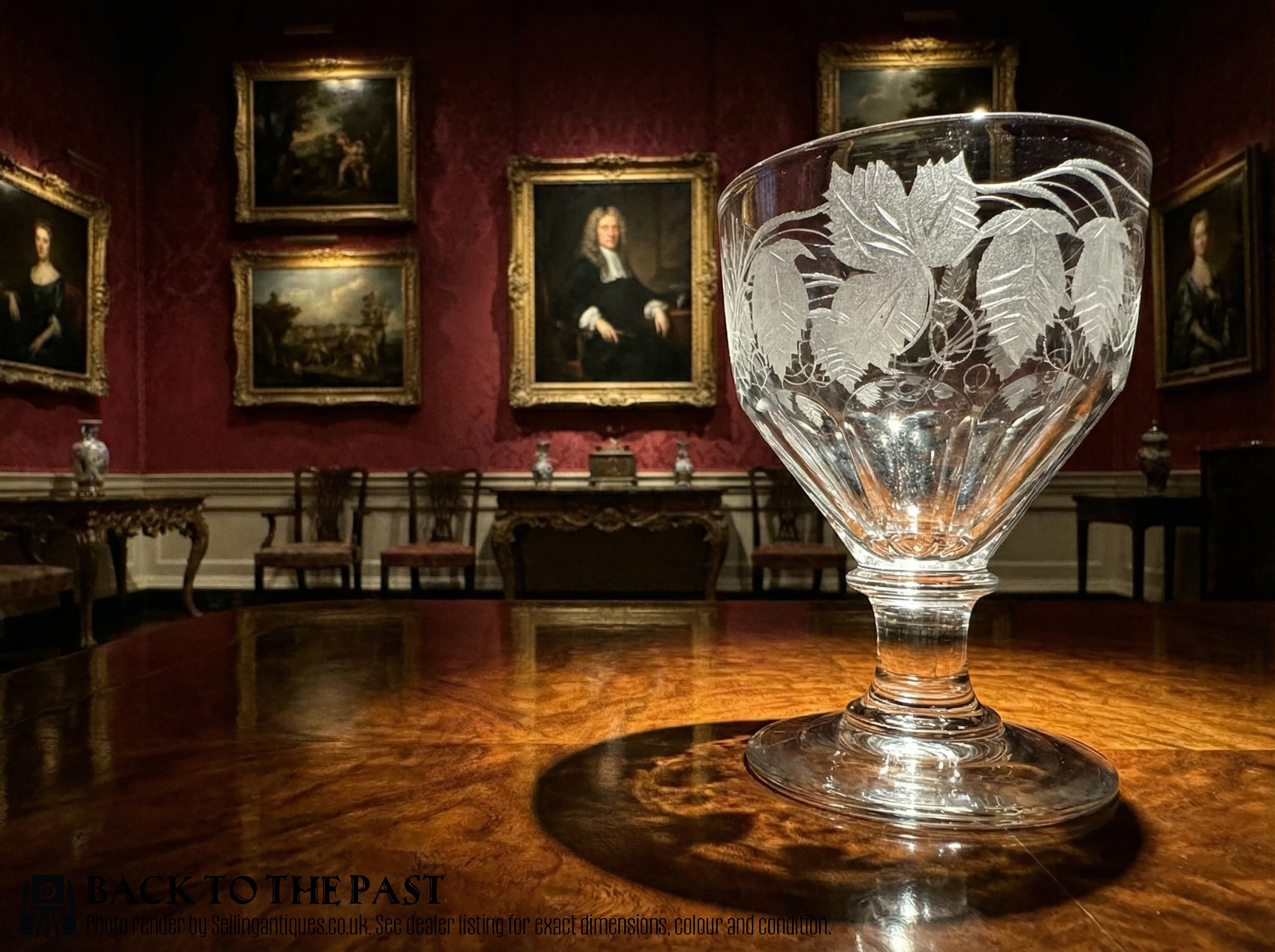
Hops and Barley Glass
When you search for hops and barley glass, you encounter drinking vessels designed for beer, ale, or barley wine during the eighteenth and early nineteenth centuries. These forms include rummers, flutes, and dwarf ale glasses intended for communal or table use.
The pieces appearing on this page span from Georgian and Regency eras up to later English traditional revivals in the twentieth century. They show engraved botanical motifs celebrating the ingredients of traditional British brewing.
Tall stems and generous bowls dominate the earlier Georgian iterations, while later serving rummers offer thicker walls and sturdy feet. Each object serves as a direct link to historical tavern culture and domestic drinking customs.
Materials and construction
Makers utilised lead crystal, flint glass, and clear glass to achieve a heavy, refractive body capable of holding deep wheel engraving. The dense metal of lead glass allowed artisans to cut facets and polish botanical details with sharp definition.
Specialised techniques such as air twists, opaque twists, and red colour twists were incorporated into the stems of eighteenth-century drinking vessels. Surface decoration relied upon skilled wheel engraving to render the intricate hop cones and barley stalks across the bowl.
Hops and Barley Glass Retail Price Guide 2026
Typical asking prices for hops and barley glass among the pieces listed under this phrase on Sellingantiques today, from the lower quarter to the upper quarter. They describe what is for sale here now, not the wider market.
Current listings span the eighteenth century, Georgian and Regency periods, through to the 1920s, utilising lead crystal, flint glass, and enamel.
Assessing quality
Quality rests upon the clarity of the metal and the dexterity of the wheel engraving. Crisp detail in the rendered hop bines separates superior workshop output from simpler production.
Complexity of stem formation dictates the upper tier of the range, particularly where intricate optical twists or precise facet cutting match the gravure of the bowl.
The Hops and Barley Glass Glossary
- Air twist
- A decorative stem formation containing elongated spiral bubbles trapped within the glass. This technique was achieved by drawing and twisting heated metal rods.
- Opaque twist
- A stem style enclosing threads of white or coloured enamel glass inside a clear flint glass casing. These threads create intricate lace-like patterns.
- Facet cut
- Geometric surface cutting applied to stems or bowls to catch the light. It produces flat, polished planes that enhance the brilliance of lead glass.
- Flute
- An elongated drinking glass with a tapering bowl designed for sparkling beverages or ale. It elevates the visual presentation of the contents.
Hops and Barley Glass: Frequently Asked Questions
What are hops and barley glasses?
These are historical drinking vessels featuring wheel-engraved motifs of hop cones and barley ears, produced primarily for serving beer and ale.
They reflect the agricultural and brewing heritage of Britain through detailed iconography etched directly onto the glass surface.
How were these glasses used?
People utilised them in homes and taverns for consuming malt beverages, ale, and barley wine during social gatherings and meals.
Larger rummers served communal drinking functions, while slender flutes and stemware accommodated individual portions at the table.
How do I date an antique ale glass?
Dating relies upon observing form characteristics, stem construction techniques, and the weight of the metal. Eighteenth-century examples often feature air or opaque twists, whereas later nineteenth-century pieces lean towards facet cutting and heavier rummer bowls.
Engraving styles also shift over time, moving from delicate scratch work to bolder wheel-cut botanical scenes.
How should I display them?
Display these pieces in well-lit cabinets where light can pass through the clear lead crystal and illuminate the engraved hops and barley details.
Placing them away from direct heat and handling them by the foot protects the delicate balance of the antique stems.