



Engraved Glass Rummer
An engraved glass rummer is a substantial drinking vessel that brings the social history of the Georgian and Victorian eras straight to the table.
Understanding the engraved glass rummer
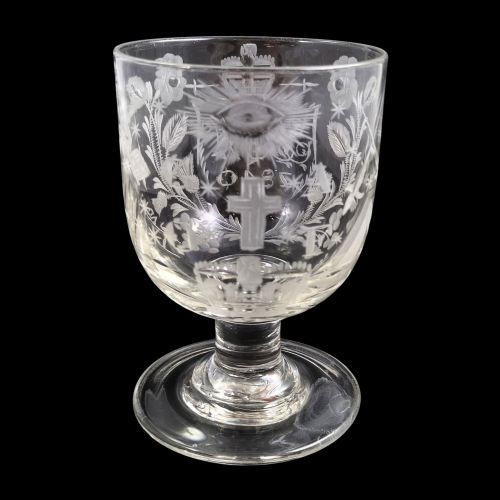
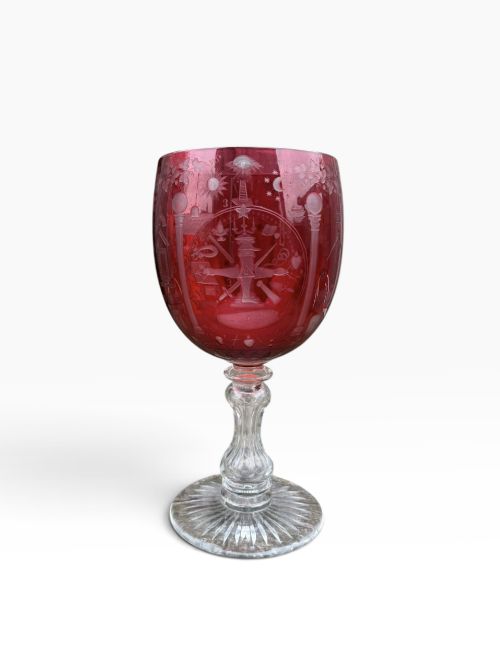
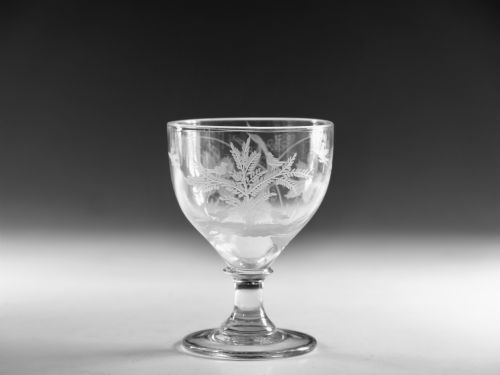
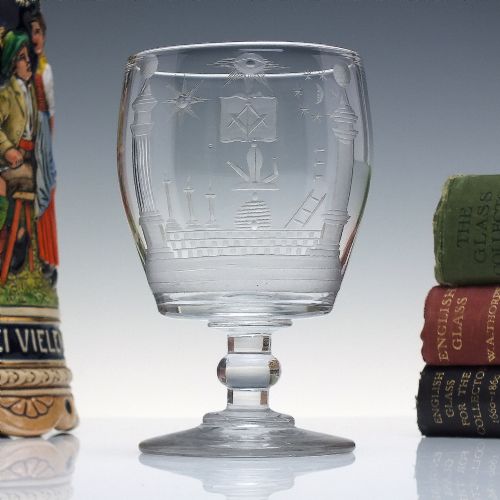
The engraved glass rummer is a sturdy drinking vessel designed for heavy use, most commonly encountered from the Georgian and Victorian periods in English households and taverns. When searching this phrase, a buyer finds robust drinkware that frequently displays agricultural symbols, armorial bearings, or Masonic emblems.
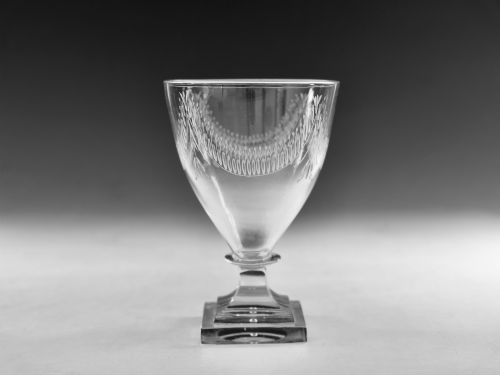
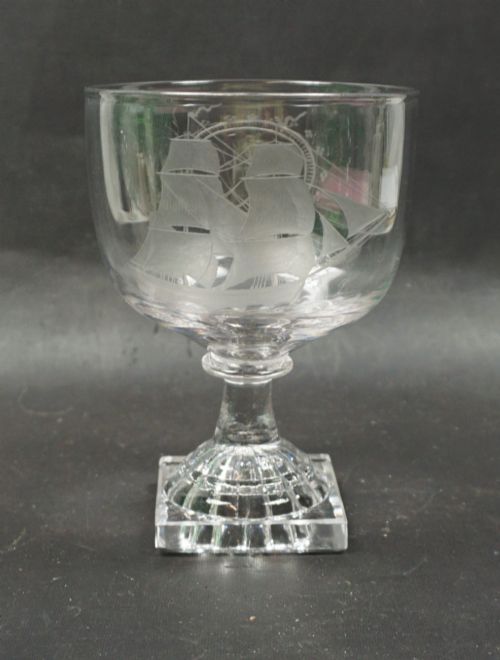
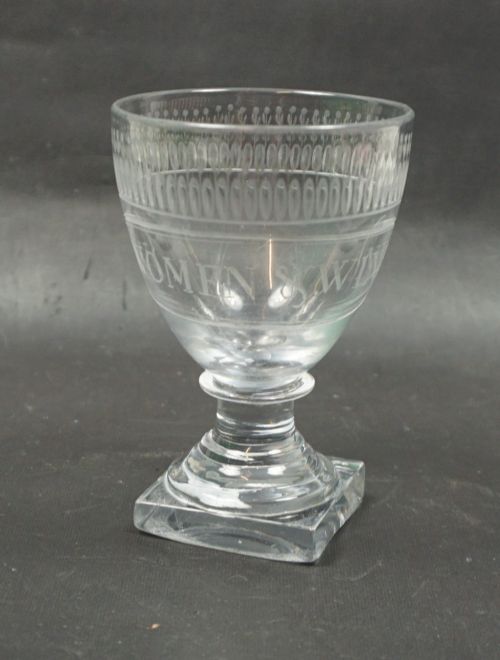
Forms vary from standard round bowls to pieces featuring distinct ovoid shapes or lemon squeezer feet. These glasses served various purposes, handling ales, wines, and punches with equal ease during communal gatherings.
Materials and construction
These vessels are formed from lead crystal, flint glass, and cut glass using traditional hot shop techniques. Artisans shaped the molten material into heavy bowls before applying decorative cuts to the surface.
Engraving was subsequently applied by hand using wheel-cutting tools to etch detailed motifs such as hops, barley, and rural scenes into the glass body.
Several rummers proudly bear the motto 'Speed the Plough', ensuring drinkers could toast agricultural progress with every sip of ale.
Assessing quality and craftsmanship
Quality in an engraved glass rummer is determined by the clarity of the metal and the depth and precision of the wheel-engraved motifs. Superior examples exhibit crisp, finely detailed imagery that retains sharp lines without blurring into the surrounding glass.
The weight, balance, and stability of the foot also dictate the tier of the piece, with heavier lead crystal specimens offering a more resonant ring and superior light refraction.
The Engraved Glass Rummer Glossary
- Lead crystal
- A type of glass containing lead oxide that increases weight, clarity, and brilliance. This material allows for deeper and sharper wheel engraving.
- Lemon squeezer foot
- A square, moulded base with panelled corners reminiscent of a domestic kitchen tool. This distinct foot shape is frequently found on Georgian specimens.
- Flint glass
- A clear, heavy glass historically used for high-quality tableware. It provides the solid foundation necessary for substantial drinking vessels.
- Pan top
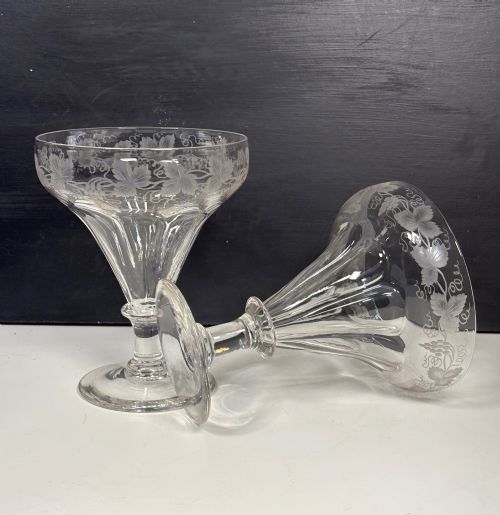
- A bowl shape that flares outwards towards the rim. This profile offers a wide opening for aromas to escape during consumption.
- Wheel engraving
- A technique where rotating abrasive wheels cut designs into the glass surface. This method creates the detailed hops, barley, and armorial scenes seen on these pieces.
Frequently Asked Questions
What were rummers used for?
Rummers served as substantial drinking vessels for ales, wines, and spirits during social gatherings in homes and taverns.
Their sturdy construction made them suitable for everyday toasts and communal drinking customs.
How do I date an engraved glass rummer?
Dating relies on observing the form of the bowl, the shape of the foot, and the style of the engraving.
Georgian examples often feature lemon squeezer bases and agricultural motifs, while Victorian pieces show shifts in glass weight and decorative themes.
Are these glasses safe to use?
Many collectors choose to use sturdy antique drinkware for special occasions, provided they receive careful hand washing.
Lead crystal requires gentle cleaning without sudden temperature changes to preserve the material.
Why do many rummers feature hops and barley?
Agricultural motifs celebrated brewing and the harvest, reflecting the rural economy and popular beverages of the period.
These symbols were standard decorative choices for vessels used to consume ale and beer.