



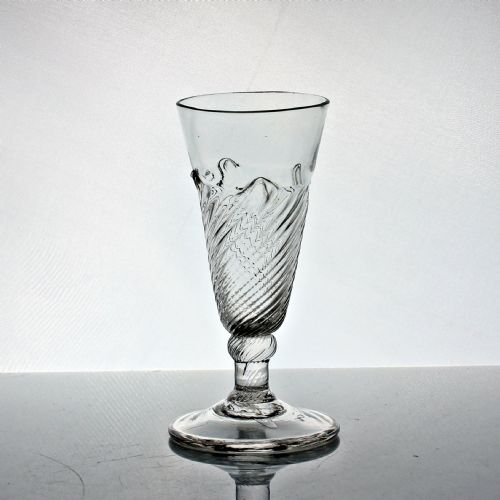


Engraved Ale Glass
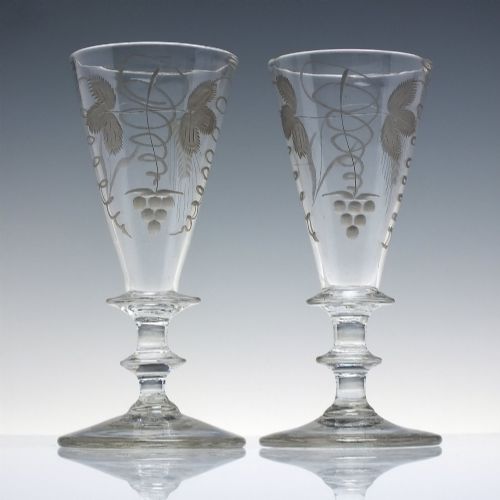
These engraved ale glass pieces bring the traditional toast of the Georgian tavern straight to your modern table.
Engraved Ale Glass
An engraved ale glass is a historic drinking vessel designed for malt beverages, typically featuring tall bowls and slender stems. The pieces found here span from the eighteenth century through the Edwardian period, with Georgian examples dominating the selection.
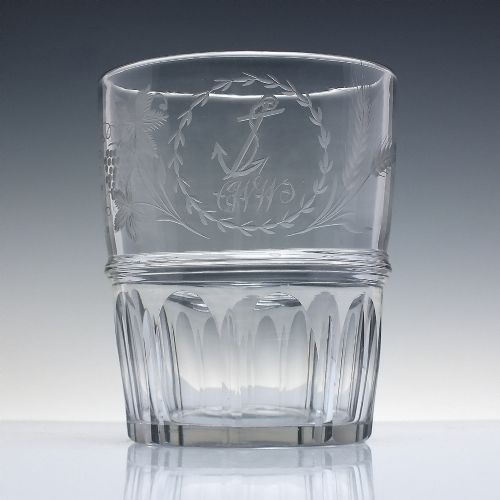
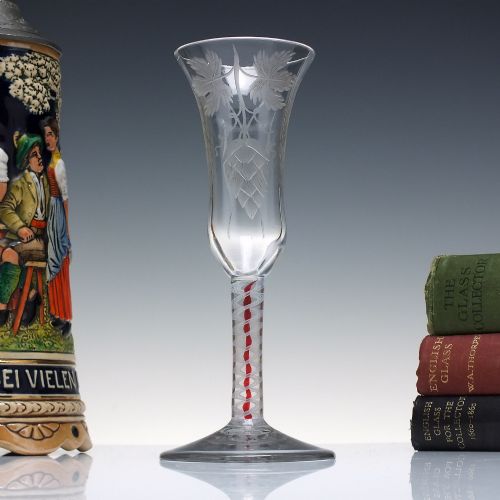
Collector interest centres heavily on eighteenth-century specimens featuring hops and barley motifs, air twists, and opaque twists. You will also encounter robust rummers, decanters, and tall flutes alongside dwarf ale glasses intended for smaller pours.
How they were made
Glassmakers shaped lead crystal, flint glass, and clear glass using traditional blowing and forming techniques. Stems were often drawn, faceted, or constructed with internal air twists and opaque twists.
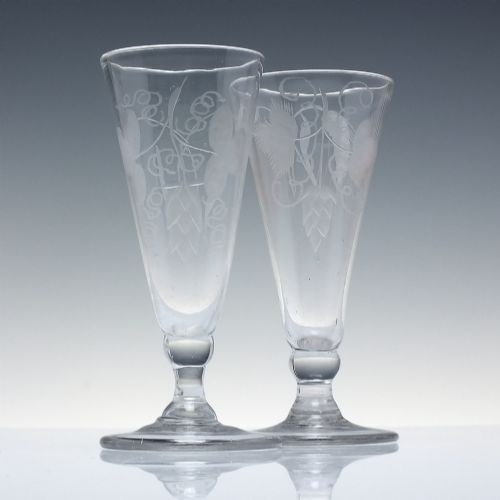
The ornamentation relies on wheel-engraving to carve botanical details like hops and barley directly into the glass surface. Some variations incorporate enamel or facet cutting to enhance the light refraction of the metal.
What varies in quality
Quality rests on the crispness of the wheel engraving and the complexity of the stem formation. Multi-spiral air twists and double series opaque twists represent higher technical skill than plain stems.
Proportion and metal clarity also dictate value. A well-balanced bowl paired with a clear, heavy lead glass body creates a superior tactile presence.
Richardson
The Engraved Ale Glass Glossary
- Air twist
- A stem containing spiral threads of trapped air created by drawing and twisting heated glass rods. This technique defines many mid-eighteenth-century specimens.
- Opaque twist
- A stem enclosing white or coloured enamel glass threads twisted into intricate internal patterns. These threads produce a striking contrast against clear glass.
- Plain stem
- A straightforward cylindrical glass stem lacking twists, facets, or knops. These form a sturdy base for many traditional pieces.
- Rummer
- A large, heavy-balled drinking glass utilised for heavier ales and beer. They often sit on a short, thick stem.
- Facet cut
- Geometric planes ground and polished onto the bowl or stem to catch the light. This finish appears frequently on later Georgian drinkware.
Engraved Ale Glass: Frequently Asked Questions
What is an engraved ale glass?
An engraved ale glass is a historic drinking vessel made to serve beer, featuring decorative wheel-engraved motifs like hops and barley. They range from tall eighteenth-century flutes to nineteenth-century rummers.
These pieces reflect the drinking habits of Georgian and Victorian Britain, serving both functional and social roles during toasts and gatherings.
How do I date an ale glass?
Dating relies on examining the stem formation, bowl shape, and manufacturing materials. Air twists and opaque twists point towards the mid-eighteenth century.
Plain stems and facet cutting span various decades, while heavier Edwardian and Victorian pieces display distinct heft and broader proportions.
Can I drink from antique glass?
Yes, many collectors use these vessels for special occasions or quiet evening drinks. Lead crystal and flint glass remain durable enough for careful use.
Hand washing is essential to preserve the delicate surfaces and prevent thermal shock to the historic material.
Why do they feature hops and barley?
Hops and barley serve as the primary ingredients in ale production, making them the most fitting decorative motif for beer glassware. Eighteenth-century artisans used copper wheels to engrave these agricultural symbols onto the bowls.
This iconography celebrates the contents of the glass and ties the vessel directly to the brewing heritage of the period.