




Flint Glass Drinking Vessel
These flint glass drinking vessel examples span the Georgian era, offering heavy balusters, opaque twists, and plain stems that collectors prize for their rich historical character.
What they are
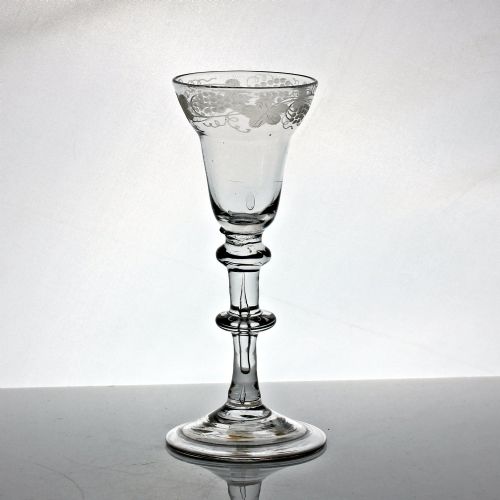
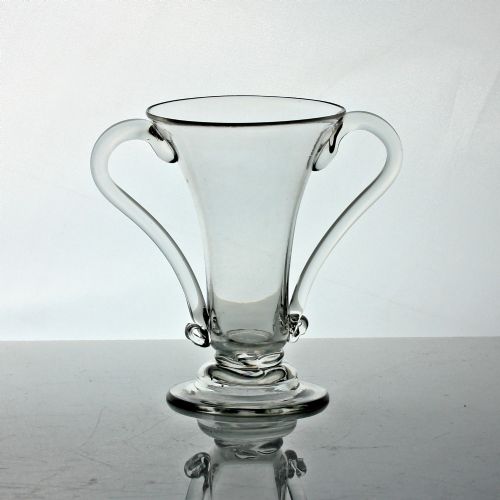
When you search for flint glass drinking vessel, you encounter 18th Century and Georgian pieces including ale glasses, wine glasses, dram glasses, and ratafia glasses. These glassware items represent standard drinking forms from the middle of the eighteenth century, showing specific stem and bowl configurations.
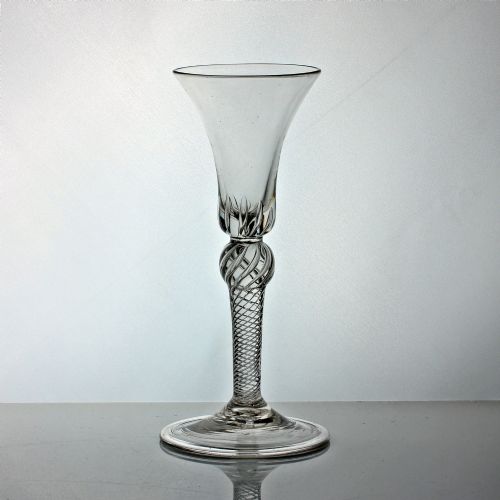
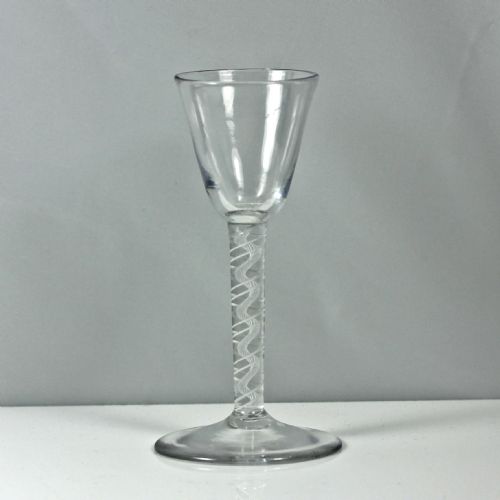
The most common form met on this page is the wine glass with a double series opaque twist stem, alongside heavier dram glasses featuring deceptive bowls. Ale glasses with plain stems and slender balustroid ratafia glasses also appear among the listed items.
Originating in England around the middle of the eighteenth century, these drinking vessels reflect the table customs of the Georgian period. Their forms range from sturdy dram glasses designed for small measures to tall, narrow ratafia glasses.
How they were made
The pieces documented here employ clear glass, flint glass, lead glass, and lead crystal, sometimes decorated with enamel glass techniques. Master glassblowers formed these vessels by gathering molten metal on a blowing iron and shaping the bowl and stem separately before joining them.
Twist stems required intricate manipulation of white or coloured opaque glass threads encased within clear glass, drawn and twisted while hot to create complex internal patterns. Heavy baluster and balustroid forms relied on precise thermal control to distribute the dense lead metal evenly throughout the knops and stems.
Retail Price Guide 2026
Typical UK retail prices for flint glass drinking vessel, calculated from the Sellingantiques database of over a million retail prices indexed since 2003. This retail price guide relies exclusively on Sellingantiques data; no external sources or auction records are used, so the figures do not describe the wider market.
Some dram glasses hide a surprisingly hefty base inside a very modest bowl, perfect for playing tricks with Georgian toasts.
What varies in quality
The distinction between standard examples and superior pieces rests on the complexity of the stem formation and the optical clarity of the lead crystal. Elaborate double series opaque twists and well-proportioned balustroid stems demonstrate higher technical mastery than straightforward plain stems.
Weight distribution and surface finishing also differentiate the range, as heavier baluster forms require exceptional balance in the hand. The presence of enamel glass decoration or unusual bowl configurations adds further distinction to individual vessels.
The Flint Glass Drinking Vessel Glossary
- Flint glass
- A dense, brilliant glass containing lead oxide, developed in England to increase refractive index and weight. This material forms the foundation of Georgian drinking vessels.
- Baluster
- A stout, swelling stem shape reminiscent of architectural balusters, featuring prominent knops. This form provides substantial weight and a secure grip.
- Opaque twist
- A stem decoration created by enclosing white or coloured enamel glass threads within the clear metal and twisting the molten unit. Double series examples combine two distinct twist formations.
- Ratafia glass
- A tall, extremely narrow drinking vessel designed for sweet fruit liqueurs. Its slender bowl minimises the surface area of the drink.
- Deceptive bowl
- A solid or thick-bottomed bowl designed to appear deeper than it actually holds. These clever vessels often served specific social functions in Georgian drinking culture.
Frequently Asked Questions
What is a flint glass drinking vessel?
A flint glass drinking vessel is a piece of Georgian glassware made from lead-rich glass, designed for beverages like wine, ale, or spirits during the eighteenth century.
These items encompass various forms such as baluster dram glasses, opaque twist wine glasses, and slender ratafia glasses.
What are opaque twist stems?
Opaque twist stems feature fine white or coloured enamel glass threads drawn through the clear metal of the stem. Makers created these patterns by twisting the molten glass before finishing the piece.
Single and double series variations describe the complexity of these internal glass threads.
Were these glasses used daily?
Georgian drinking vessels served both formal dining tables and social gatherings for beverages such as ale, wine, and liqueurs. Their robust lead crystal construction suited regular handling in taverns and homes.
Specialist forms like dram glasses and ratafia glasses fulfilled specific roles for particular pours.