

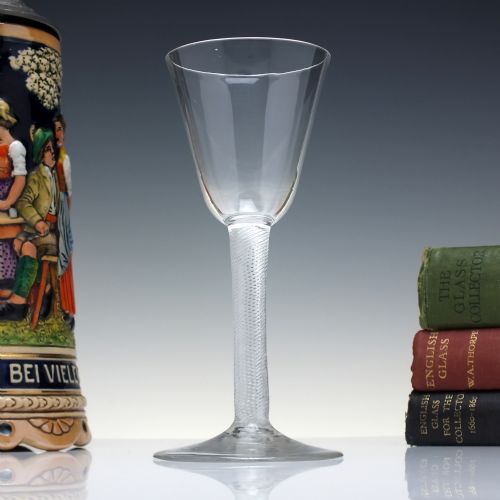


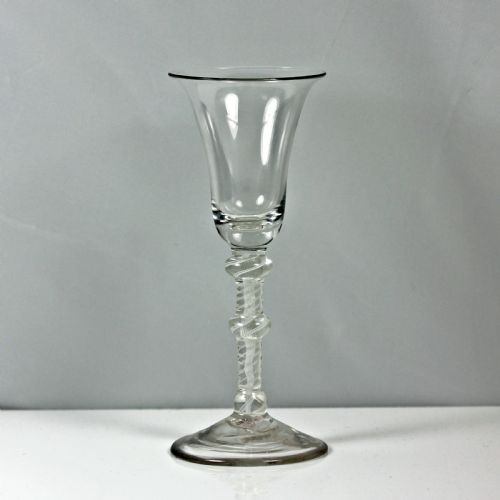


Georgian Glass Collector
These georgian glass collector pieces span delicate drinking vessels and fitted mahogany cabinets designed to keep delicate glassware secure and visible.
Georgian Glass Collector
The georgian glass collector category brings together period drinking vessels and the mahogany cabinets built to display them. You will frequently encounter wine glasses alongside vitrines and bijouterie cabinets dating from the eighteenth century.
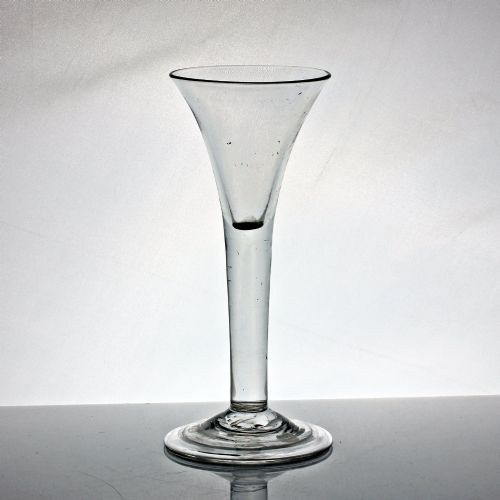
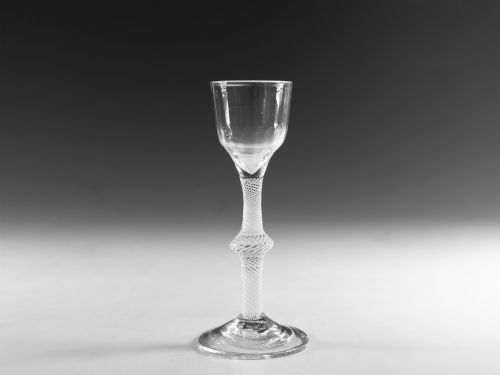
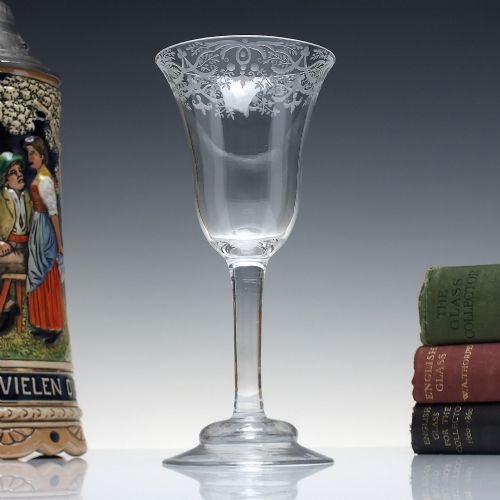
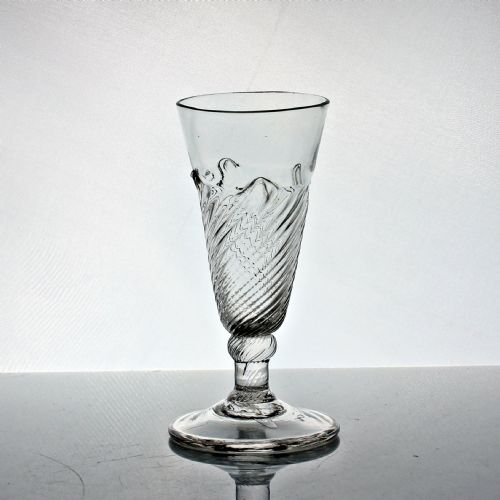
Vessels range from plain stem and opaque twist wine glasses to dwarf ale glasses and armorial rummers. Alongside these glass forms, mahogany display furniture offers a dedicated setting for smaller collections.
Materials and construction
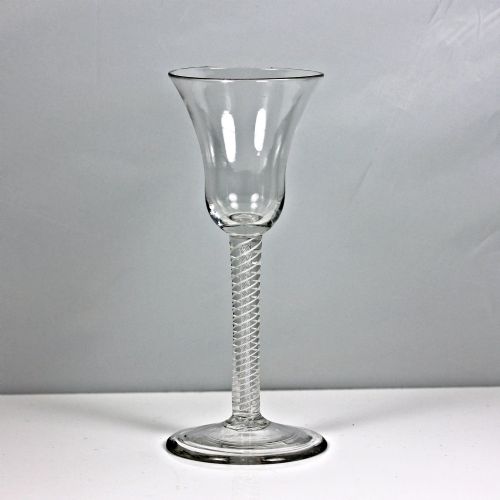
Makers shaped lead glass and clear glass by hand, incorporating air twists and opaque twists into stems during the eighteenth century. Cabinets relied on solid mahogany, frequently featuring inlaid woodwork and brass hardware.
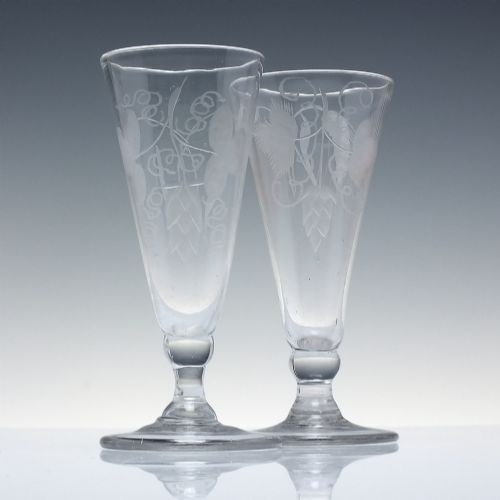
Engraving and white enamel work appear across the glassware, while desk accessories combine glass seals with fitted boxes.
Desk sets in this selection include ten intaglio coloured-glass seals waiting for hot wax.
Judging the range
Quality rests on the clarity of the metal, the precision of the stem twist, and the crispness of any engraved decoration. Weight and balance distinguish standard table use from finer cabinet examples.
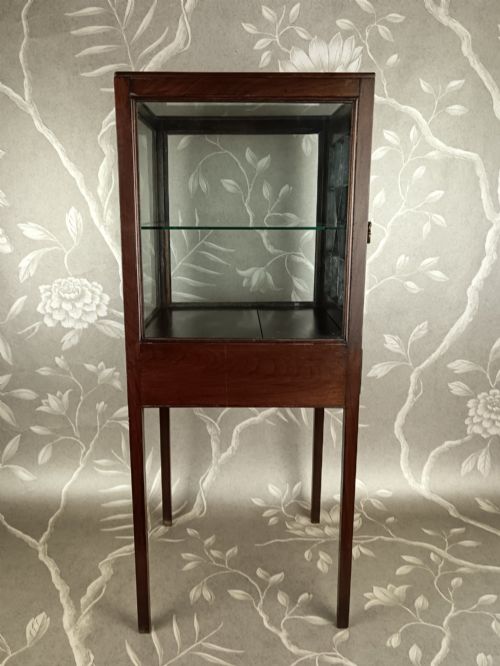
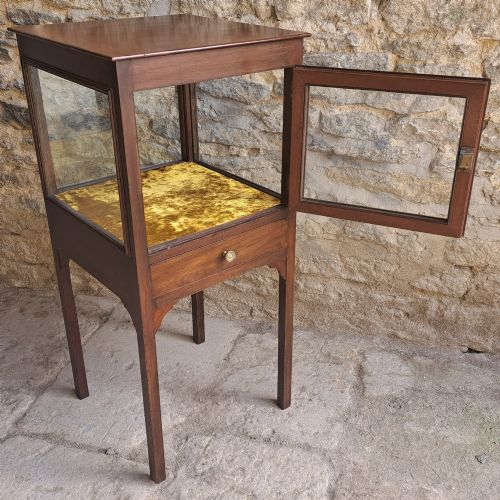
Cabinet quality depends on the choice of mahogany timber, the subtlety of inlay, and the structural integrity of glazed display doors.
The Georgian Glass Collector Glossary
- Lead glass
- Heavy glass containing lead oxide that increases brilliance and refractive index. This material forms the basis of most eighteenth-century drinking vessels.
- Opaque twist
- Stem formation created by enclosing white or coloured enamel threads within clear glass. These threads are drawn and twisted during manufacture.
- Air twist
- Spiral channel of air trapped inside a glass stem. Makers formed these by drawing out bubbles within the molten metal.
- Vitrine
- Glass-fronted display cabinet intended for the exhibition of small objects. These pieces utilise mahogany frames to protect their contents.
- Ratafia glass
- Narrow drinking vessel designed for sweet cordial or liqueur. Bowls are typically small and mounted on sturdy stems.
Georgian Glass Collector: Frequently Asked Questions
How do I display my collection?
Period mahogany vitrines and bijouterie cabinets provide enclosed shelving designed specifically for small glass objects. These pieces keep delicate vessels safe from dust and accidental knocks.
Proper lighting inside a cabinet can also highlight the clarity and engraving of eighteenth-century lead metal.
What is a rummer?
A rummer is a large, sturdy drinking glass introduced in the eighteenth and nineteenth centuries. They often feature generous bowls supported by short stems and heavy footed bases.
Many examples carry engraved armorial crests or celebratory motifs rather than simple floral patterns.
How are air twists made?
Makers formed air twists by pricking bubbles in hot metal and stretching the glass to draw the air into spiral channels. The stem was then shaped and joined to the bowl and foot.
This technique requires precise temperature control to maintain the regularity of the internal bubbles.