


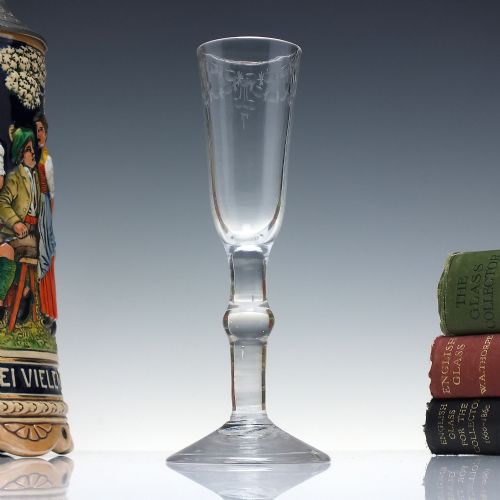

Balustroid Stem Glass
A balustroid stem glass is a tactile drinking vessel from the eighteenth century, prized by collectors for its weighty handle and clear glass form.
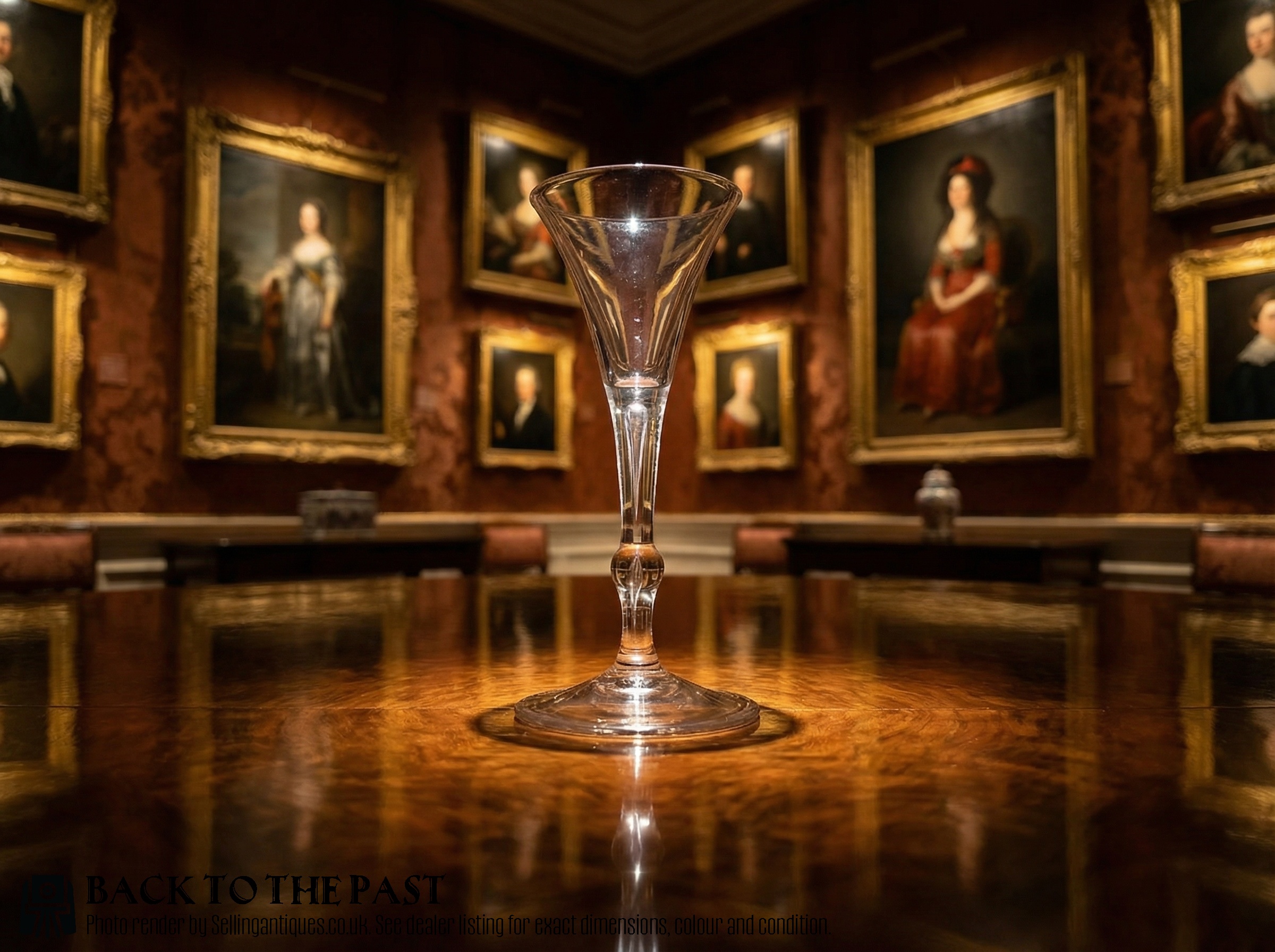
Balustroid Stem Glass
When you search for balustroid stem glass, you encounter drinking glasses and stemware shaped during the Georgian era. These pieces date from the eighteenth century, specifically spanning the decades around seventeen thirty and seventeen fifty.
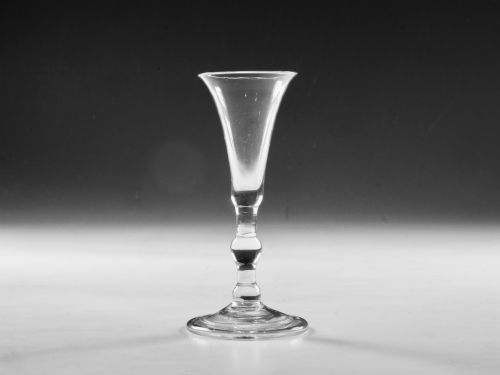
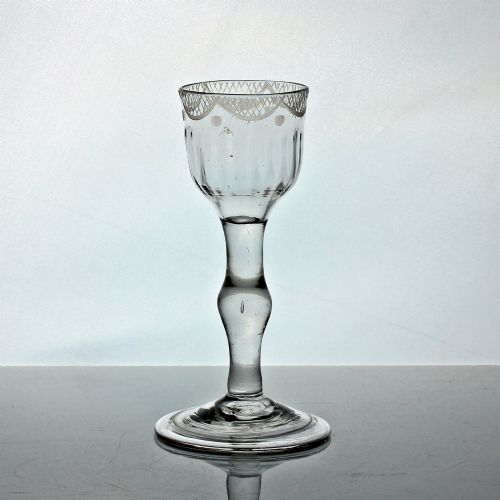
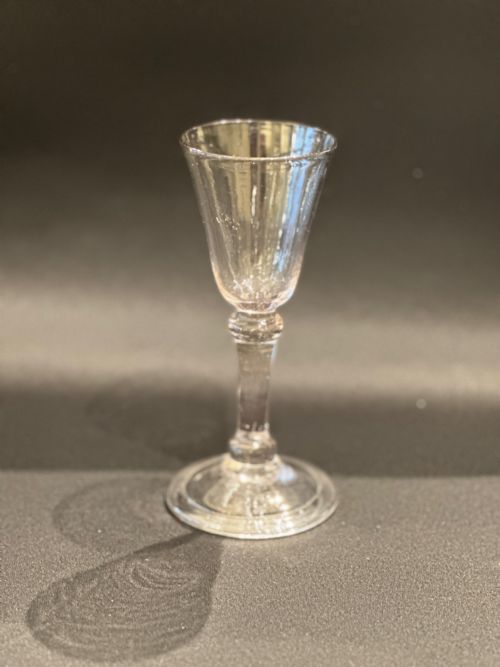
The objects on this page include wine glasses, ratafia glasses, and patch stands. The wine glasses dominate the selection, often featuring engraved bowls atop characteristic balustroid stems.
Georgian craftsmen produced these items in England using clear glass formulas. Collectors frequently meet examples with domed feet, hollow stems, or Kit Kat forms.
How they were made
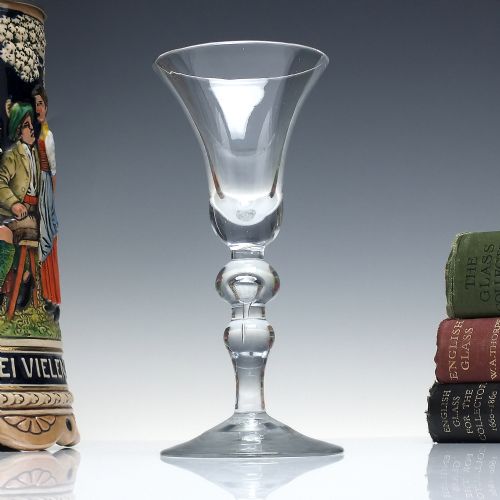
The makers utilised lead glass, flint glass, and lead crystal to achieve clarity and weight in each balustroid stem glass. These heavy materials allowed artisans to draw or apply distinct stem nodes below the bowl.
Engraving adorned the surface of certain vessels, displaying decorative motifs such as swag and tail patterns. Workshops formed feet with domed profiles to balance the substantial weight of the stem and bowl.
Balustroid Stem Glass Retail Price Guide 2026
Typical asking prices for balustroid stem glass among the pieces listed under this phrase on Sellingantiques today, from the lower quarter to the upper quarter. They describe what is for sale here now, not the wider market.
Georgian drinkers required tall, slender Kit Kat glasses to keep pace with lengthy political toasts.
What varies in quality
Quality in a balustroid stem glass rests upon the proportion between the bowl, the knopped stem, and the foot. The clarity of the lead crystal or flint glass further distinguishes superior examples from standard ones.
The Balustroid Stem Glass Glossary
- Balustroid stem glass
- A drinking vessel featuring a stem intermediate between a full baluster and a plain stem, typical of the eighteenth century. These forms developed as glasshouses moved away from heavier seventeenth-century styles.
- Lead crystal
- A heavy, brilliant glass made with lead oxide. This material became standard in English glassmaking and provides the characteristic ring and clarity of Georgian stemware.
- Kit Kat
- A tall, slender wine glass form associated with the Georgian period. Such glasses often display elongated balustroid stems.
- Ratafia glass
- A narrow drinking vessel used for serving sweet cordial or liqueur. They appear alongside wine glasses in eighteenth-century contexts.
- Patch stand
- A small pedestal dish or stand used in the eighteenth century. Examples with balustroid stems occasionally surface in this category.
Balustroid Stem Glass: Frequently Asked Questions
How old are these glasses?
The pieces listed on this page date from the eighteenth century, specifically the Georgian era. Most examples originate from the decades between seventeen thirty and seventeen fifty.
English glasshouses produced these vessels during the reigns of the early Georges. This period represents a high point in domestic lead glass manufacturing.
Were these used for wine?
Many of these pieces served as wine glasses on eighteenth-century dining tables. The forms accommodated the heavy, fortified wines popular among the Georgian gentry.
Other vessels in this group include narrow ratafia glasses for cordials and small patch stands. Each form fulfilled a specific role in Georgian hospitality and dining customs.
How do I identify a Georgian glass?
Georgian glass is identified by material composition, weight, and construction details such as pontil marks on the base. The presence of lead crystal or flint glass gives the metal a distinctive dark reflectivity and heft.
Stylistic cues like balustroid stems, engraved swag and tail motifs, and domed feet point directly to the eighteenth century. Handling multiple examples builds familiarity with the touch and appearance of the period.