





18th Century Ale Glass
These delicate vessels of the 18th century ale glass category bring genuine Georgian craftsmanship to the table for collectors of historic tavern and dining ware.
18th Century Ale Glass
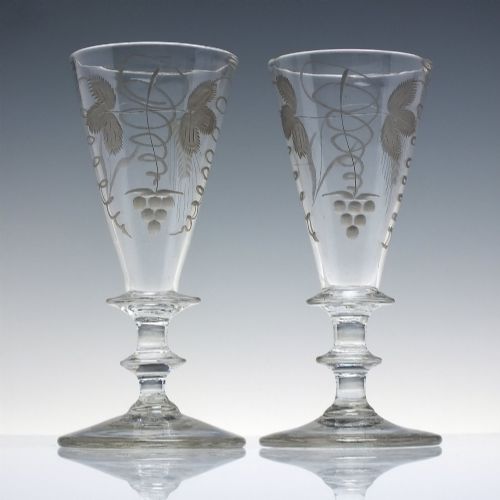
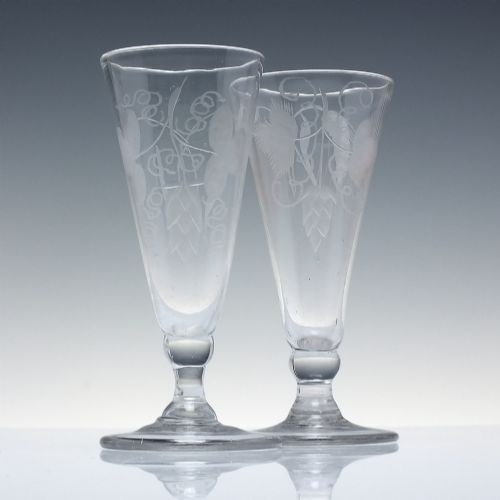
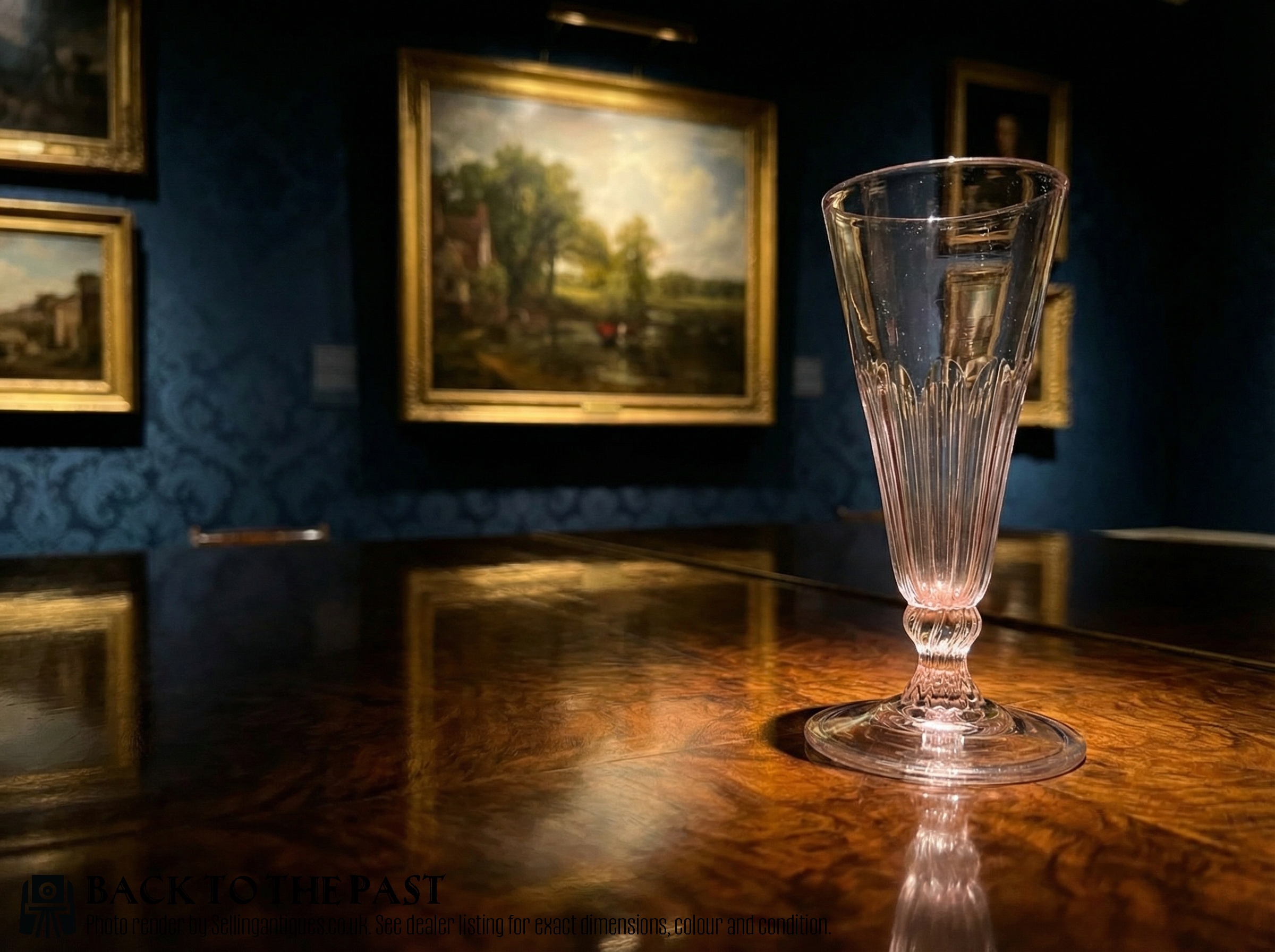
An 18th century ale glass typically presents a narrow, elongated bowl designed specifically to retain the head and effervescence of historic brewed malt beverages. The forms seen across these pieces range from tall flutes and dwarf glasses to tankards and jugs, originating from the Georgian period.
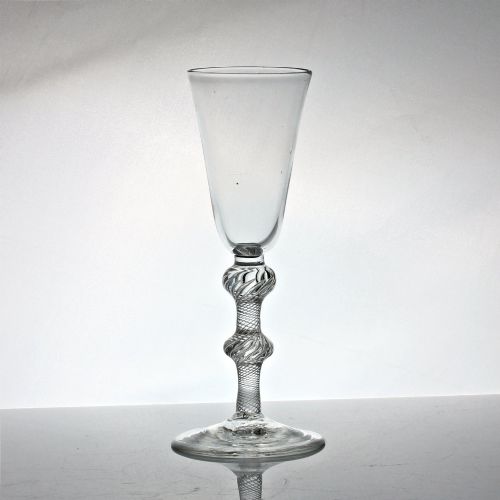
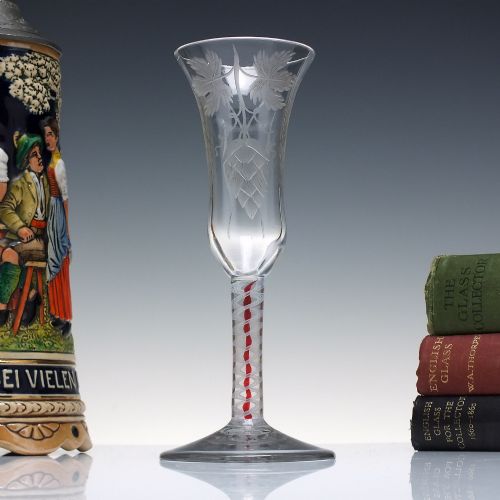
The most common examples encountered on this page display traditional stems such as plain forms, air twists, opaque twists, and facet cuts supporting trumpet or bucket bowls. Many of these drinking vessels bear characteristic wheel-engraved decorations featuring hops and barley motifs.
Collectors also encounter related serving pieces from the same era, including large beer decanters and quart tankards. These drinkware items span the decades from the mid 1700s through to the turn of the nineteenth century.
How they were made
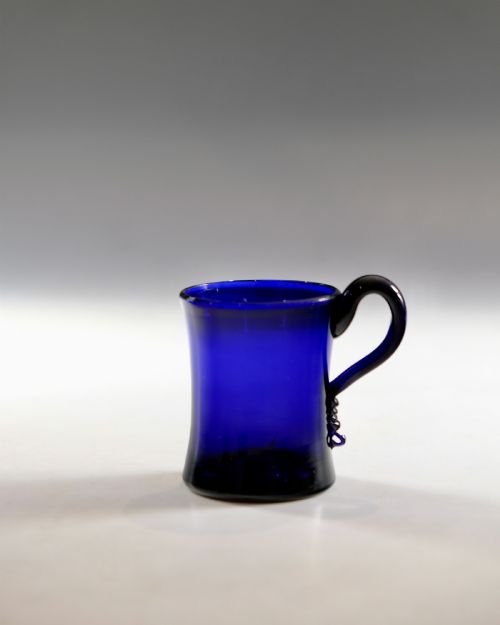
The material used is predominantly lead glass or flint glass, shaped by hand-blowing and manipulation while molten to create clear or coloured bodies. Artisans utilised cobalt glass for blue tankards and occasionally incorporated enamel details.
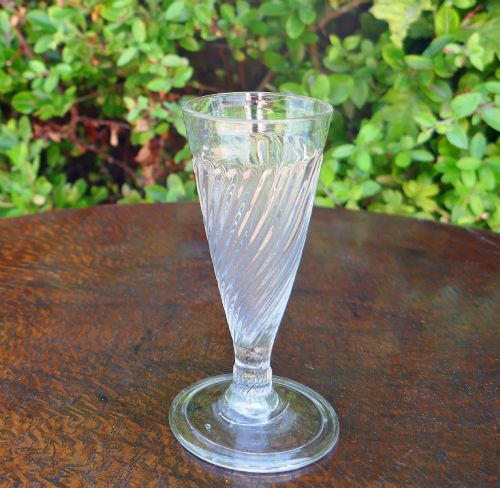
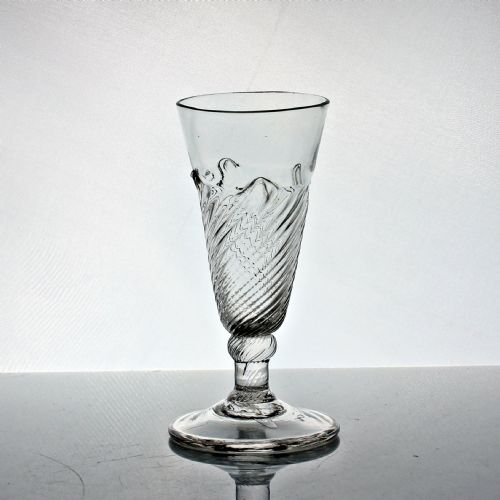
Optical moulding techniques produced distinct textures, resulting in full and half wrythen patterns, rib moulding, and petal or nut moulded bowls. Stems were formed using intricate internal air bubbles drawn into spirals or multi-series opaque white glass threads.
What varies in quality
The 18th Century Ale Glass Glossary
- Air twist
- A stem formation created by drawing out elongated air bubbles inside the molten metal into spiral threads. This technique produces a luminous internal pattern.
- Wrythen
- A decorative swirling rib pattern applied to the bowl of the glass during blowing. It creates a subtle optical texture across the surface.
- Folded foot
- A base edge turned underneath to form a smooth, rounded rim that adds stability and weight. This denotes earlier manufacturing methods.
- Facet cut
- Geometric polished planes cut into the stem or bowl to catch the light. This style became increasingly popular in the later part of the century.
- Opaque twist
- A stem containing white or coloured enamel glass threads drawn into single or double series cables. These threads are encased within clear flint glass.
18th Century Ale Glass: Frequently Asked Questions
What is the difference between an ale glass and a wine glass?
Ale glasses generally feature taller, narrower bowls designed to display the lighter body and effervescence of historic ales. They frequently incorporate hop and barley engravings specific to brewing.
Wine glasses of the same period usually present wider, more open bowls intended for aromatic wines rather than malt beverages.
Why do some glasses have folded feet?
Makers folded the rim of the glass foot underneath to provide extra strength and weight to the base during daily tavern use. This construction detail is more commonly found on pieces dating from the first half of the century.
As manufacturing techniques improved, the practice gradually became less frequent among glasshouses.
How do you identify an air twist stem?
An air twist is formed by trapping elongated bubbles inside the stem and twisting the molten glass as it is drawn out. This creates bright, spiral strands running vertically through the transparent metal.
Close inspection under a magnifying glass reveals these are internal refraction lines rather than surface cuts.
Were these glasses used daily or kept for display?
Georgian households and taverns used these sturdy lead glass vessels for serving beverages at the table or drinking house. The inclusion of heavy feet and robust ribs helped them withstand regular handling.
Today, collectors appreciate them both as historic table service items and as display cabinets examples.