





Georgian Ale Glasses
Georgian ale glasses are drinking vessels shaped for strong malt liquors, prized for their slender bowls and engraved hops and barley.
Georgian Ale Glasses
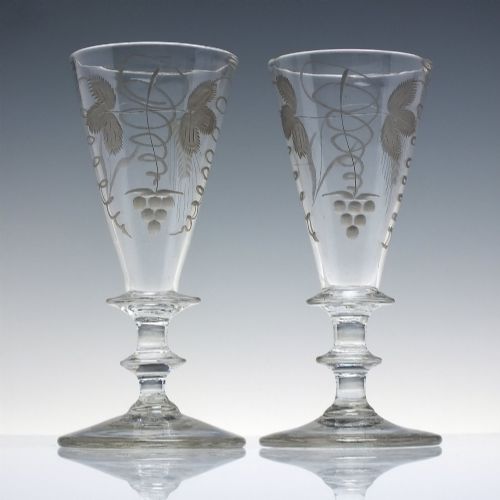
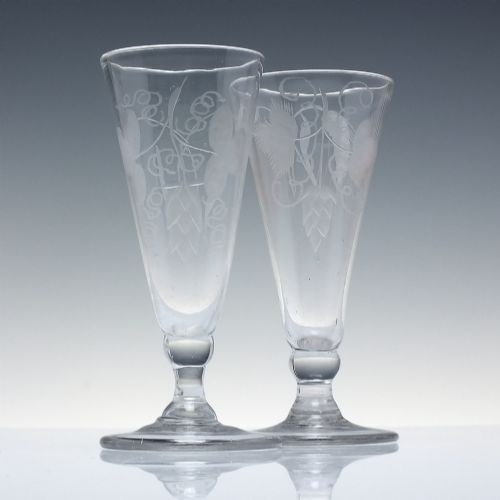
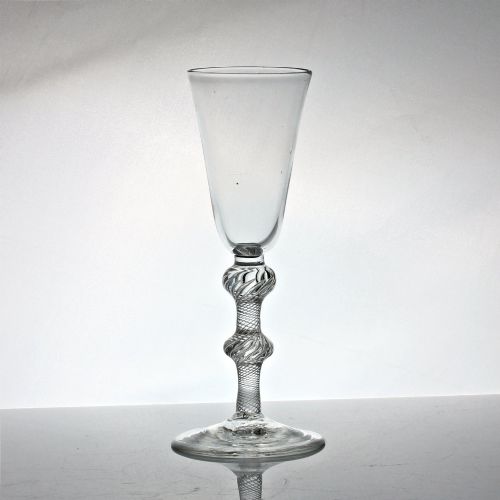
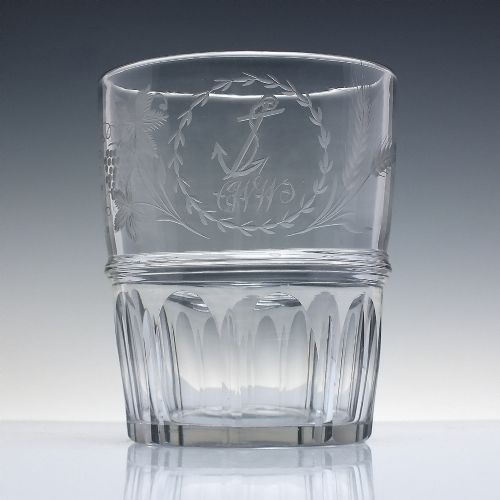
Georgian ale glasses are drinking vessels designed specifically for consuming malt liquors, beers, and barleys during the eighteenth and early nineteenth centuries. When searching for georgian ale glasses, collectors encounter tall flutes, dwarf forms, and rummers shaped to concentrate the aromas of historic brews. These drinking vessels appear predominantly in eighteenth-century and Regency styles, reflecting the social drinking habits of the period.
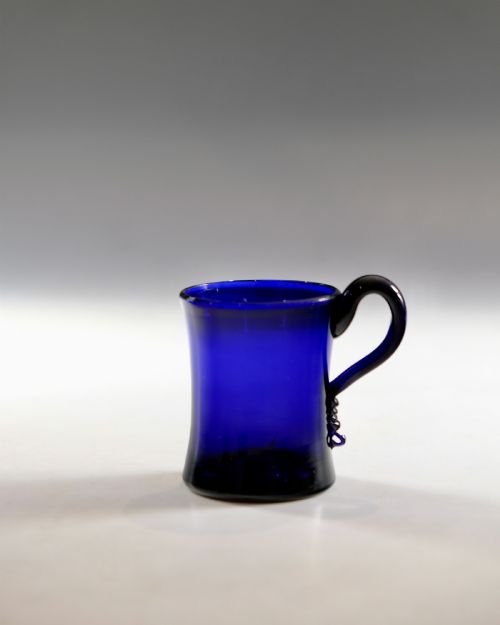
The pieces on this page span several decades, featuring tall bowls balanced on stems that range from plain columns to intricate twists. English examples dominate the selection, often taking the form of flute glasses or heavy-footed tankards and rummers. Alongside standard clear lead glass, the inventory includes uncommon coloured pieces in cobalt, red, and emerald green.
What varies in quality
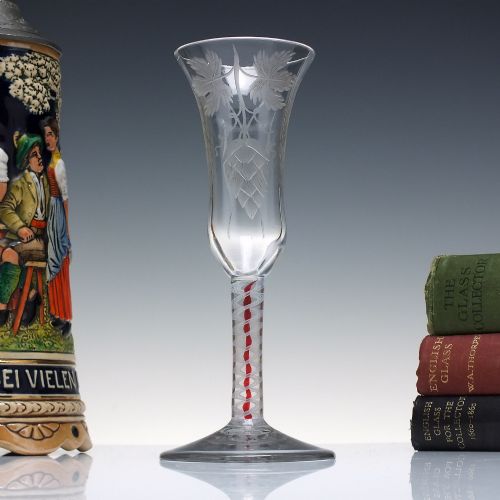
Quality rests upon the clarity of the metal and the precision of the manufacturing technique, whether in an air twist or a facet cut stem. Superior examples display crisp wheel engraving with deep, clean cuts that delineate the hop leaves and barley awns. The balance between the bowl, stem, and folded foot dictates the elegance of the silhouette.
Rarity and coloration drive distinction among surviving drinking vessels, separating standard clear items from cobalt or red specimens. The complexity of the internal twist, such as a multi-spiral air formation or coloured threads, demonstrates the skill of the glasshouse. Uniformity across matched pairs or sets elevates the standing of the pieces.
Eighteenth-century drinkers sometimes peered through tiny trapped air bubbles in glass stems just to check the maker's twist.
The Georgian Ale Glasses Glossary
- Air twist
- A stem containing elongated threads of air trapped inside the glass and drawn into a spiral. This technique creates a delicate internal pattern visible through clear lead glass.
- Opaque twist
- A stem featuring white or coloured enamel rods twisted within the glass matrix. These threads form single or double series patterns running down the length of the stem.
- Wrythen
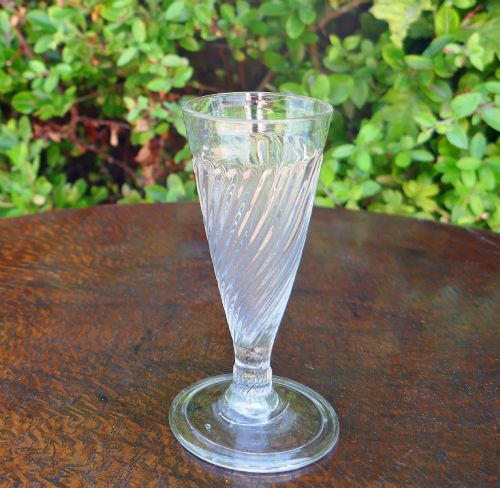
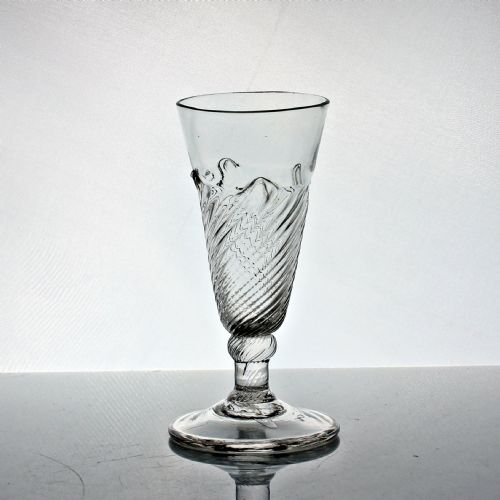
- A decorative moulding pattern where spiral ridges or ribbing run up the body of the glass. The technique imparts a subtle texture to the surface of the vessel.
- Lemon squeezer foot
- A square, moulded glass base with indented corners resembling nineteenth-century kitchen implements. This heavy foot provides stability for tall or loaded drinking vessels.
- Flute
- A tall, narrow drinking glass designed to retain the carbonation and aromas of ale. The elongated bowl sits atop a stem and a spreading foot.
- Facet cut
- Geometric planes ground and polished onto the surface of the glass stem or bowl. This technique creates flat facets that catch the light.
Georgian Ale Glasses: Frequently Asked Questions
What is a dwarf ale glass?
A dwarf ale glass is a shorter, sturdier version of the traditional tall flute, designed with a compact stem and bowl for everyday tavern use.
These smaller drinking vessels still frequently feature hop and barley engravings and folded feet despite their reduced height.
How do you identify an air twist stem?
An air twist stem contains spiralling threads of bubbles trapped inside the clear lead glass during the blowing process.
Looking closely through the stem reveals these continuous air channels running from the base of the bowl to the foot.
Were these glasses used for beer?
These vessels were specifically formed for consuming strong malt liquors, barley wines, and ales popular during the Georgian era.
The narrow bowls helped concentrate the rich aromas of the brews while accommodating the generous portions of the period.
What does hop and barley engraving mean?
Hop and barley engraving refers to the wheel-cut botanical motifs decorating the bowls of drinking vessels.
These agricultural designs directly celebrated the primary ingredients used in brewing the ale contained within.
What is a folded foot?
A folded foot is created by turning the outer edge of the glass base back underneath itself while hot.
This technique forms a thickened, rounded rim that adds weight and durability to the bottom of the drinking vessel.