

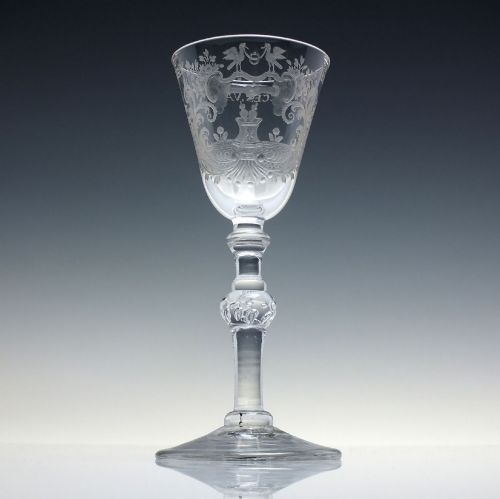


Georgian Wheel Engraved Glass
Georgian wheel engraved glass brings tactile depth to eighteenth and nineteenth-century vessels through crisp, mechanical incisions.
Georgian Wheel Engraved Glass
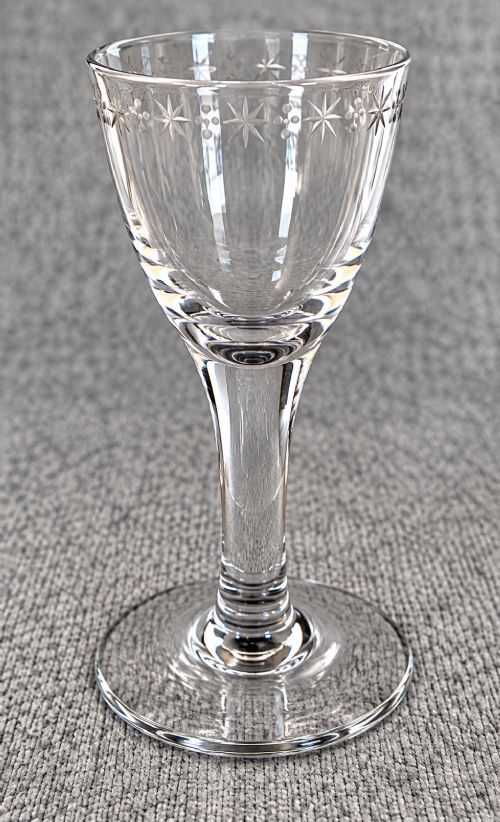
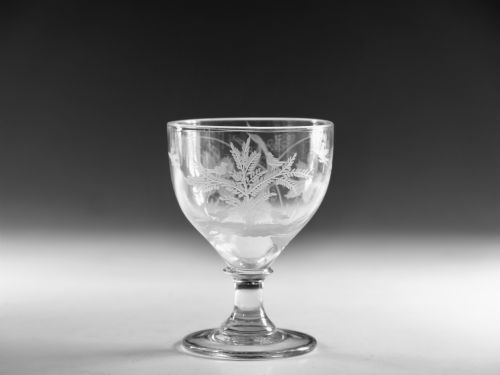
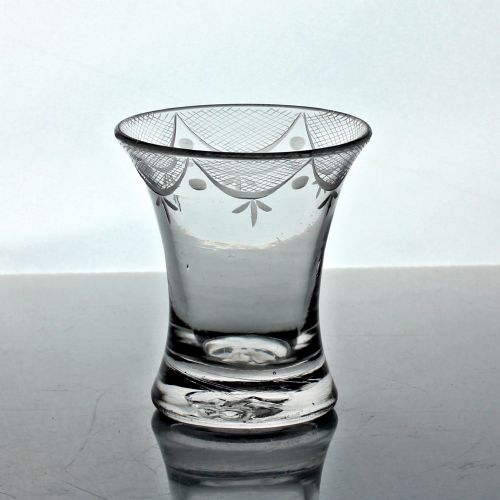
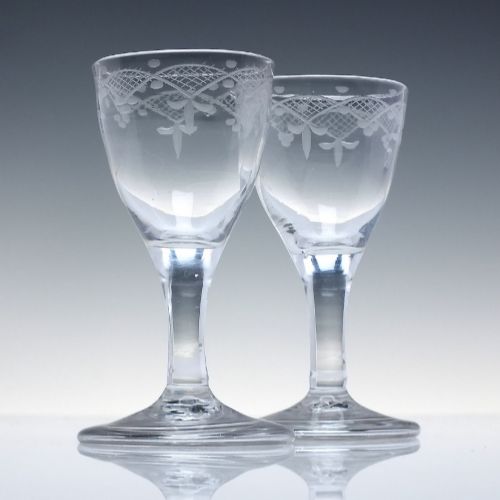
Georgian wheel engraved glass comprises drinking vessels, decanters, and table objects made across the eighteenth and nineteenth centuries. Buyers searching for georgian wheel engraved glass seek historic vessels decorated with motifs cut directly into the surface using small rotating copper or stone wheels. The items span diverse domestic and ceremonial forms, from diminutive dram glasses and firing glasses to substantial rummers and decanters.
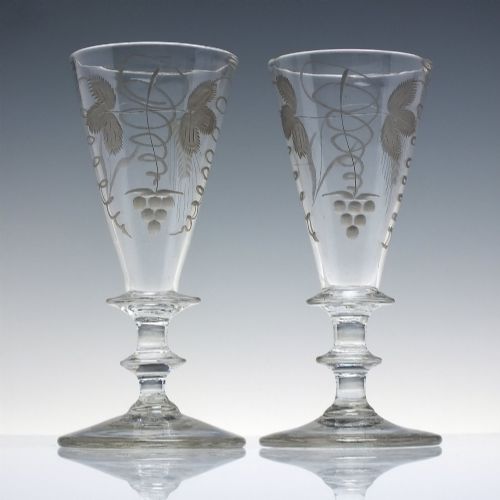
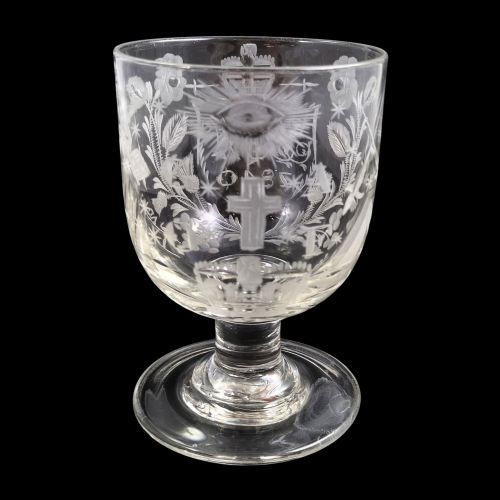
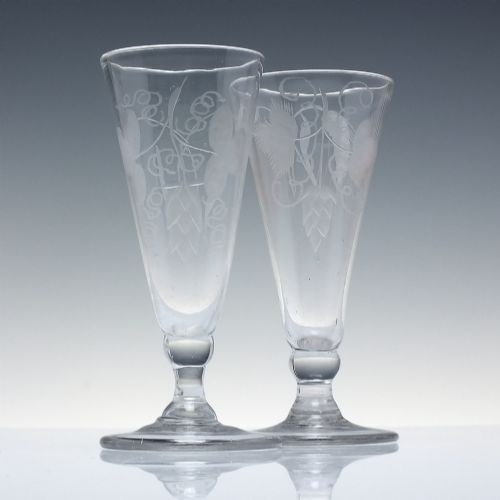
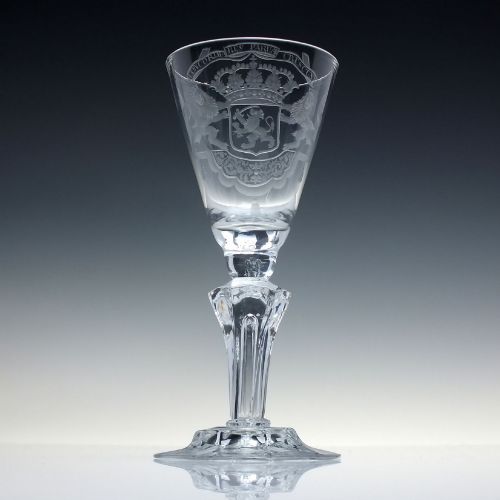
The selection on this page centres heavily on Georgian and Regency drinking vessels alongside nineteenth-century iterations. Wine glasses, beer and ale glasses, and large serving rummers dominate the forms, frequently bearing floral, armorial, or symbolic ornamentation. Examples range from early eighteenth-century pedestal stems to later nineteenth-century rinsers and decanters.
What varies in quality
Quality in georgian wheel engraved glass rests on the clarity of the metal and the precision of the wheel work. Superior pieces display crisp, deep cutting with clean margins where the rotating edge met the glass, whereas lesser examples show shallow or hesitant incisions. The weight and balance of the vessel also dictate grade, with heavy, well-proportioned rummers and balanced baluster stems commanding greater admiration.
The sophistication and depth of the engraving subject matter further differentiate the range. Standard floral or hop-and-barley motifs appear frequently, but detailed armorial crests, Jacobite symbols, or named ships demand superior technical control from the cutter. The integrity of the form, preservation of the surface polish, and originality of components like stoppers complete the distinction between ordinary and exceptional specimens.
Listings feature lead glass, clear lead glass, and flint glass across Georgian, Regency, and nineteenth-century periods.
Ganthony of London·Fagioli of Clerkenwell London
The Georgian Wheel Engraved Glass Glossary
- Wheel engraved
- A decoration technique where a vessel is pressed against small rotating abrasive wheels to cut designs into the glass surface. This method produces characteristic concave lines and matte or polished hollows.
- Rummer
- A large, wide-bowled drinking glass popular during the Georgian and Regency periods. These vessels were typically used for ale, wine, or punch.
- Dram glass
- A small drinking vessel designed for consuming a single measure of spirits. Eighteenth-century examples often feature thick lead glass and folded feet.
- Firing glass
- A heavy-bottomed drinking glass produced with a thick base that made a sharp report when slammed onto a wooden table. These were used during toasts at fraternal and political gatherings.
- Baluster stem
- A thick, turned glass stem featuring swelling nodes reminiscent of architectural balusters. These are characteristic of mid-eighteenth-century English wine glasses and goblets.
Georgian Wheel Engraved Glass: Frequently Asked Questions
What is georgian wheel engraved glass?
Georgian wheel engraved glass refers to drinking vessels and decorative items made in Britain during the eighteenth and nineteenth centuries, decorated using small rotating cutting wheels.
These pieces showcase traditional forms like rummers, decanters, and wine glasses adorned with cut motifs.
How do I date a piece?
Dating relies on observing stylistic markers such as stem construction, foot profiles, and the specific composition of the lead glass.
Earlier eighteenth-century items often feature baluster stems or folded feet, while nineteenth-century pieces move towards heavier table rummers and facet-cut designs.
How were these glasses used?
They served functional roles at the dining table for wine, beer, ale, and spirits during formal meals and gatherings.
Larger rummers and decanters were passed around the table or used for serving specific beverages like punch.
Can I use them today?
These historic vessels can be used carefully for special toasts or fine dining, though many collectors prefer to display them.
Hand washing in warm water without harsh detergents is essential to preserve the fragile antique lead glass.