

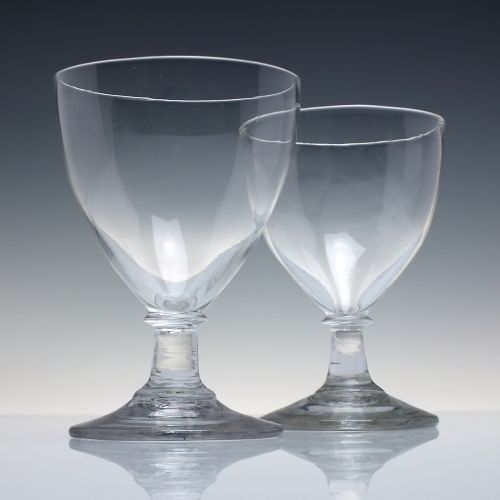


18th Century Glass Rummer
These 18th century glass rummer examples are substantial drinking vessels designed for robust toasts, combining tactile weight with period charm.
18th Century Glass Rummer
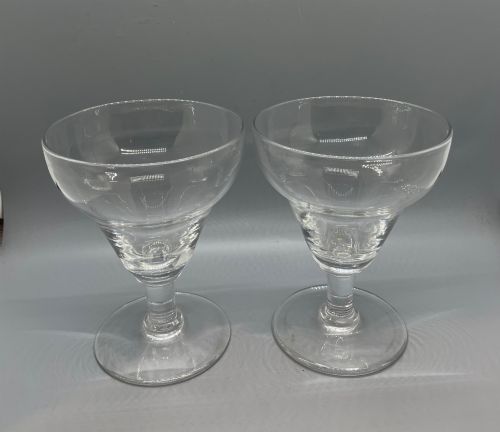
An 18th century glass rummer is a sturdy drinking vessel designed for heavy toasts, robust in hand and generous in capacity. The pieces gathered here span the Georgian period, reaching from the middle decades of the eighteenth century through to the year 1800.
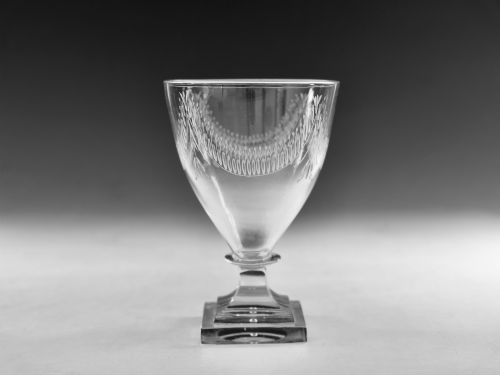
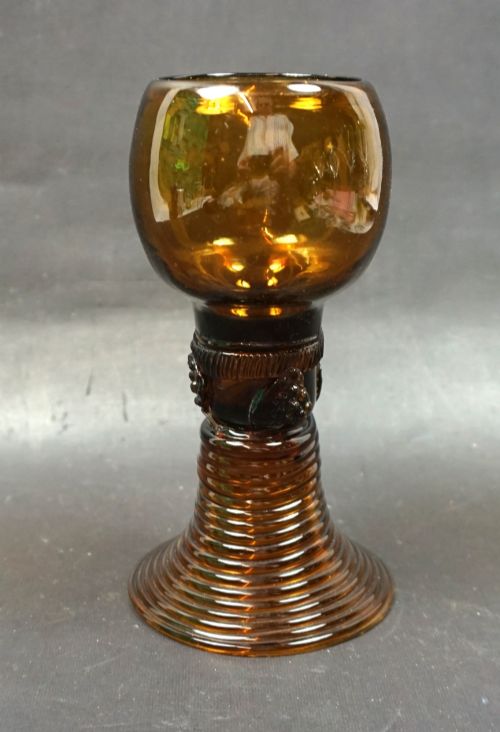
Forms vary from ogee and ovoid bowls to pan top and incurved bucket shapes, often supported by square lemon squeezer feet or heavy moulded bases. English and German origins appear across the selection, encompassing clear lead crystal alongside coloured variants in green and amber.
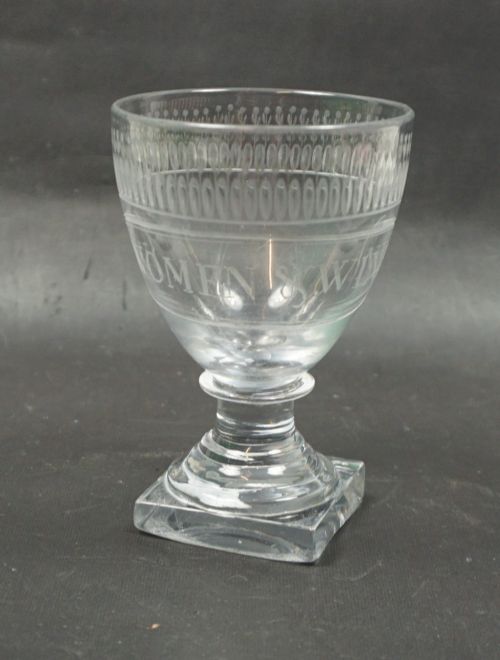
Decoration ranges from plain stems to naive etchings, monogram engravings, and petal moulded bodies. Buyers encounter both single drinking vessels and matched pairs or sets intended for formal dining tables.
How they were made
Makers utilised lead glass, lead crystal, and flint glass, yielding vessels with significant heft and refractive brilliance. Hand-blown glass techniques shaped the ovoid and ogee bowls, while moulds created petal patterns and hollow stems.
Surface ornamentation relied on wheel-engraving and etching to apply monograms, hunting scenes, and commemorative inscriptions. Specialist feet, such as square lemon squeezer bases, required precise pressing and folding while the material remained hot.
18th Century Glass Rummer Retail Price Guide 2026
Typical asking prices for 18th century glass rummer among the pieces listed under this phrase on Sellingantiques today, from the lower quarter to the upper quarter. They describe what is for sale here now, not the wider market.
One surviving vessel bears the spirited, etched proclamation 'Women & Wine', capturing eighteenth-century tavern sentiments in clear lead.
What varies in quality
The distinction between ordinary and exceptional pieces rests upon the crispness of the mould work and the depth of the wheel engraving. Sharp detail in petal moulding and finely articulated hunting scenes or inscriptions elevate a vessel.
Proportion and metal quality dictate the tactile appeal of the glass, with heavier lead crystal exhibiting superior clarity and ring. Matched pairs and complete sets command greater regard than isolated specimens due to the difficulty of survival.
The 18th Century Glass Rummer Glossary
- Rummer
- A large, heavy drinking glass popular in the eighteenth and nineteenth centuries for wine, ale, or punch. These vessels typically feature substantial bowls on short stems.
- Ogee
- An S-shaped curved profile forming the bowl of a drinking glass. This contour helps release the aromas of the drink.
- Lemon squeezer base
- A square, moulded glass foot with indented corners resembling a citrus juicer. This form provides exceptional stability to heavy goblets.
- Petal moulded
- Glass blown into a ribbed or panelled mould to create raised vertical flutes resembling flower petals. The technique adds both grip and visual texture to the lower bowl.
- Roemer
- A continental European drinking vessel, frequently green or amber in colour, featuring a spherical bowl upon a coiled or studded stem. German examples often display elaborate trailing.
18th Century Glass Rummer: Frequently Asked Questions
What were rummers used for?
These vessels served for everyday tavern drinking and formal dining, holding ale, wine, or punch.
Their sturdy build suited the hearty toasts popular during the Georgian period.
How do I tell English from German rummers?
English examples typically utilise clear lead crystal with engraved or plain bowls on square or conical feet.
German roemers frequently employ coloured green or amber glass with distinctive coiled foot rings and hollow stems.
Can I use these glasses today?
These historical vessels tolerate careful modern use for special occasions, provided they avoid dishwashers and sudden temperature shifts.
Hand washing in warm water preserves the fragile engraved surfaces and historic metal.
What does petal moulding look like?
Petal moulding creates raised, rounded vertical panels around the lower half of the bowl, resembling overlapping flower petals.
This technique strengthens the vessel while catching the light across its facets.