
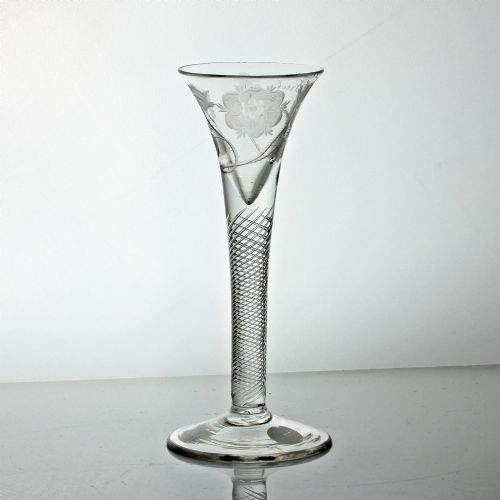


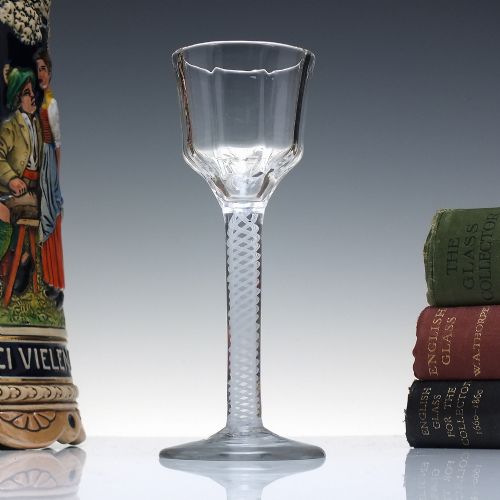
Engraved Georgian Goblet
An engraved georgian goblet brings heavy lead glass, crisp wheel-engraving and eighteenth-century social history straight to the table.
Engraved Georgian Goblet
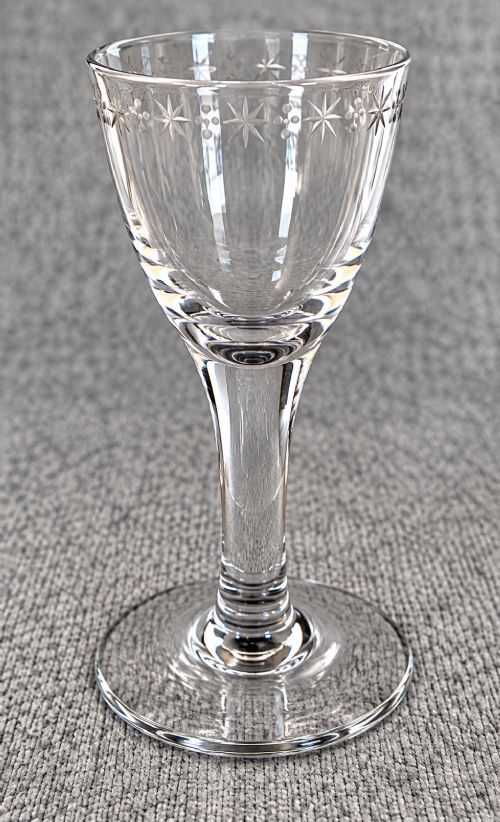
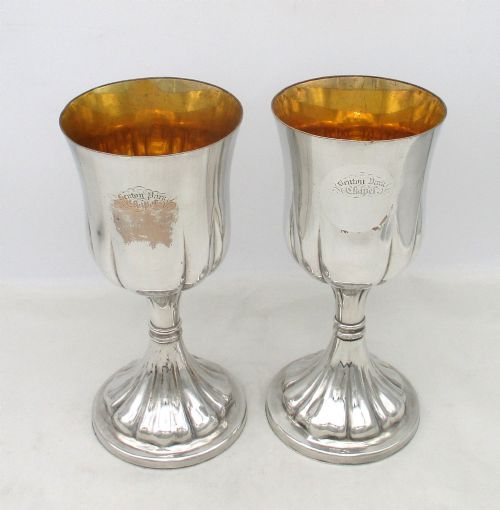
When you search for an engraved georgian goblet, you encounter drinking vessels spanning the eighteenth and early nineteenth centuries, encompassing rummers, wine glasses, ale glasses and dram glasses. The selection includes balustroid, plain stem, facet stem and air twist stems, alongside substantial lead crystal rummers and sterling silver or plated chalices.
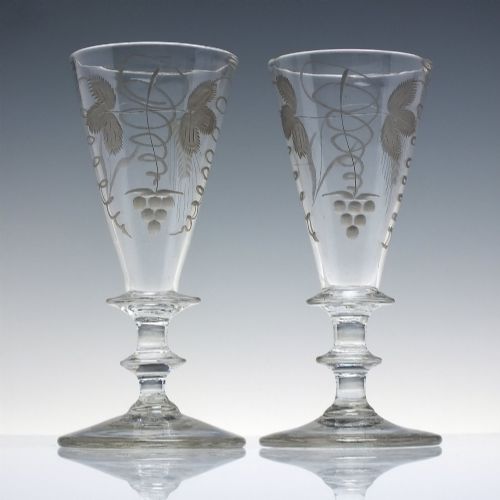
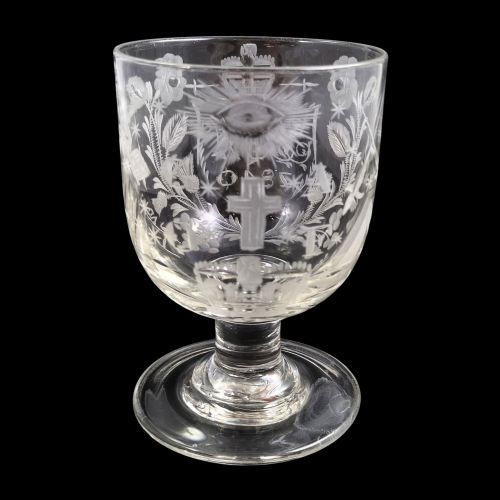
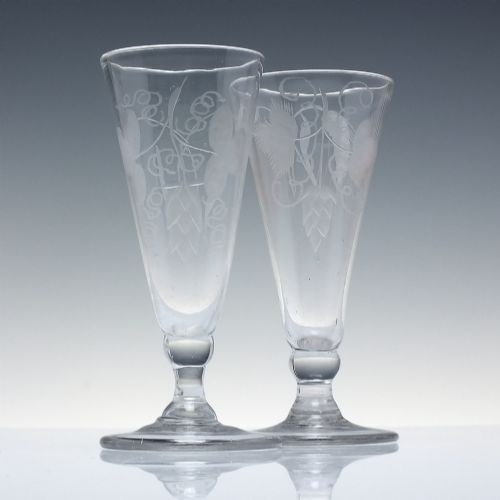
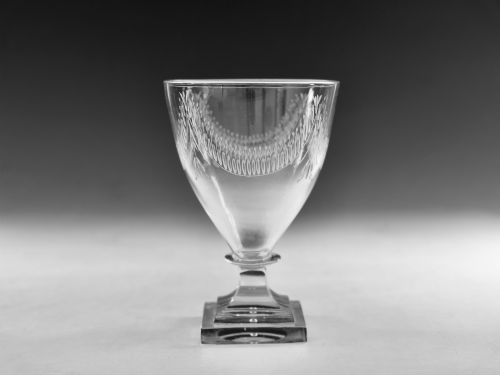
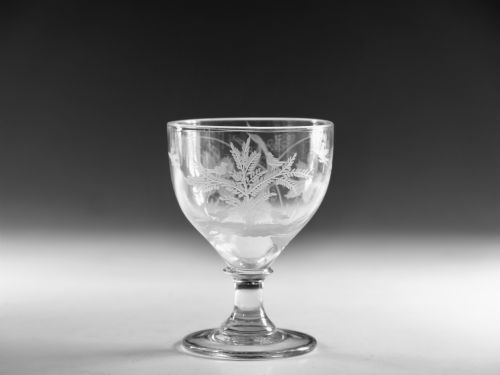
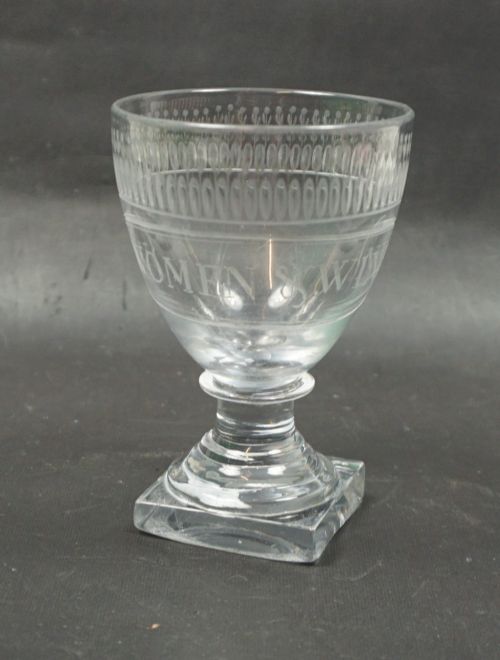
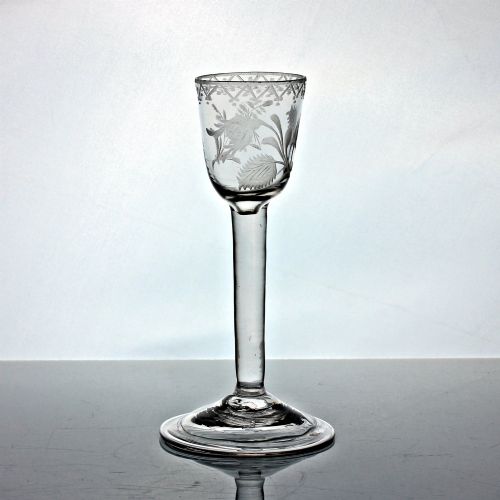
The prevailing form on this page is the English drinking glass from the Georgian and Regency eras, frequently featuring engraved bowls decorated with hops, barley, armorials or commemorative inscriptions. These range from dwarf ale glasses and gin glasses to large serving rummers resting on square bases or wide foot feet.
Materials and Techniques
The pieces are fashioned from lead glass, lead crystal, flint glass and clear glass, alongside copper and sterling silver for the metal chalices. Makers utilised heavy metal compositions that allowed deep wheel-engraving and facet cutting without compromising the structural integrity of the bowl and stem.
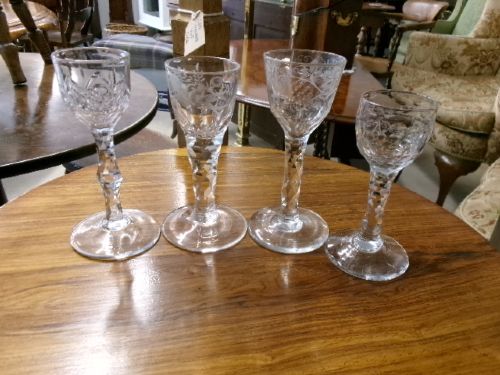
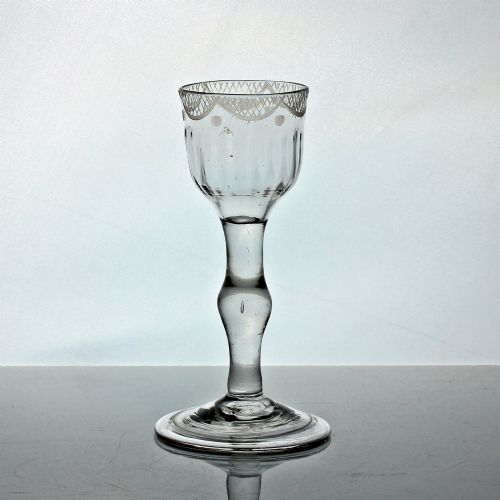
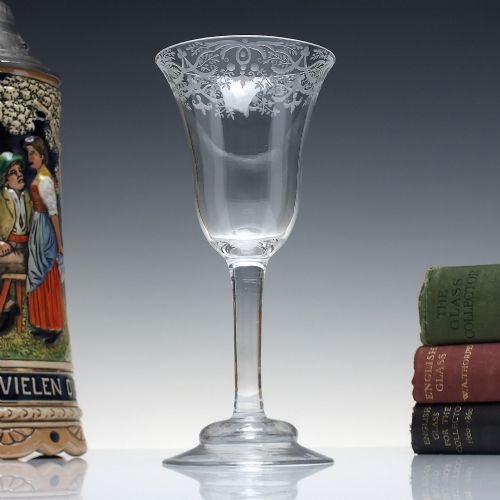
Stems incorporate intricate air twists, single and double series opaque twists, or faceted cuts formed while the metal remained hot. Bowls and feet feature hand-engraved motifs executed with copper wheels and abrasive pastes, ranging from delicate floral swags to bold commemorative scenes.
One cheerful rummer bears the unrepentant declaration 'Women & Wine', ensuring eighteenth-century priorities remain cheerfully intact on the modern sideboard.
Gradations in Execution
The distinction between ordinary and superior pieces lies in the crispness of the wheel-engraving and the purity of the metal. Finer examples display deep, deliberate cuts with distinct shading and high clarity in the lead glass, free from excessive cloudiness or heavy internal imperfections.
Proportion and balance dictate the standing of a goblet, where well-drawn stems and correctly weighted square or conical feet command greater attention. The intricacy of the twist formation and the historical significance of the engraved subject further elevate the distinction of the vessel.
The Engraved Georgian Goblet Glossary
- Rummer
- A large, sturdy drinking glass popular in the late eighteenth and nineteenth centuries, often used for wine, beer or punch. They typically feature stout stems and substantial bowls.
- Air Twist
- A stem formation created by drawing out air bubbles trapped within the molten glass and twisting them into spiral threads. This technique requires exceptional skill from the glassmaker.
- Opaque Twist
- A stem enclosing white or coloured enamel glass rods twisted into single or double series patterns. It appeared frequently on drinking vessels during the middle decades of the eighteenth century.
- Baluster Stem
- A thick, swelling stem shape reminiscent of architectural balusters, characteristic of early eighteenth-century drinking vessels. They add considerable weight and stability to the base of the bowl.
- Lemon Squeezer Base
- A square, moulded glass foot with indented corners resembling the form of a mechanical lemon squeezer. These bases were common on rummers and heavy table glasses around eighteen hundred.
Engraved Georgian Goblet: Frequently Asked Questions
How were these goblets used originally?
These vessels served for everyday drinking, formal toasts, communal dining and celebratory gatherings involving wine, ale, beer or spirits. Specific forms catered to particular drinks, such as narrow ale glasses or large serving rummers meant for passing around the table.
Heavier specimens with armorials or commemorative engravings often marked political allegiances, marriages, military victories or social clubs. Over time, many transitioned from active tavern and dining use into cabinet pieces and display items.
What is an air twist stem?
An air twist is a decorative stem type formed by manipulating tiny bubbles trapped inside the molten metal into delicate spiral threads. Makers elongated and twisted the glass while hot to trap the air in continuous internal strands.
This technique required precise temperature control and steady hands, making such stems prized by collectors of eighteenth-century drinking vessels. They appear alongside opaque twists and plain stems within the current selection.
Are these glasses safe to use today?
While these antique vessels were made for drinking, modern owners generally avoid using them for daily dining due to their age, fragility and the presence of lead in the crystal. Hand washing in lukewarm water without harsh detergents is essential if they are ever handled.
Most buyers prefer to display them in cabinets or on open shelves where the engraved details catch the light. The metal chalices and heavier rummers possess greater sturdiness, but care remains necessary to prevent rim chips and surface scratches.
How do you tell a rummer from a wine glass?
A rummer is noticeably larger, heavier and wider in the bowl than a standard wine glass, built to hold generous portions of beer, ale or punch. They frequently sit on square lemon squeezer bases or heavy circular feet rather than delicate slender stems.
Wine glasses and ale glasses from the eighteenth century tend to feature taller, more refined stems with air twists, opaque twists or plain profiles. Rummers emerged slightly later around the turn of the nineteenth century as more robust tavern and domestic tableware.