




Air Twist Stem Glass
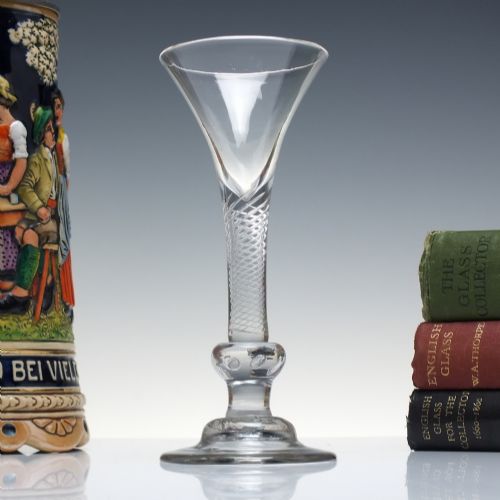
An air twist stem glass brings eighteenth-century glassmaking into the hand, offering delicate optical threads enclosed within clear metal.

Air twist stem glasses on the market
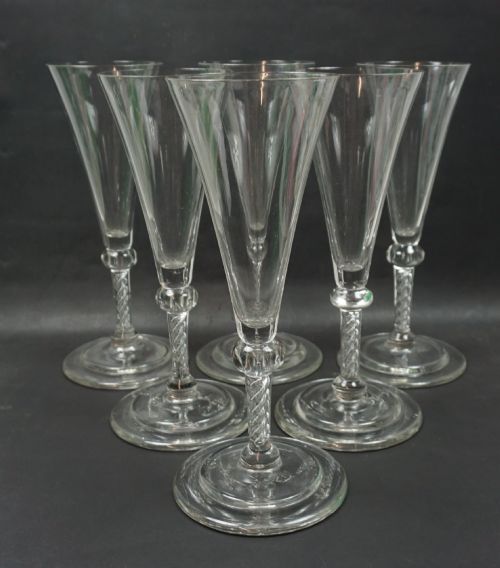
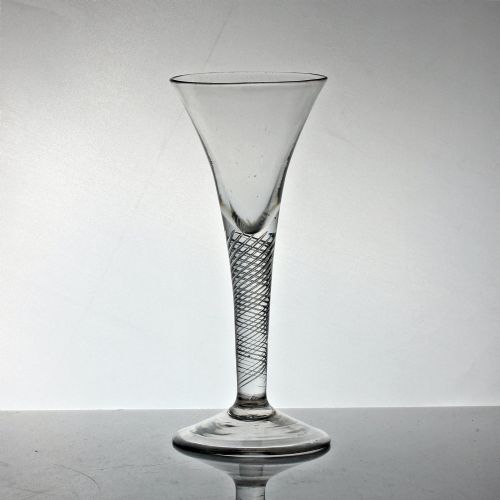
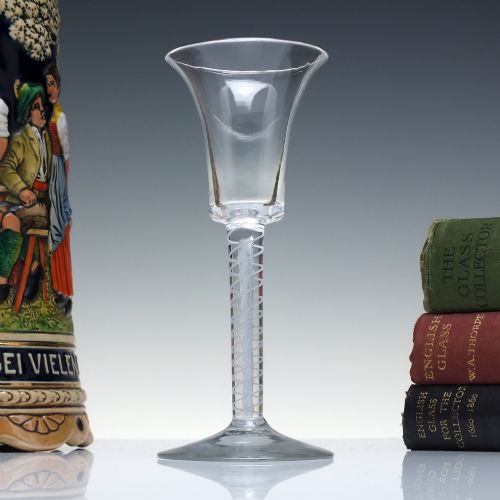
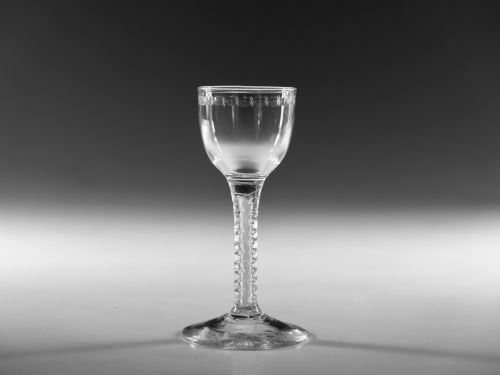
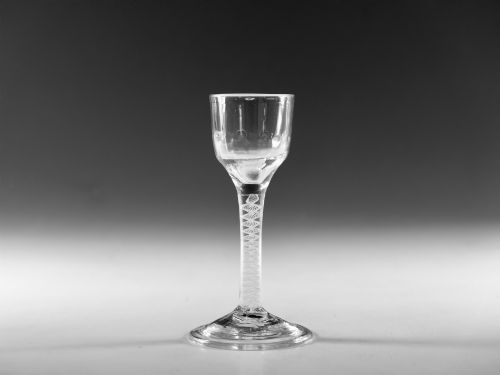
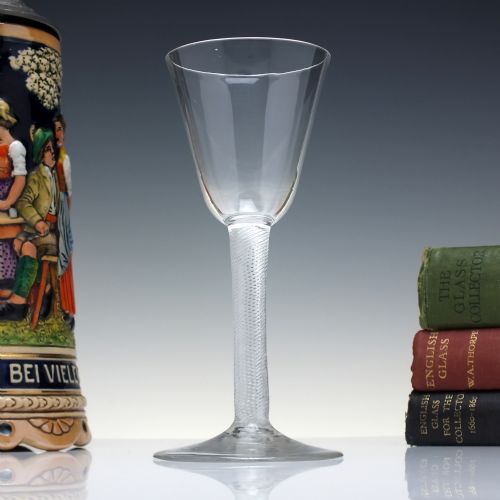
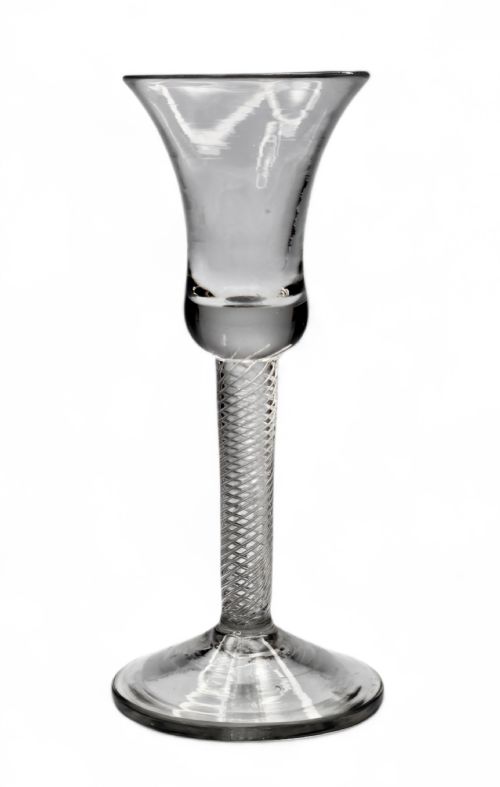
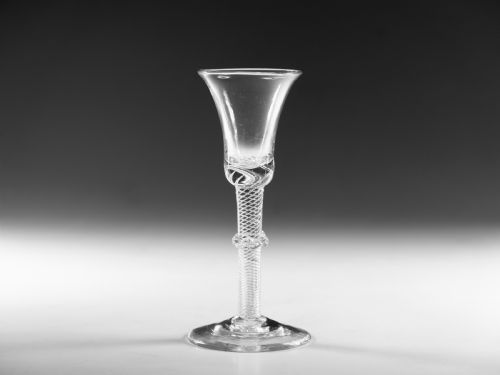
An air twist stem glass is an eighteenth-century drinking vessel defined by internal spiral channels running through the stem. These pieces belong to the Georgian era, with dates stretching from around 1750 to 1800.
Collectors encounter wine glasses, wine cordials, champagne flutes, and ale glasses among the listed forms. The most frequently met examples feature single or multiple spiral threads encased within clear glass stems.
English production dominates this category, utilising lead glass or clear crystal to achieve the characteristic brightness of the period. Bowls vary from bell shapes and fluted ogees to forms carrying engraved hops, barley, or hunting scenes.
Materials and manufacture
Glassmakers created the characteristic twist by forming hot metal around internal bubbles and drawing and twisting the mass before it cooled. This technique produced continuous air channels that catch the light within clear glass, flint glass, or lead crystal stems.
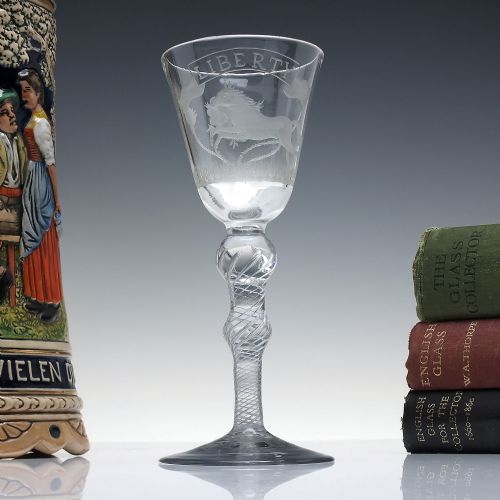
Blowing and tooling shaped the distinct bowl forms, domed feet, and applied details seen across eighteenth-century glassware. Engravers then applied surface decoration such as hunting scenes or botanical motifs to the finished vessels using abrasive wheels.
Retail Price Guide 2026
Typical UK retail prices for air twist stem glass, calculated from the Sellingantiques database of over a million retail prices indexed since 2003. This retail price guide relies exclusively on Sellingantiques data; no external sources or auction records are used, so the figures do not describe the wider market.
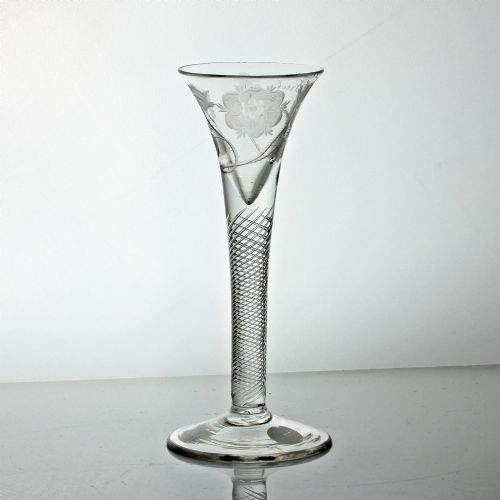
Anti-Jacobite glasses carried secret political allegiances into the tavern, concealed within delicate threads of air and wheel-engraved symbolism.
Judging quality and character
Clarity of the metal separates standard vessels from exceptional pieces, with high-grade lead crystal offering superior transparency and weight. The regularity and fineness of the internal air threads also dictate the visual refinement of the stem.
The crispness of wheel engraving determines distinction in decorated examples, distinguishing swift workshop output from deeply worked pictorial scenes. Proportions between bowl, stem, and foot govern the overall balance of each piece.
The Air Twist Stem Glass Glossary
- Air twist
- A stem containing elongated internal air bubbles drawn into a spiral thread. This optical effect defines the group.
- Lead glass
- A heavy, bright glass formula containing lead oxide. It provides the clarity and brilliance typical of Georgian drinking vessels.
- Ogee bowl
- A bell-shaped cup curving out at the rim and in at the base. This profile appears frequently on mid-eighteenth-century cordials and wines.
- Domed foot
- A conical base rising toward the stem centre. It adds height and visual stability to early wine glasses.
- Multi spiral air twist
- A stem containing numerous fine air threads rather than a single channel. The effect creates complex internal patterns.
Frequently Asked Questions
What is an air twist stem glass?
An air twist stem glass is an eighteenth-century drinking vessel featuring internal spiral channels trapped inside the clear glass stem. These threads were formed while the metal was hot.
Such glasses were designed for wine, ale, and cordials during the Georgian period. Their distinctive stems catch the light without the use of cut facets.
How can I tell if an air twist glass is 18th century?
Dating relies on examining the metal weight, manufacturing marks, and stylistic proportions typical of the Georgian era. Pontil scars on the underside of the foot indicate hand-blown production methods.
Comparative study of bowl shapes, such as bell or ogee profiles, helps distinguish period work from later reproductions. Material composition and surface wear offer further confirmation of age.
Were these glasses used for everyday drinking?
Georgian households utilised lead glass stemware for dining and formal social occasions. Their delicate construction required careful handling during toasts and gatherings.
Over time, many surviving pieces transitioned from active service into cabinets and collections. Today they are appreciated as historical examples of English glasshouse craft.