


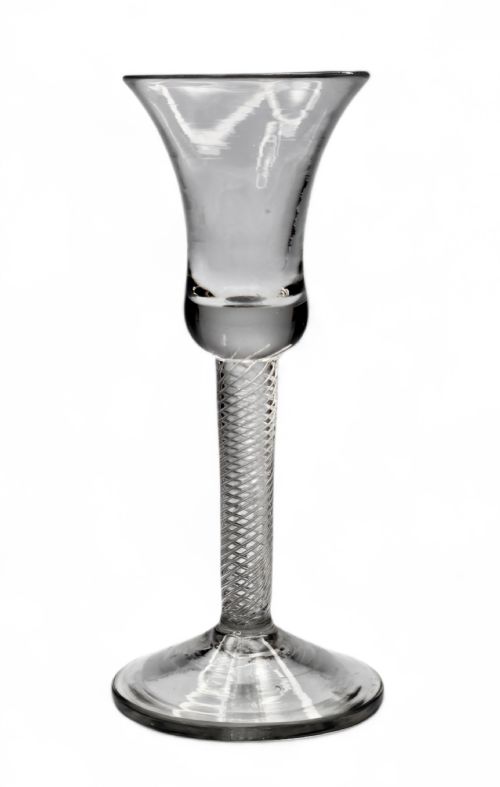
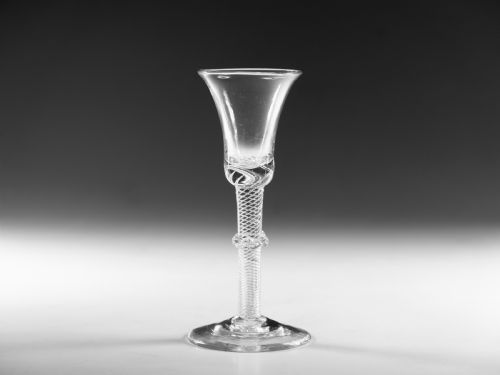
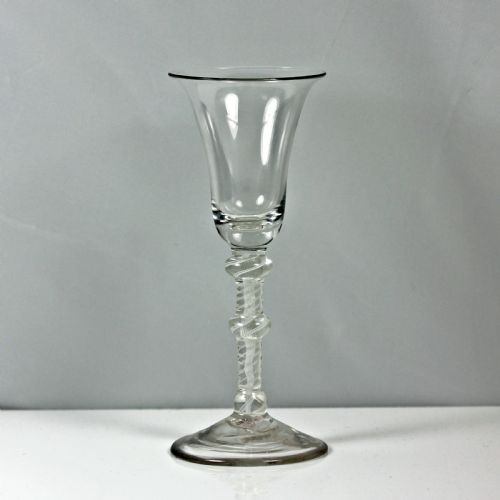


Georgian Bell Bowl Glass
A georgian bell bowl glass brings the tactile weight of the eighteenth century to your table, prized by collectors for its distinctive curved silhouette.
What They Are
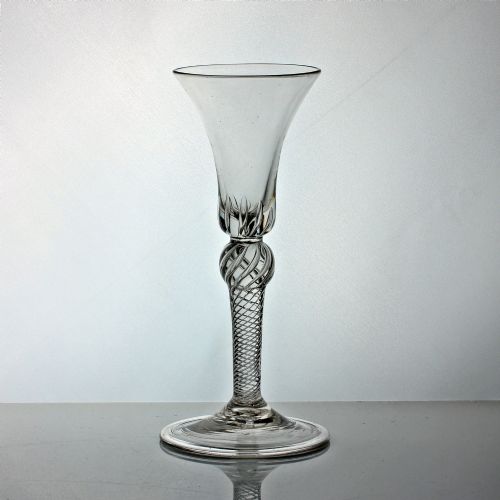
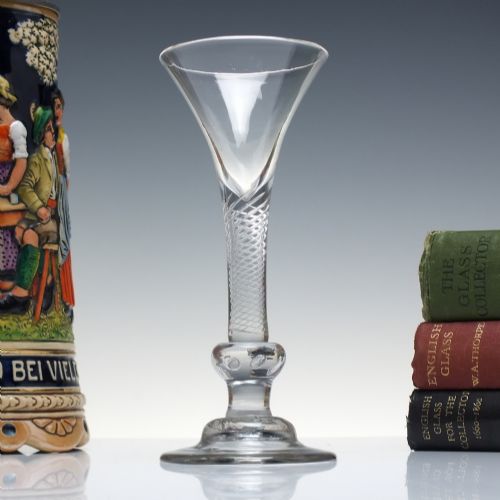
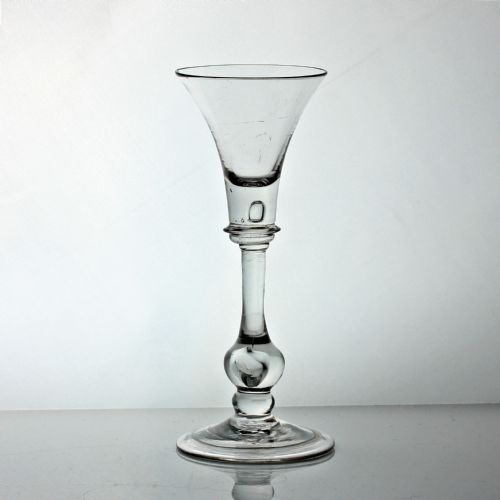
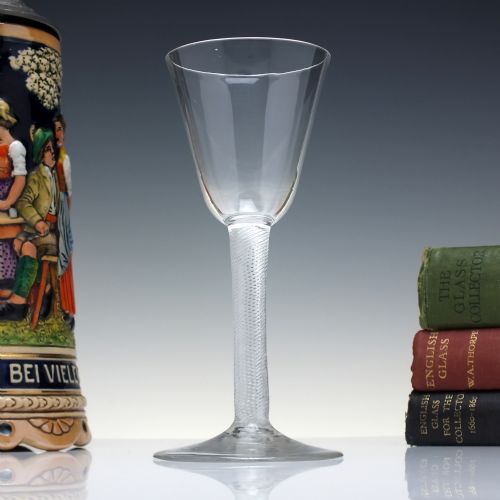
When you search for georgian bell bowl glass, you encounter drinking vessels produced during the eighteenth century, specifically around the seventeen-forties and seventeen-seventies. These pieces take the form of wine glasses, ale glasses, and firing glasses, all sharing the signature flared profile.
The evidence shows examples ranging from plain stems with air tears to complex composite stems, air twists, opaque twists, and colour twists. You are most likely to meet clear lead glass forms featuring either domed feet, knops, or heavy balustroid stems alongside tulip engravings.
How They Were Made
These items were shaped as blown glass utilising lead glass and lead crystal, which allowed makers to form delicate twists and substantial bowls. Craftsmen drew the molten material into thin threads for air twists and opaque twists, enclosing them within the stem during construction.
Engraving was applied directly to the clear glass surface, as seen in tulip-engraved examples. Feet were frequently formed with domed profiles or folded rims to provide stability to the heavy lead metal.
Retail Price Guide 2026
Typical UK retail prices for georgian bell bowl glass, calculated from the Sellingantiques database of over a million retail prices indexed since 2003. This retail price guide relies exclusively on Sellingantiques data; no external sources or auction records are used, so the figures do not describe the wider market.
Some glasses were built with bases so thick they could be banged on tavern tables without cracking.
What Varies in Quality
Quality rests upon the complexity of the stem formation and the clarity of the metal. Single, double, and triple-series twists require immense skill to maintain uniform spacing throughout the length of the glass.
The presence of a domed foot, multiple knops, or polychrome enamel threads elevates a piece above standard plain stem varieties. The weight and brilliance of the lead crystal also distinguish superior examples.
The Georgian Bell Bowl Glass Glossary
- Bell bowl
- A drinking vessel bowl shaped like an inverted bell with a flaring rim. This profile defines the Georgian drinking glasses recorded in the archive.
- Air twist
- A stem containing elongated spiral bubbles trapped inside the glass. These are formed by drawing air out of heated glass rods before twisting them.
- Opaque twist
- A stem featuring white or coloured enamel glass threads drawn into spiral patterns. They sit inside clear lead glass to create striking optical effects.
- Balustroid
- A heavy stem form derived from architectural balusters, popular in mid-eighteenth-century drinking vessels. It often incorporates knops and swelling profiles.
- Firing glass
- A short, heavy-based drinking glass designed to be banged on a table instead of toasted. They feature thick feet to withstand the impact.
Frequently Asked Questions
What is a bell bowl glass?
It is an eighteenth-century drinking vessel featuring a curved, flaring bowl reminiscent of an inverted bell. These pieces were primarily used for wine and ale.
The form was standard during the Georgian period and appears with various stem treatments, including air twists, opaque twists, and plain stems.
How do I date a Georgian glass?
Dating relies on examining the stem construction, foot formation, and manufacturing characteristics of the lead glass. Pieces from the seventeen-forties often exhibit balustroid or plain stems with air tears.
Later decades introduced complex opaque and colour twists. Tool marks and pontil scars on the underside also provide clues to the production era.
Were these glasses used for wine?
They served various alcoholic beverages, including wine, ale, and spirits, depending on the specific capacity and bowl shape. Smaller bowls suited potent drinks, while firing glasses accommodated toastings.
Tulip engravings and colour twists indicate they were made for dining and social gatherings.