





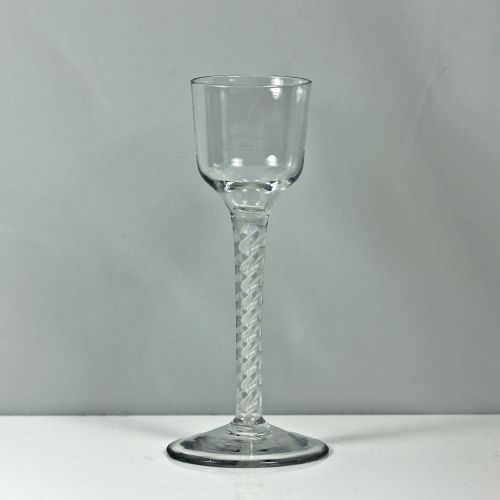
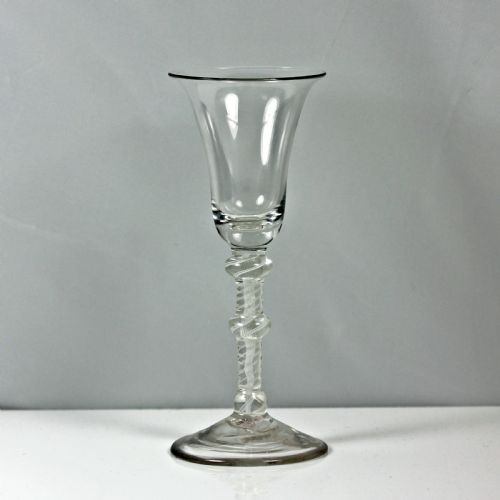
White Twist Wine Glass
A white twist wine glass brings the subtle, milky threads of eighteenth-century glasshouses straight to your table.
White Twist Wine Glass
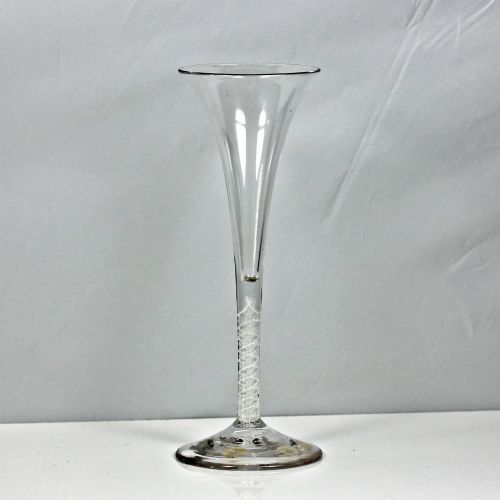
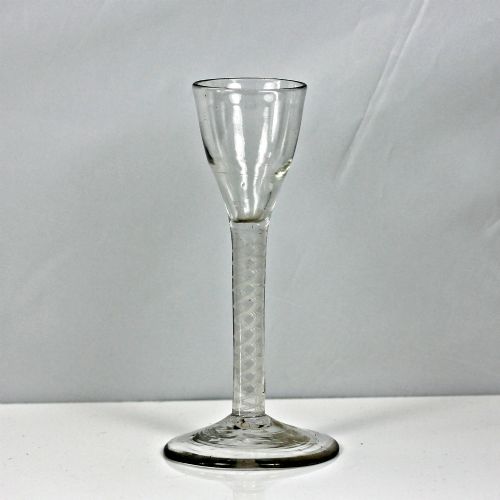
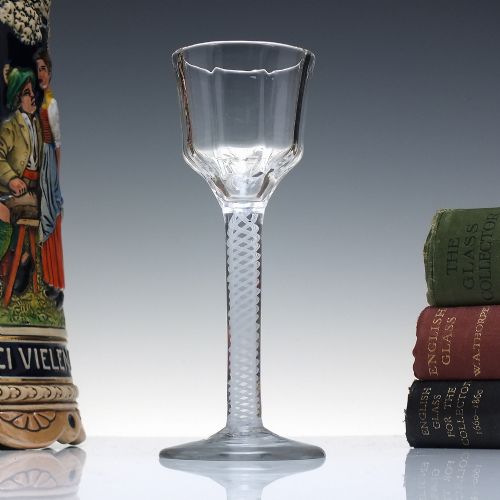
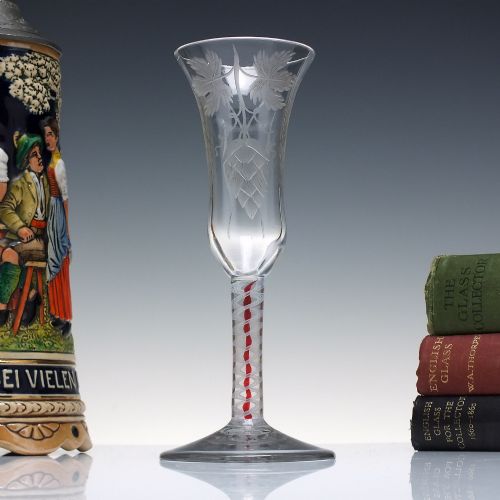
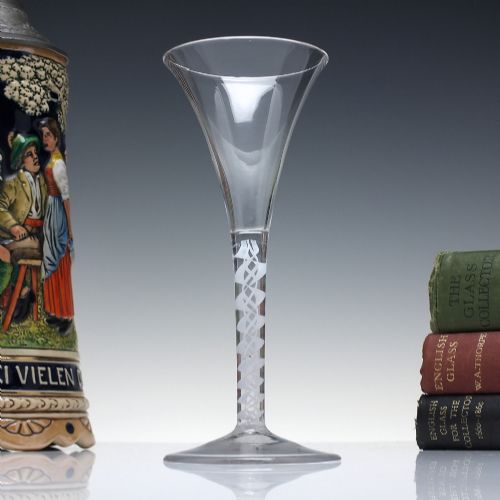
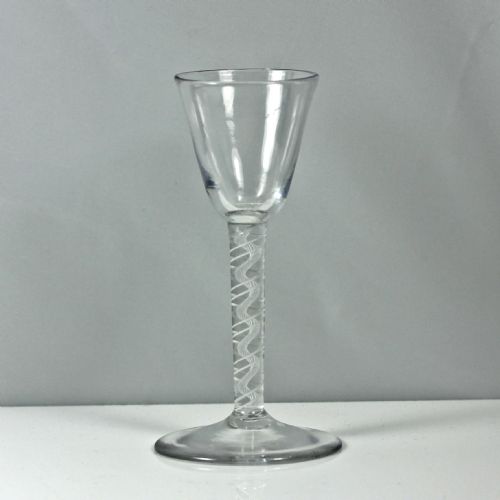
A white twist wine glass is an eighteenth-century drinking vessel defined by its opaque white enamel stem. When you search for this phrase, you enter the world of Georgian lead glass production, where master blowers manipulated white enamel threads inside clear metal.
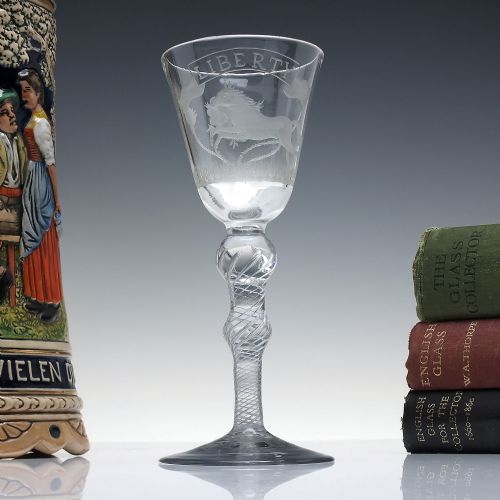
The pieces you meet most often on this page belong to the Georgian period, specifically the middle decades of the eighteenth century. They take forms such as trumpet, ogee, and bell bowls set above stems featuring single or double series twists.
Alongside standard wine glasses, the selection includes cordial glasses, sweetmeat glasses, and occasional ale glasses. These narrower or shallower vessels served different pours at the dining table while retaining the signature white enamel stem.
How they were made
Glassmakers created these stems using lead glass, flint glass, and enamel glass. They gathered white enamel threads from small pots within the furnace and incorporated them into a clear glass base before drawing and twisting the hot metal.
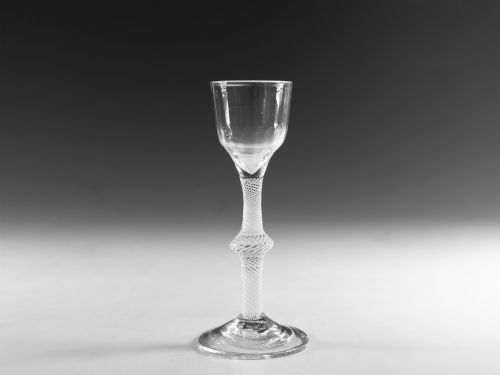
Single series twists use one set of enamel threads, whereas double series examples combine opaque white threads with inner gauze or air twist elements. Workers formed knops, collars, and ribbed ogee bowls by hand while the metal remained pliable.
White Twist Wine Glass Retail Price Guide 2026
Typical asking prices for white twist wine glass among the pieces listed under this phrase on Sellingantiques today, from the lower quarter to the upper quarter. They describe what is for sale here now, not the wider market.
The inventory records multiple variations of opaque twists, including single series, double series, and multi-spiral stems with knops.
What varies in quality
Quality in a white twist wine glass rests on the crispness and complexity of the internal threads. Clean, sharply defined enamel lines against clear metal separate superior examples from muddied or thick stems.
Proportion and form dictate the standing of a piece within its type. A trumpet bowl balanced over a well-drawn multi-spiral stem displays the maker's supreme control over hot metal.
The White Twist Wine Glass Glossary
- Opaque twist
- A stem containing white enamel rods twisted within clear lead glass. This technique replaced heavier baluster stems during the Georgian era.
- Double series
- A stem configuration featuring two distinct sets of threads, such as an outer spiral surrounding an inner gauze or secondary twist. It creates a dense, intricate pattern inside the glass.
- Ogee bowl
- An architectural profile curving out at the rim and in at the base, resembling an elongated letter S. Many eighteenth-century drinking glasses utilise this shape for improved mouthfeel.
- Knop
- A decorative swelling or knob on the stem of a glass. Makers formed single, double, or triple knops to add weight and visual interest.
- Lead glass
- A heavy, brilliant glass made by adding lead oxide to the batch. It gave Georgian drinking vessels their characteristic ring and clarity.
White Twist Wine Glass: Frequently Asked Questions
What is an opaque twist wine glass?
An opaque twist wine glass is an eighteenth-century drinking vessel with a stem enclosing white enamel threads. These threads form spirals, gauzes, or cables inside clear lead glass.
Craftsmen produced them primarily during the mid-Georgian period by manipulating molten glass rods before the metal cooled. They represent a significant stylistic shift from earlier heavy baluster stems.
What is the difference between single and double series?
A single series stem contains just one set of twisted elements, such as a pair of opaque white spiral threads running down the centre. The effect is clean and restrained.
Double series stems combine two distinct twists within the same rod, often pairing an outer white enamel spiral with an inner gauze or secondary corkscrew. This creates a denser, more complex visual texture inside the clear metal.
Were these glasses used for wine?
Georgian drinking glasses served various beverages depending on their capacity and bowl shape. While many held wine, smaller vessels functioned as cordial or sweetmeat glasses for liqueurs and rich desserts.
Ale glasses and champagne glasses also appear in the period, featuring taller narrow bowls or specific flute-moulded designs suited to their contents.