

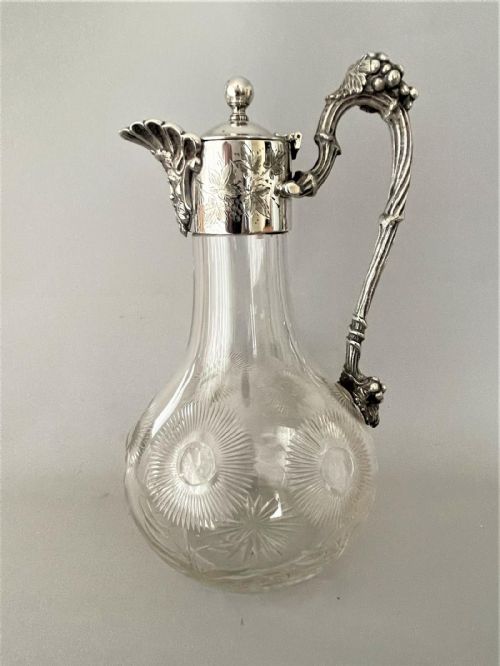
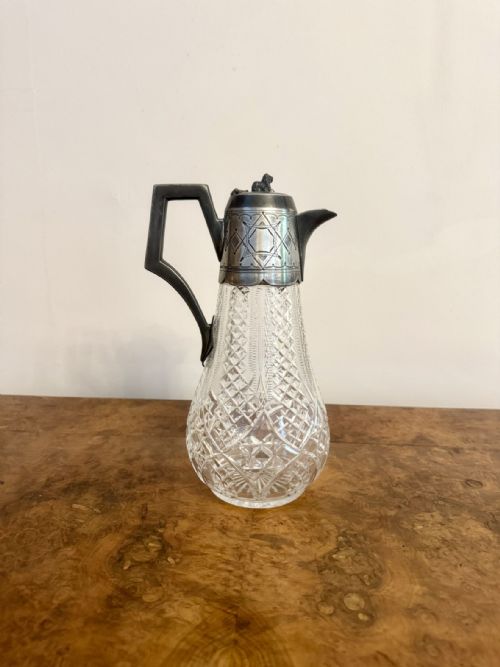
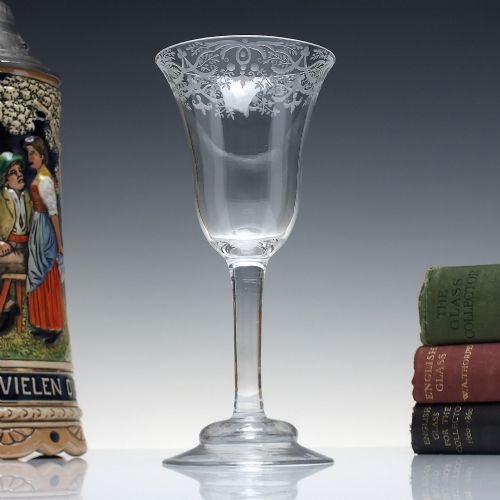
Engraved Wine Glass
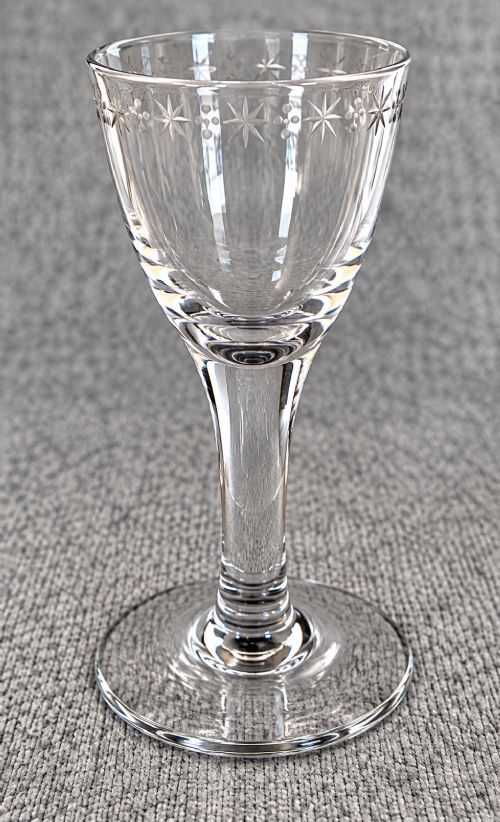
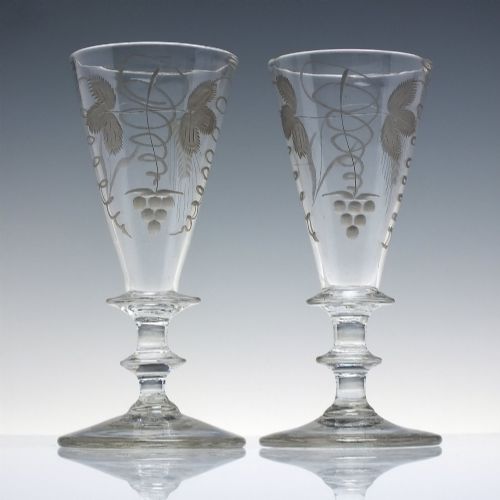
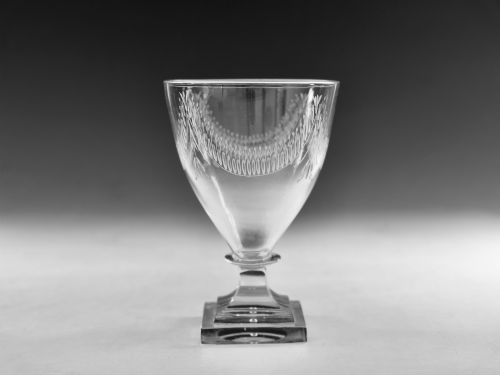
An engraved wine glass brings tactile history to the table, combining delicate wheel-cut ornamentation with the weight of Georgian lead crystal or Victorian glass.
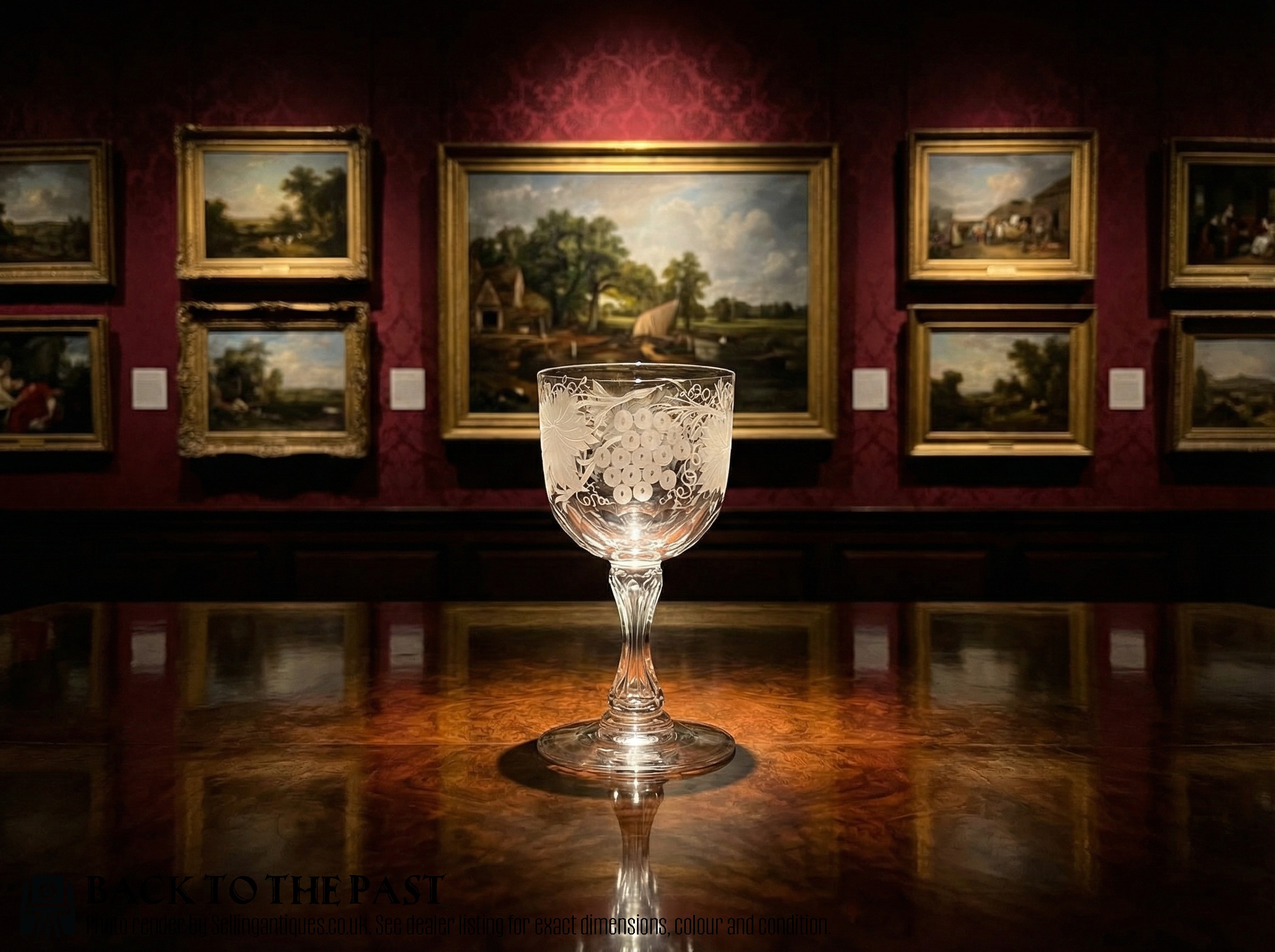
Engraved Wine Glass
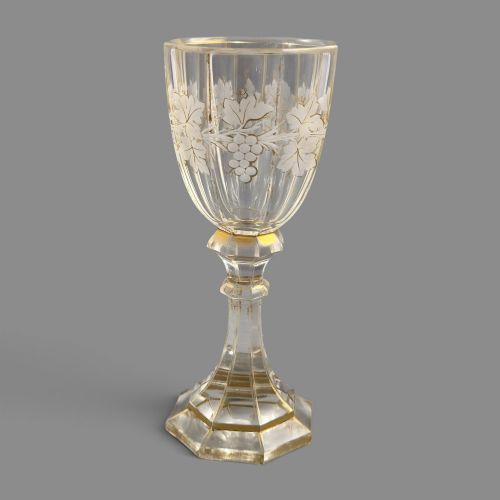
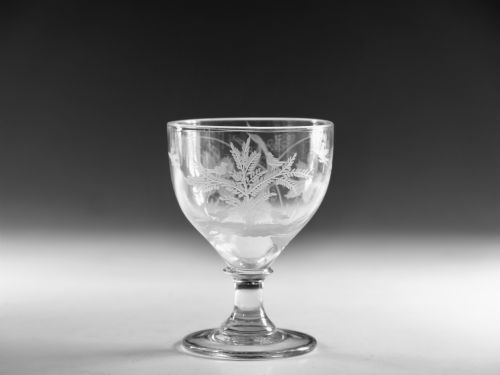
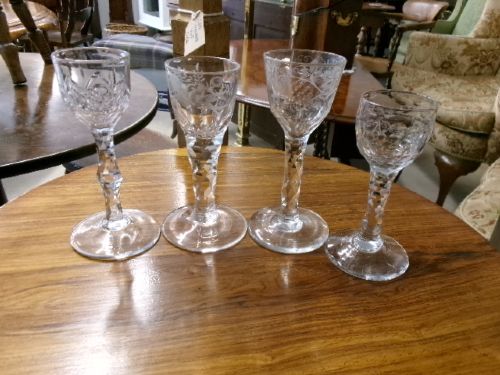
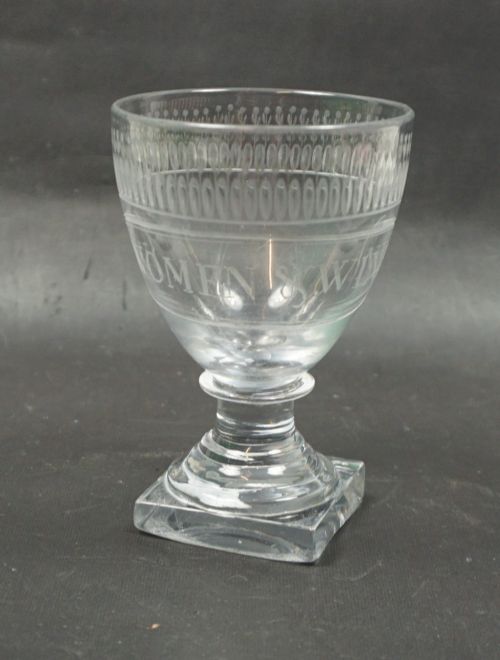
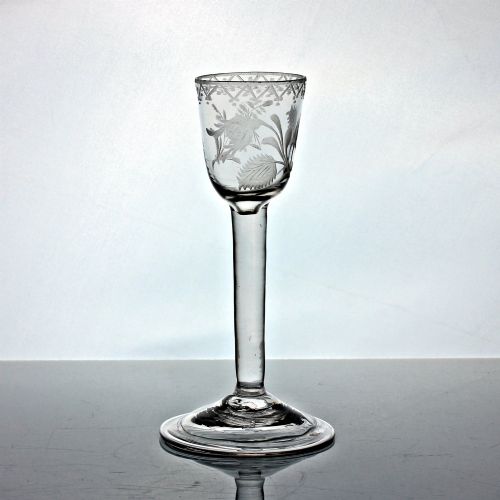
When you search for an engraved wine glass, you encounter drinking vessels spanning from the early eighteenth century through the Victorian and Edwardian eras. The selection ranges from slender Jacobite stems decorated with symbolic roses to heavy facet-cut rummers and colourful continental roemers.
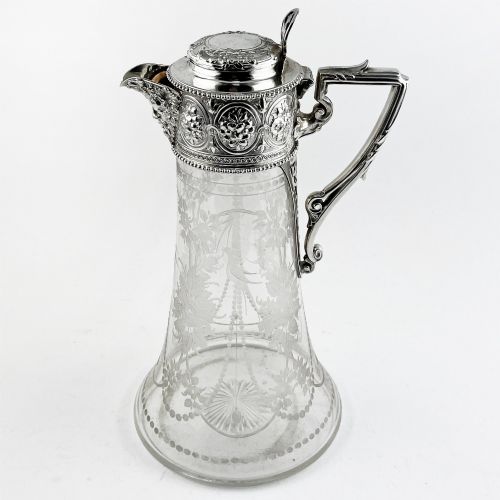
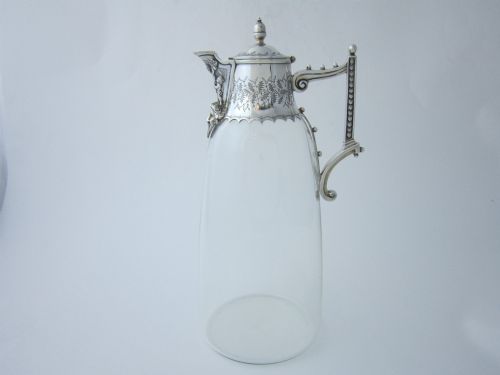
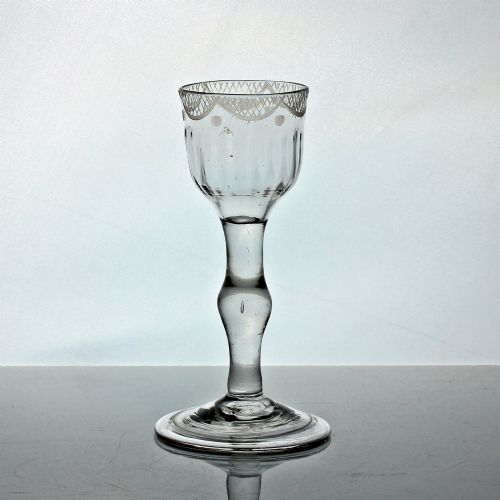
Eighteenth-century examples often display air twist or opaque twist stems alongside floral or armorial wheel engraving. Later nineteenth-century pieces lean towards rich cranberry, green, or amber hues, frequently paired with silver-plated or sterling mounts.
Materials and construction
These vessels rely heavily on lead crystal and clear lead glass, which provided the heavy, refractive body necessary for deep wheel cutting and fine engraving. Makers also worked with coloured glass, producing vibrant cranberry, ruby red, and uranium green pieces through mineral oxides.
Stems were formed using specialised techniques such as air twists, multi-spiral threads, and opaque white enamel glass twists encased within the molten metal. Artisans finished the bowls using copper wheel engraving to incise floral swags, coats of arms, and detailed figural scenes.
Engraved Wine Glass Retail Price Guide 2026
Typical asking prices for engraved wine glass among the pieces listed under this phrase on Sellingantiques today, from the lower quarter to the upper quarter. They describe what is for sale here now, not the wider market.
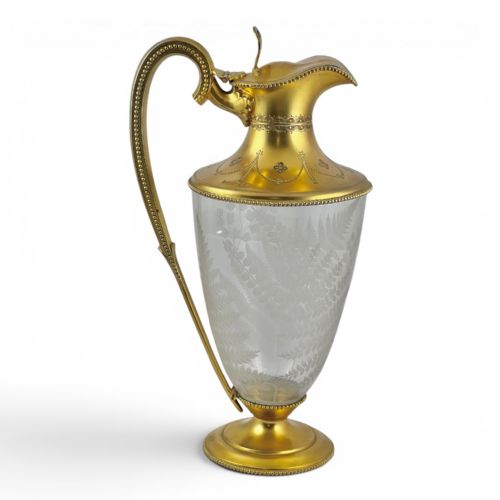
Listings span plain stem wine glasses, facet-cut rummers, and silver-mounted decanters across Georgian and Victorian periods.
Markers of distinction
Quality rests upon the crispness of the wheel engraving and the clarity of the underlying metal. Superior pieces display deep, precisely articulated cuts and well-proportioned stems without cloudiness or heavy internal bubbling.
Asprey and Co. Ltd·Moser Bohemian·Webb Corbett·Josphinenhutte·James Giles·Baccarat
The Engraved Wine Glass Glossary
- Air twist
- A stem containing spiral threads of trapped air created by drawing and twisting heated glass rods. This technique gained popularity during the mid-eighteenth century.
- Baluster stem
- A heavy, swelling stem shape reminiscent of architectural balusters, typical of early eighteenth-century drinking vessels. It gives the glass a low centre of gravity.
- Ogee bowl
- A bell-shaped bowl with an 'S'-shaped profile curving out at the rim. This form was widely used on eighteenth-century wine glasses and rummers.
- Roemer
- A continental goblet featuring a large spherical bowl resting on a cylindrical stem decorated with applied prunts. These often appear in green or amber glass.
- Rummer
- A capacious, heavy-bottomed drinking glass developed around 1800 for ale or wine. They frequently feature faceted lower bowls and sturdy square or rounded feet.
Engraved Wine Glass: Frequently Asked Questions
Are these glasses safe for daily use?
While structurally sound, antique lead glass and delicate stems deserve careful handling during modern dining. Eighteenth-century vessels benefit from gentle use at special occasions rather than rough everyday service.
Hand washing remains mandatory, as modern dishwashers cloud historical glass surfaces and weaken fragile twist stems.
How can I tell an 18th-century glass from a Victorian copy?
Examine the foot of the vessel for tool marks, pontil scars, and natural wear patterns accumulated over generations. Eighteenth-century lead metal often shows a distinct greyish cast and greater heft relative to its size.
Victorian reproductions and later revival pieces tend to exhibit sharper symmetry and different refractive qualities under natural light.
What are Jacobite wine glasses?
Jacobite glasses are political artefacts secretly used to toast the exiled Stuart claimants to the British throne. They carry coded engravings such as the six-petalled rose, oak leaves, or specific portraits.
These pieces form a distinct collecting category separate from standard Georgian table glass due to their historical associations.