


Georgian Engraved Glassware
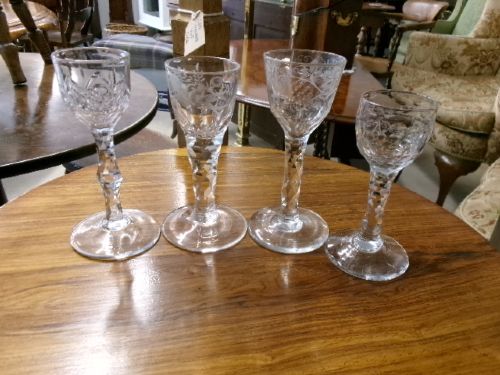
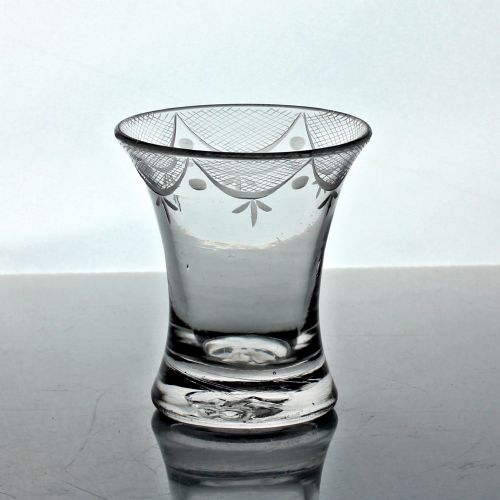
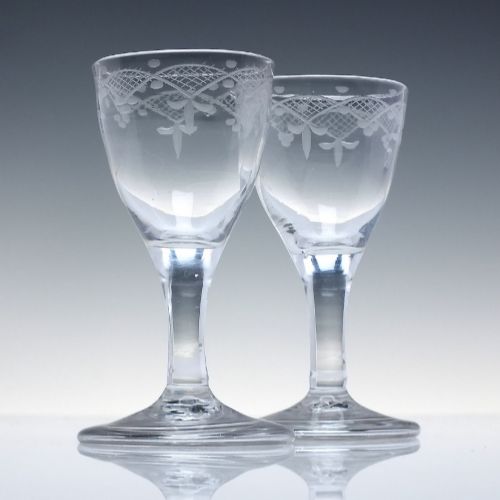
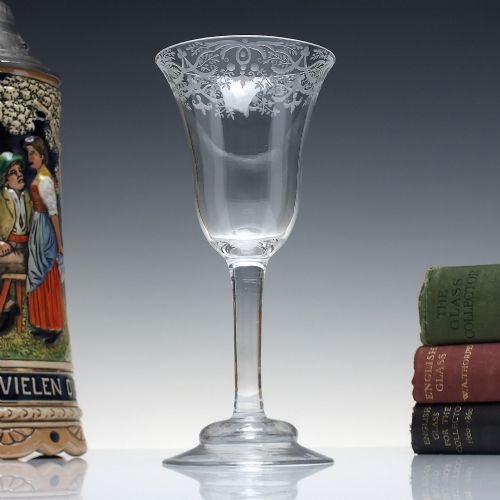
Georgian engraved glassware brings tactile history to the table, offering drinking vessels decorated with wheel-cut or etched motifs from the eighteenth and early nineteenth centuries.
Georgian Engraved Glassware
Georgian engraved glassware comprises drinking vessels and serving pieces created during the eighteenth and early nineteenth centuries, featuring decorative surface cutting or etching. These items include wine glasses, rummers, dram glasses, goblets, and decanters.
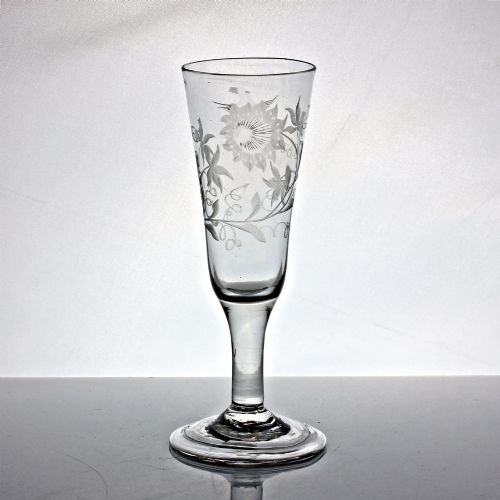
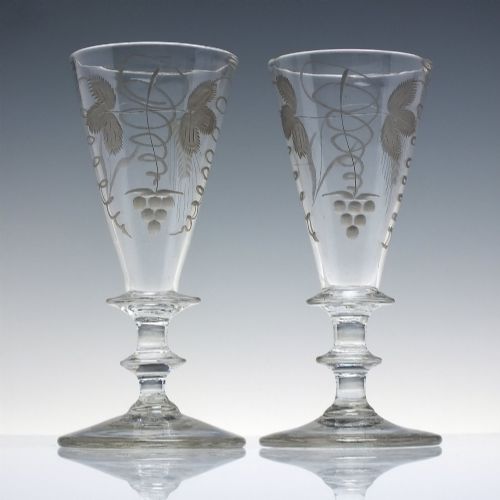
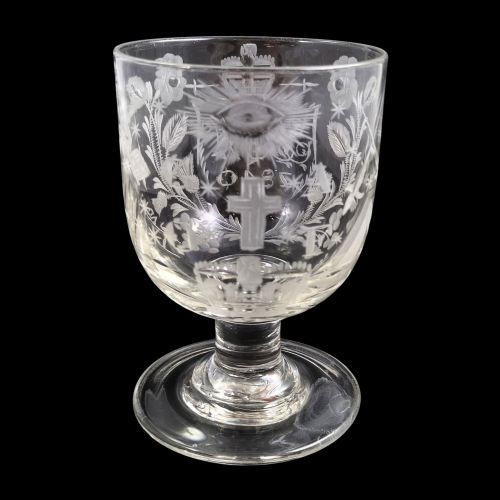
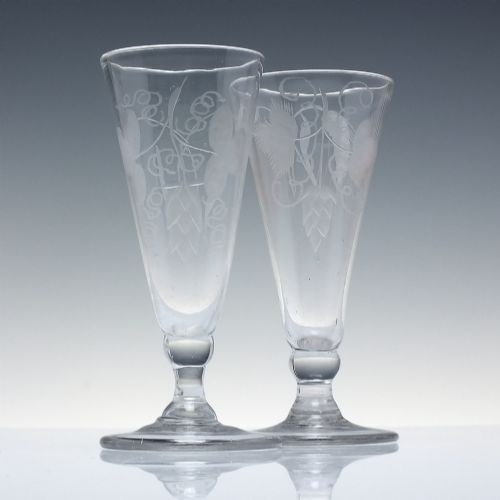
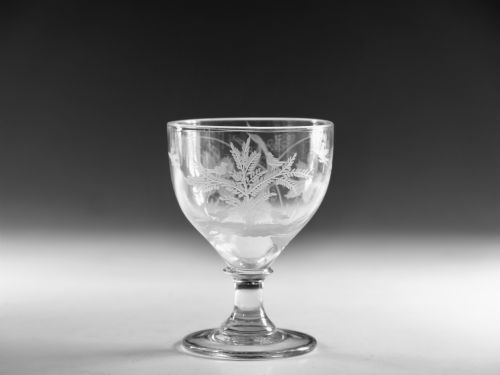
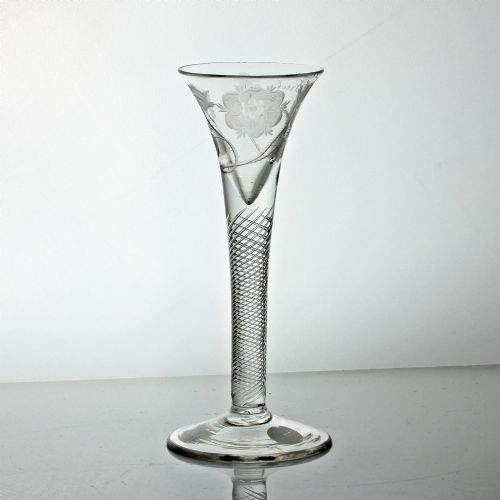
Buyers searching for georgian engraved glassware will frequently encounter wine glasses and rummers decorated with floral motifs, hops, and barley, or specific historical emblems such as Jacobite symbols. Most examples date from the eighteenth century through to the Regency period.
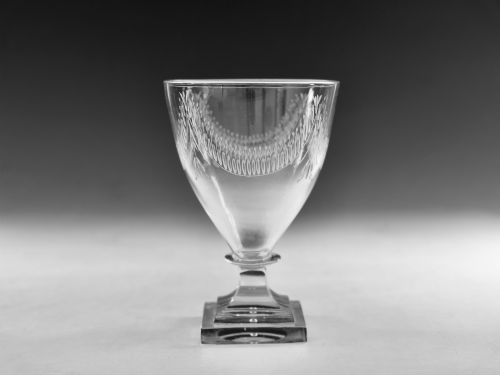
The forms range from small dram and firing glasses with folded feet to large serving rummers with square lemon squeezer bases. These pieces reflect the drinking habits and social rituals of the period through varied stem formations and bowl shapes.
Materials and Techniques
The pieces are formed from lead glass, flint glass, and clear lead glass, often created using hand-blown techniques that produce natural variations in the material. Green glass also appears among specific beaker vases from the period.
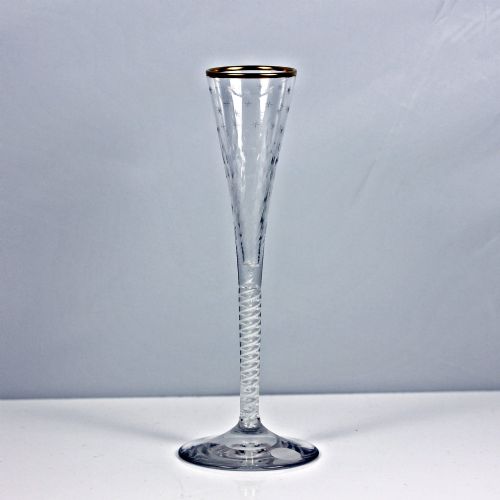
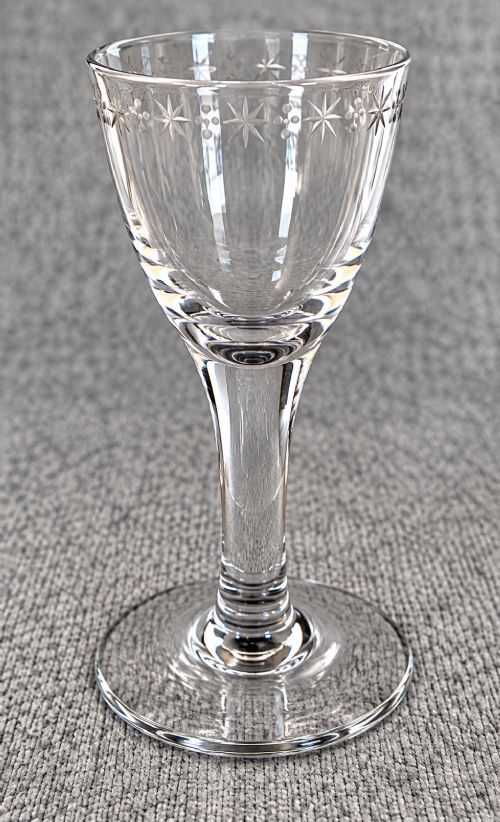
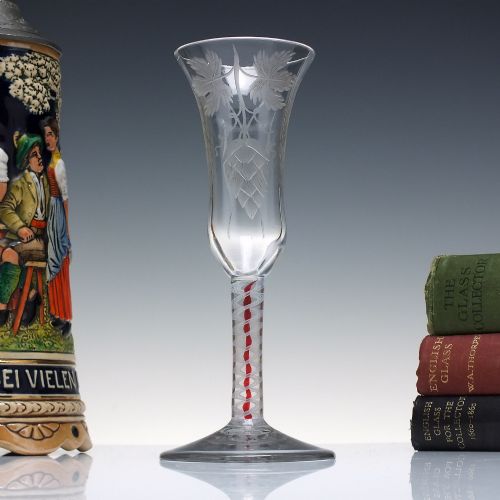
Decoration is applied through wheel-engraving or etching, creating permanent surface designs that depict hops, barley, armorial bearings, or floral sprays. Stems frequently incorporate air twists, colour twists, plain formations, or faceting.
Object forms include rummers with lemon squeezer feet, dram glasses with folded feet, and large beaker vases.
Factors of Quality
Quality rests upon the clarity of the metal and the crispness of the wheel engraving or etching on the bowl. Finer examples display precise execution in decorative motifs such as hops and barley or heraldic armorials.
Structural complexity also dictates standing within the range, distinguishing simple plain stems and plain bowls from intricate air twists, colour twists, and faceted bases with folded or lemon squeezer feet.
The Georgian Engraved Glassware Glossary
- Rummer
- A large drinking glass popular in the eighteenth and nineteenth centuries, often featuring an engraved bowl decorated with hops and barley.
- Air twist
- An optical effect inside the stem of a glass created by elongated air bubbles drawn through the molten metal before manipulation.
- Firing glass
- A heavy-bottomed drinking glass designed to be thumped on a table rather than set down gently during toasts.
- Lemon squeezer foot
- A square glass base pressed into a moulded shape resembling a kitchen squeezer, typical of the Regency period.
- Dram glass
- A small drinking vessel used for serving spirits, frequently encountered with folded feet for added rim strength.
Georgian Engraved Glassware: Frequently Asked Questions
What drinks were these glasses used for?
These vessels served various alcoholic beverages depending on their specific form. Smaller vessels like dram glasses held spirits, while taller rummers and goblets accommodated beer, ale, or wine.
Specialised shapes included serving bottles, decanters, and champagne glasses, reflecting the varied dining and drinking customs of the eighteenth century.
How do I identify Jacobite glassware?
Jacobite glasses feature covert political iconography supporting the exiled Stuart dynasty. Look for engraved symbols such as roses, buds, or specific mottoes like Fiat.
These motifs were often etched onto plain stems, air twists, or colour twist stems during the eighteenth century as secret toasts.
What is the difference between air twist and colour twist stems?
An air twist contains fine, spiralling threads of trapped air running through the transparent stem of the glass. A colour twist incorporates threads of coloured glass within the stem structure.
Both techniques required immense skill from the glassblower to maintain uniform spirals throughout the stem.
Can I use these antique glasses daily?
While these pieces were originally created for functional use, their age and delicate lead glass composition require careful handling. Hand washing in lukewarm water is essential to preserve the historical material.
Many collectors prefer to display them or reserve them for occasional use to prevent accidental damage to the fragile stems and engraved bowls.