




Clear Glass Ale Goblet
These clear glass ale goblet examples span Georgian and Edwardian periods, offering tactile drinking vessels shaped for historic ales.
Clear Glass Ale Goblet
A clear glass ale goblet serves as a traditional drinking vessel designed specifically for enjoying historic ales and barley wines. These pieces appear most frequently in Georgian forms, alongside occasional Edwardian examples.
The category encompasses stemware created for beverage consumption, featuring distinct tall bowls and sturdy feet. Many examples date from the eighteenth century, demonstrating the evolution of English drinking customs.
Materials and construction
Makers utilised lead glass, flint glass, and hand-blown glass techniques to shape these drinking glasses. The molten material was manipulated by hand, resulting in characteristic forms with folded feet and applied stems.
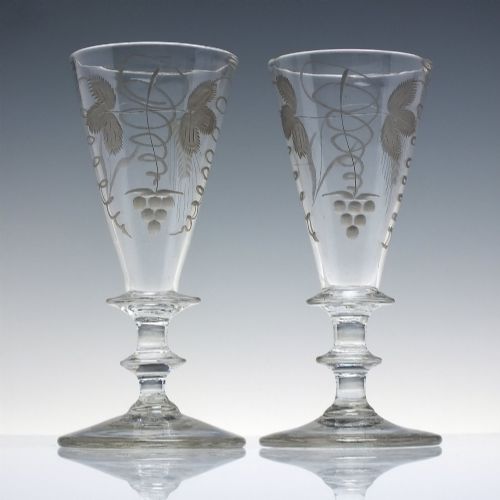
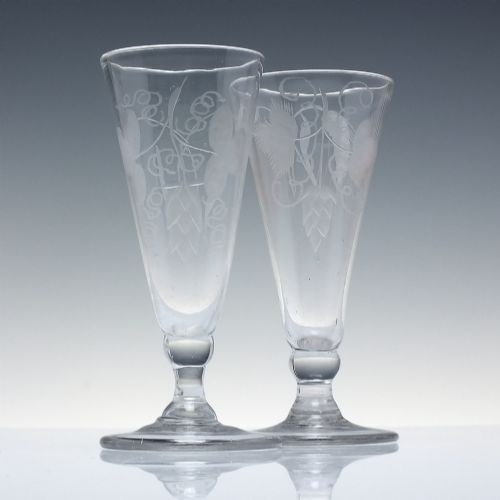
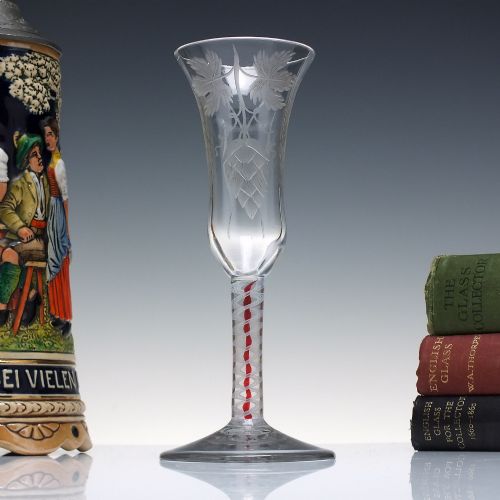
Decoration often involved intricate wheel engraving to depict hops and barley motifs upon the bowl. Internal optical effects like air twists, multi-spiral twists, and wrythen patterns were achieved during the blowing process.
Listings for this clear glass ale goblet category encompass lead crystal, enamel, and hand-blown glass across Georgian and Edwardian periods.
Quality and character
Distinctions in quality often rest upon the complexity of the internal stem formations, such as air twists and opaque twists. Superior examples display balanced proportions between the tall bowl, stem, and foot.
The Clear Glass Ale Goblet Glossary
- Ale glass
- A tall drinking vessel with a narrow bowl designed for serving ale or beer. These glasses often feature engraved hop and barley motifs.
- Air twist
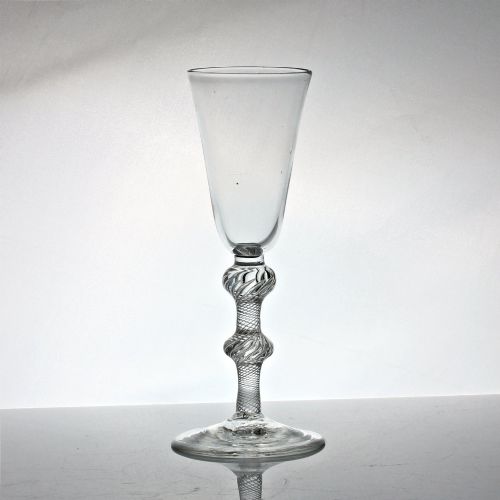
- An optical effect within a glass stem created by elongated air bubbles drawn out and twisted during manufacture. This technique creates a delicate spiral pattern inside the metal.
- Folded foot
- A base edge turned under and sealed back against the underside to add strength and stability. This feature appears frequently on eighteenth-century English drinking vessels.
- Opaque twist
- A stem decoration formed using white enamel rods enclosed within clear glass to create intricate internal threads. These threads are twisted along the axis of the stem.
- Wrythen
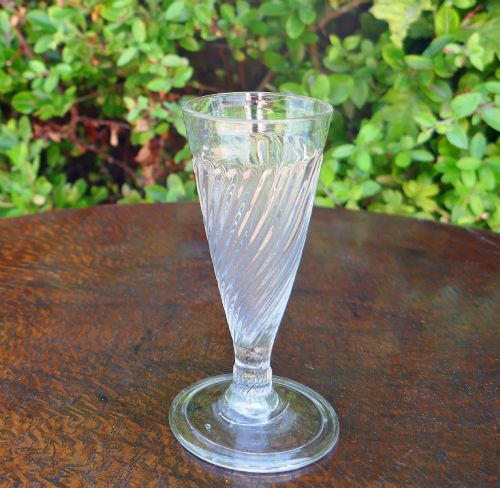
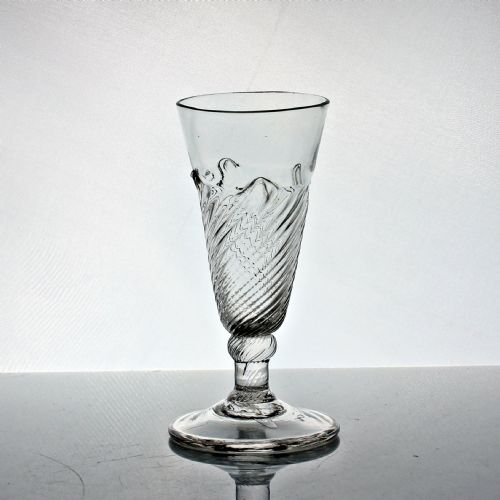
- A surface pattern of shallow ribs twisted obliquely around the body of a vessel. The technique adds texture and catches the light.
Clear Glass Ale Goblet: Frequently Asked Questions
What were ale goblets used for?
These drinking glasses served historic ales and barley wines during social gatherings and formal meals. Their specific capacities and tall bowl shapes suited the effervescent qualities of early brews.
Over time, forms evolved from narrow eighteenth-century stems into larger nineteenth-century rummers. Each variation accommodated shifting drinking preferences and table traditions.
How do I date a glass ale goblet?
Dating relies heavily on observing manufacturing traits such as pontil marks, metal weight, and stem construction. Eighteenth-century pieces frequently display air twists or opaque twists, whereas later examples show different proportions and engraving styles.
Style shifts also offer chronological clues, moving from dwarf stems and folded feet toward larger Edwardian drinking vessels. Comparing piece forms against documented examples helps narrow down the period of origin.
How do I care for antique glass?
Antique drinking glasses require gentle hand washing in lukewarm water with mild detergent. Avoid sudden temperature changes to protect the historic metal from thermal shock and cracking.
Storage should involve stable shelving away from direct sunlight and vibration. Handling these fragile stemware pieces by the base rather than the rim preserves their structural integrity.
What is an air twist stem?
An air twist stem contains elongated bubbles trapped inside the glass and drawn into a spiral thread. Makers manipulated the molten metal to trap air before twisting the stem into shape.
This technique produced decorative internal patterns that catch the light without adding coloured materials. It remains a hallmark of mid-eighteenth-century English drinking glasses.