






Clear Glass Drinking Vessel
A clear glass drinking vessel spans centuries of table use, offering the weight and clarity of lead glass, flint glass, and crystal from Georgian to Art Deco periods.
Clear Glass Drinking Vessel
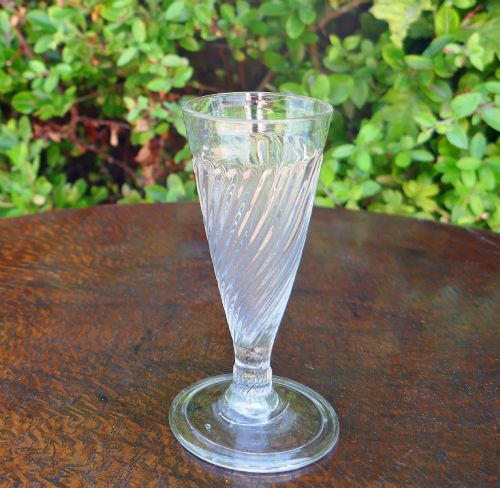
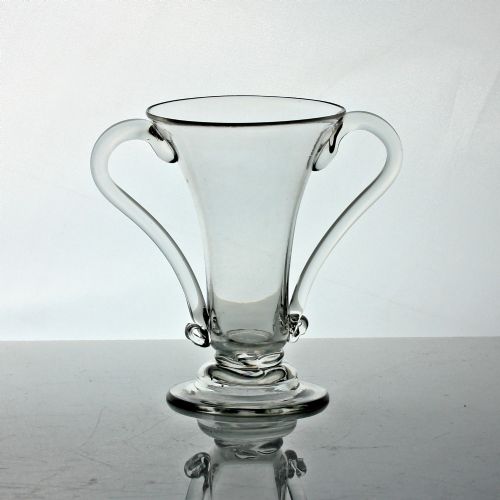
A clear glass drinking vessel brings together centuries of British and continental table glassware, ranging from simple tavern cups to elaborate toast masters and cordial glasses. Buyers seeking this phrase encounter wine glasses, rummers, ale glasses, goblets, and tankards spanning the eighteenth, nineteenth, and early twentieth centuries.
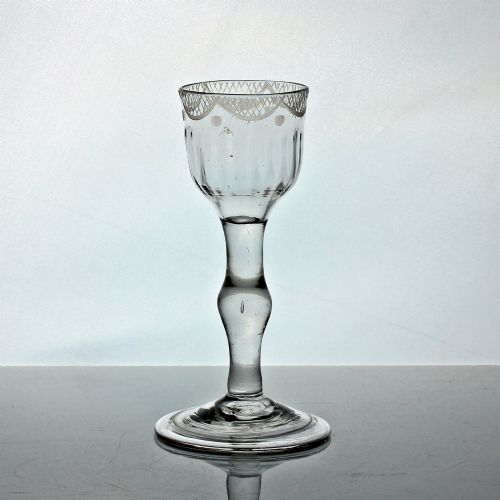
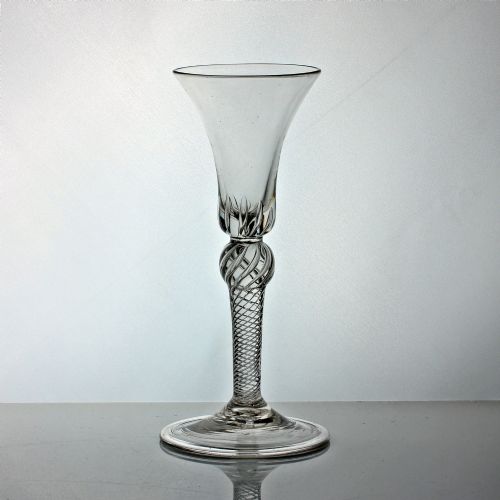
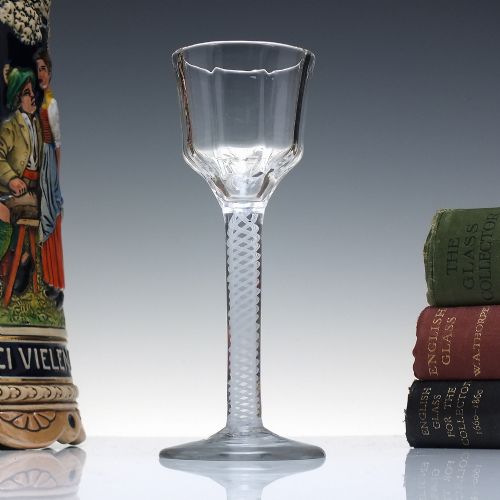
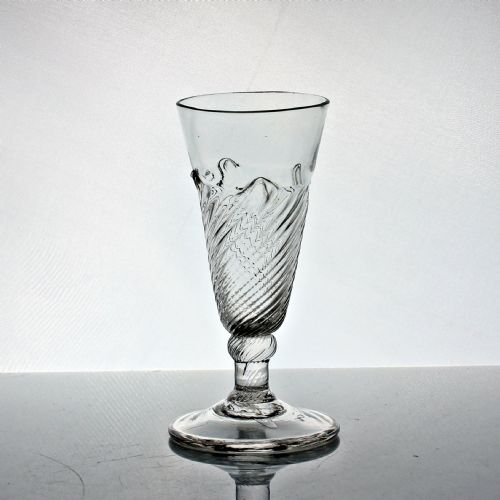
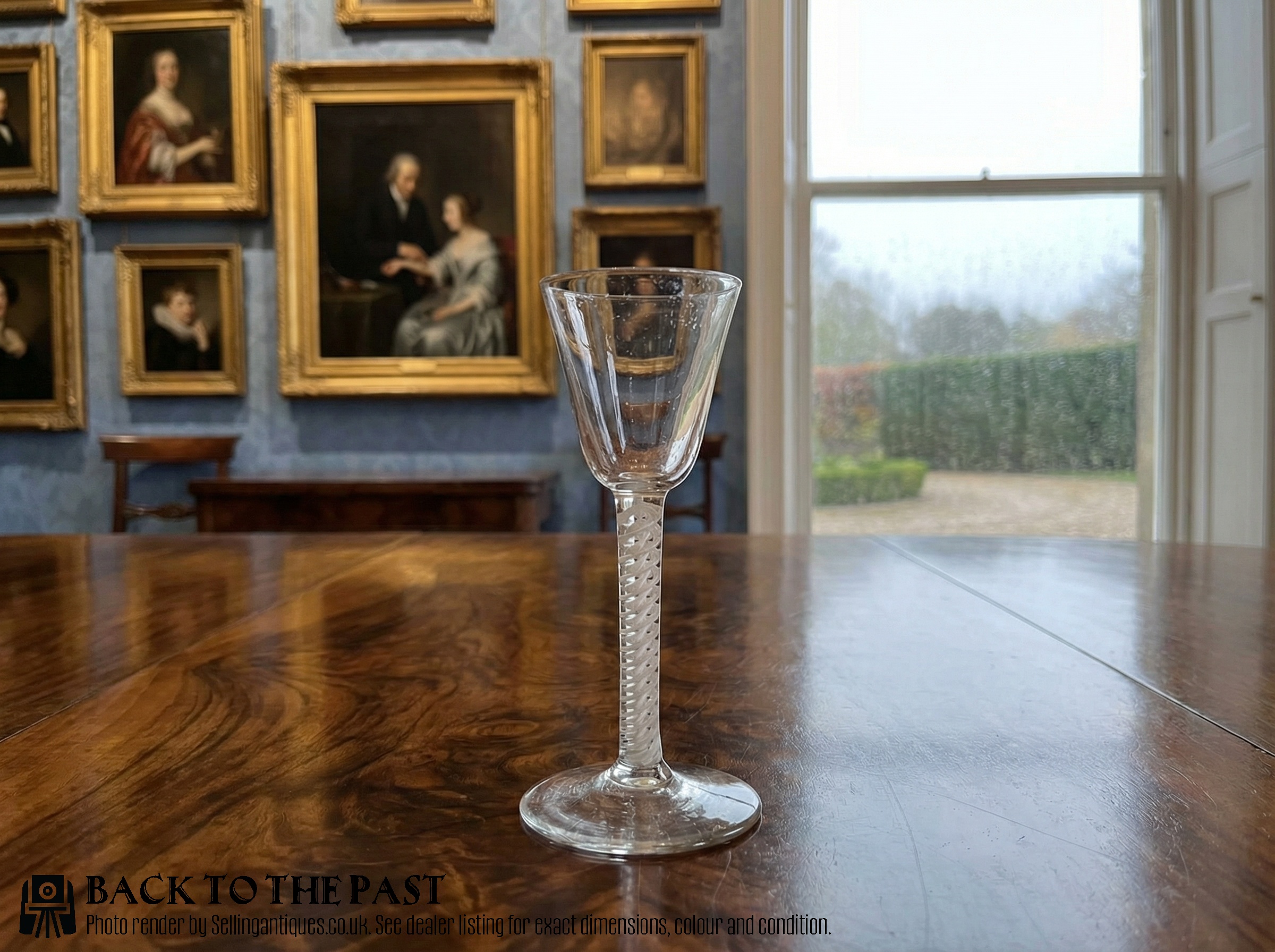
The eighteenth-century examples form a major portion of the selections, featuring baluster, air twist, and opaque twist stems supporting ogee, bell, or round funnel bowls. These drinking forms evolved from heavy tavern pieces into delicate toast glasses designed for specific beverages like ale, drams, and cordials.
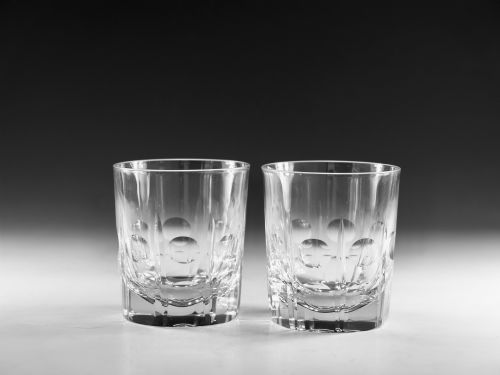
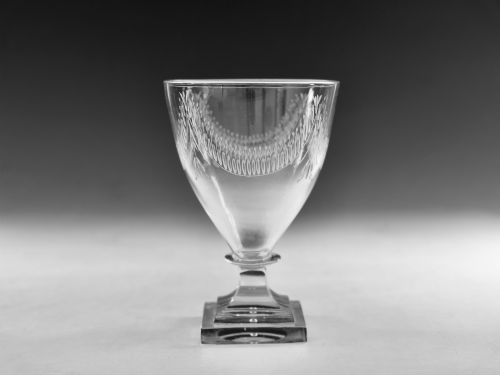
Nineteenth-century iterations shift toward heavier rummers, square-based goblets, etched dessert wine glasses, and silver-topped cocktail shakers from the Edwardian and Art Deco eras. Bohemian makers also contribute cased and gilt goblets alongside Victorian etched pieces, showing how utility merged with decorative ornamentation over time.
Materials and Technique
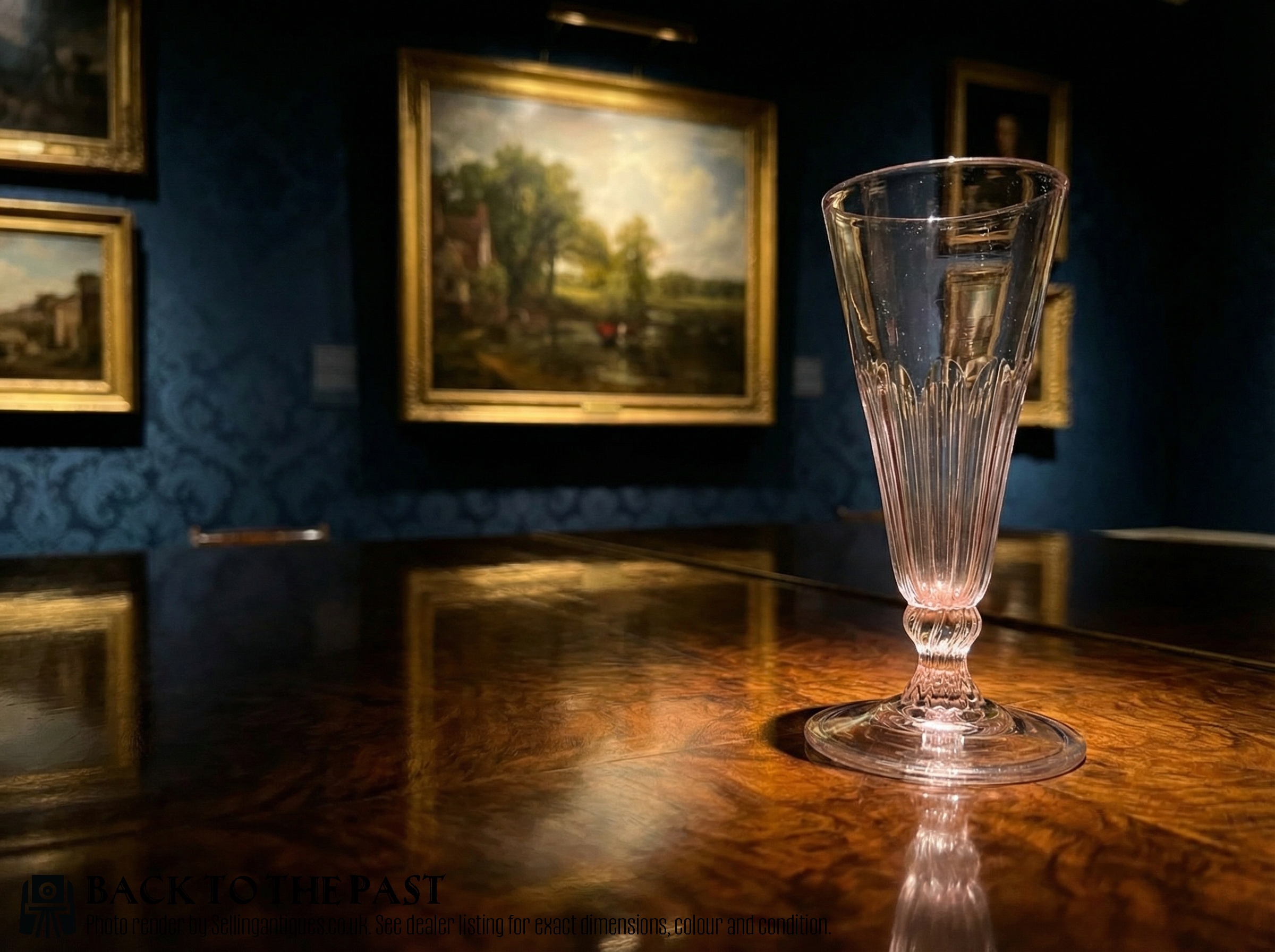
Makers utilised lead glass, flint glass, and lead crystal to achieve the high refractive index and brilliance seen across these pieces. The heavier metal content allowed glassblowers to form thick feet, knops, and sturdy stems that could withstand daily use.
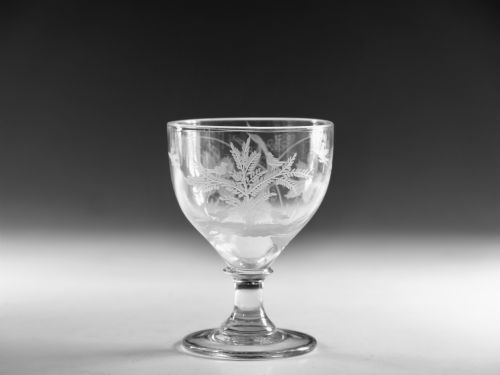
Twist stems were formed by trapping air bubbles within the molten metal before drawing and twisting the glass, creating single or double series opaque and air twists. Engraving, wheel-cutting, and enamel decoration were applied post-blowing to finish rummers, tankards, and wine glasses with hops, barley, or geometric motifs.
Listings feature lead glass, flint glass, and sterling silver across periods from the 17th century to Art Deco.
Quality Variations
The clarity and weight of the metal set the foundation, as high-purity lead crystal possesses a brighter ring and deeper refraction than standard utility glass. Purity of the melt determines the presence of tiny seed bubbles and striae within the walls of the vessel.
Execution of form and decoration dictates the upper tier, seen in the symmetry of balustroid stems, the crispness of wheel-engraved hops, and the precise alignment of air or opaque twists. Folded feet, domed bases, and unground pontil marks further distinguish workshop standards of earlier periods from mass production.
Hukin and Heath
The Clear Glass Drinking Vessel Glossary
- Air twist
- A stem containing elongated internal spiral air bubbles formed by drawing twisted glass rods. This technique dates predominantly to the mid-eighteenth century.
- Opaque twist
- A stem incorporating white or coloured enamel glass threads drawn into spiral patterns. These threads sit inside a clear lead glass outer casing.
- Rummer
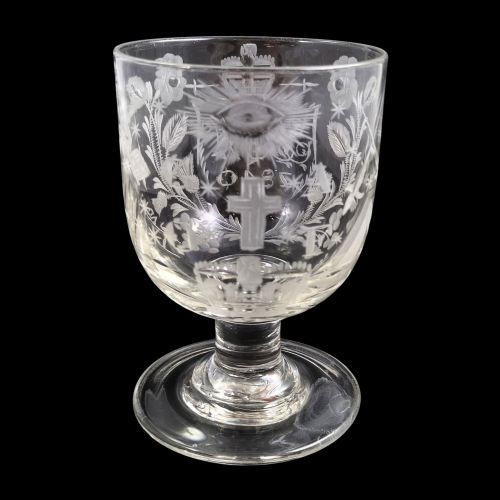
- A capacious goblet-like drinking vessel popular in the late eighteenth and nineteenth centuries, often set on a square or lemon-squeezer base.
- Pontil mark
- The rough scar left underneath the base where the glassmaker's pontil iron was snapped away from the finished vessel.
Clear Glass Drinking Vessel: Frequently Asked Questions
What is a rummer used for?
A rummer served as a robust drinking vessel for ale, wine, or punch during the Georgian and Victorian periods. Their capacity made them suitable for everyday tavern use or domestic gatherings.
Over time, these heavy glasses evolved from simple tavern cups into commemorative items, sometimes featuring engraved coats of arms or Masonic symbols.
How do I date an 18th century wine glass?
Dating relies on observing stem construction, bowl shape, and foot formation. Air twists and baluster forms typically point to the middle decades, while plain stems span a wider timeline.
Additional clues include the presence of a folded foot to strengthen the rim against chipping, a feature more common in earlier production.
What makes an opaque twist glass different?
An opaque twist contains white or coloured enamel glass filaments drawn into internal spirals within the stem. Makers achieved this by arranging canes in a mould before reheating and twisting.
This method succeeded air twists and preceded faceted stems, marking a specific decorative phase in English glassmaking during the Georgian era.
Can I use antique glassware for drinks?
These pieces were made for consumption, but lead glass requires careful hand washing rather than dishwasher use to prevent clouding. Thermal shock should also be avoided by not pouring boiling liquids into cold vessels.
Many collectors prefer to display them, though durable rummers and heavier goblets remain capable of holding modern beverages.