


Victorian Etched Stemware
Victorian etched stemware brings sparkling historic character to the table, offering genuine nineteenth-century glass for modern dining.
Victorian Etched Stemware
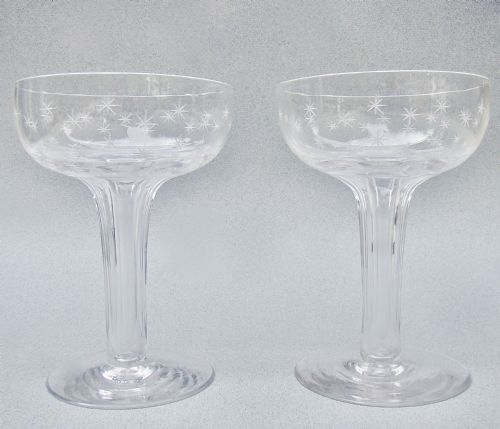
Victorian etched stemware comprises drinking vessels and table glass produced during the nineteenth century, spanning decades from the eighteen-sixties to the eighteen-nineties. The selection includes wine glasses, champagne glasses, champagne coupes, and rummers designed for formal dining and social occasions of the period.
The objects present clear glass alongside coloured variants in ruby and amber, often shaped as hollow stem glasses or deep-bowled goblets. Sets range from matched pairs to larger gatherings of glasses, capturing the diverse aesthetic output of nineteenth-century glassmakers.
How they were made
Production relied on glass and lead crystal, shaped by blowing and cutting to create defined bowls, stems, and feet. Artisans applied wheel engraving and acid techniques to cut decorative motifs directly into the surface of the material.
Coloured pieces utilised layered glass techniques, such as red over crystal, where clear material received a vibrant outer coating that was subsequently cut away to reveal contrasting colour and pattern.
Nineteenth-century diners toasted their health from vessels specifically hollowed out in the stem to let the bubbly rise.
What varies in quality
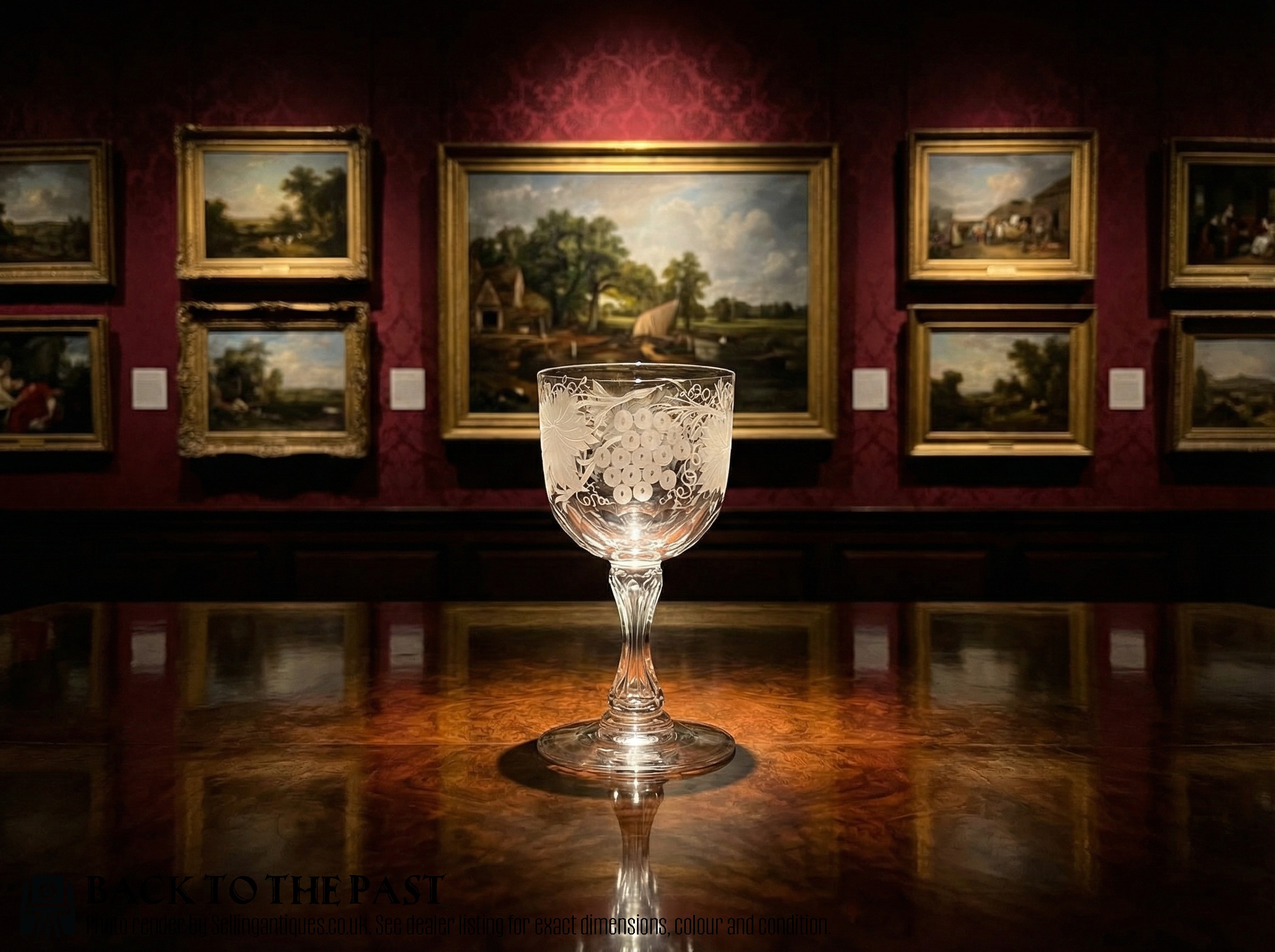
Quality rests upon the crispness and depth of the wheel engraving or acid cutting, where finer examples display precise detail in motifs like fruiting vines and star patterns. The clarity of the crystal and the uniformity of the glass matrix also distinguish superior vessels from simpler utilitarian wares.
The weight and balance of the piece, particularly in hollow stem variants and heavy rummers, reflect the skill involved in handling the molten material during manufacture.
Stevens & Williams
The Victorian Etched Stemware Glossary
- Crystal
- A high-quality form of glass containing lead oxide, which increases brilliance, weight, and clarity. This material allows for deeper and sharper cutting.
- Champagne coupe
- A shallow, broad-bowled glass on a stem, historically used for sparkling wine. The wide rim allows the bubbles to dissipate quickly.
- Acid cut cameo
- A decorative technique using acid to eat away layers of coloured glass, leaving a raised design in relief. It creates striking contrast between the outer casing and the underlying crystal.
Victorian Etched Stemware: Frequently Asked Questions
How do I date victorian etched stemware?
Dating relies on stylistic clues, manufacturing techniques, and recorded periods associated with specific glass forms. Pieces often correlate with design shifts seen across the decades from eighteen-sixty to eighteen-ninety.
Examining the depth of the engraving, the composition of the crystal, and the specific shape of the bowl provides further context for establishing a likely decade of origin.
Can I use these glasses daily?
These nineteenth-century vessels can certainly be used for dining, provided they receive careful handling. Hand washing is essential to preserve the delicate etched and cut surfaces.
Avoiding sudden temperature changes prevents thermal shock to the old crystal. Treating them with gentle care ensures they continue to serve at the modern table.
How do coloured glasses differ from clear?
Coloured variants involve specific metal oxides added during the melting process or feature overlaid layers of contrasting hues like ruby or amber. These pieces demanded additional manufacturing steps compared to standard clear glass.
The exterior colour was often cut away in patterns to expose the clear crystal beneath, adding textural and visual depth to the finished item.