


Etched Glass Stemware
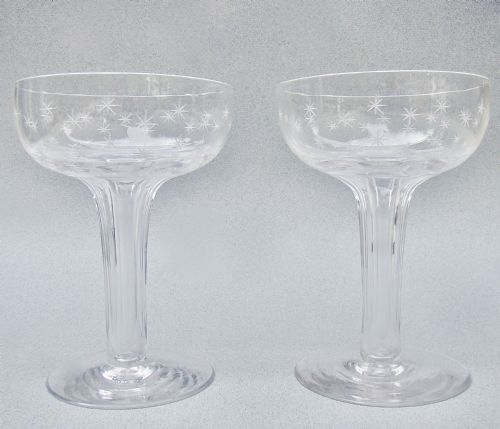
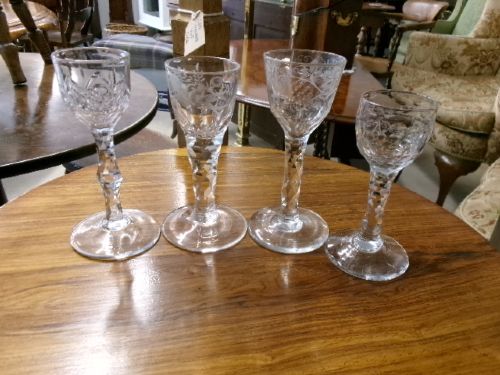
These etched glass stemware pieces bring patterned elegance to the table, combining historic crystal forms with delicate wheel-cut and acid-etched decoration.
Etched Glass Stemware
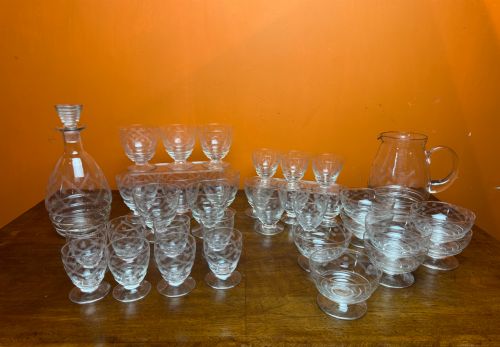
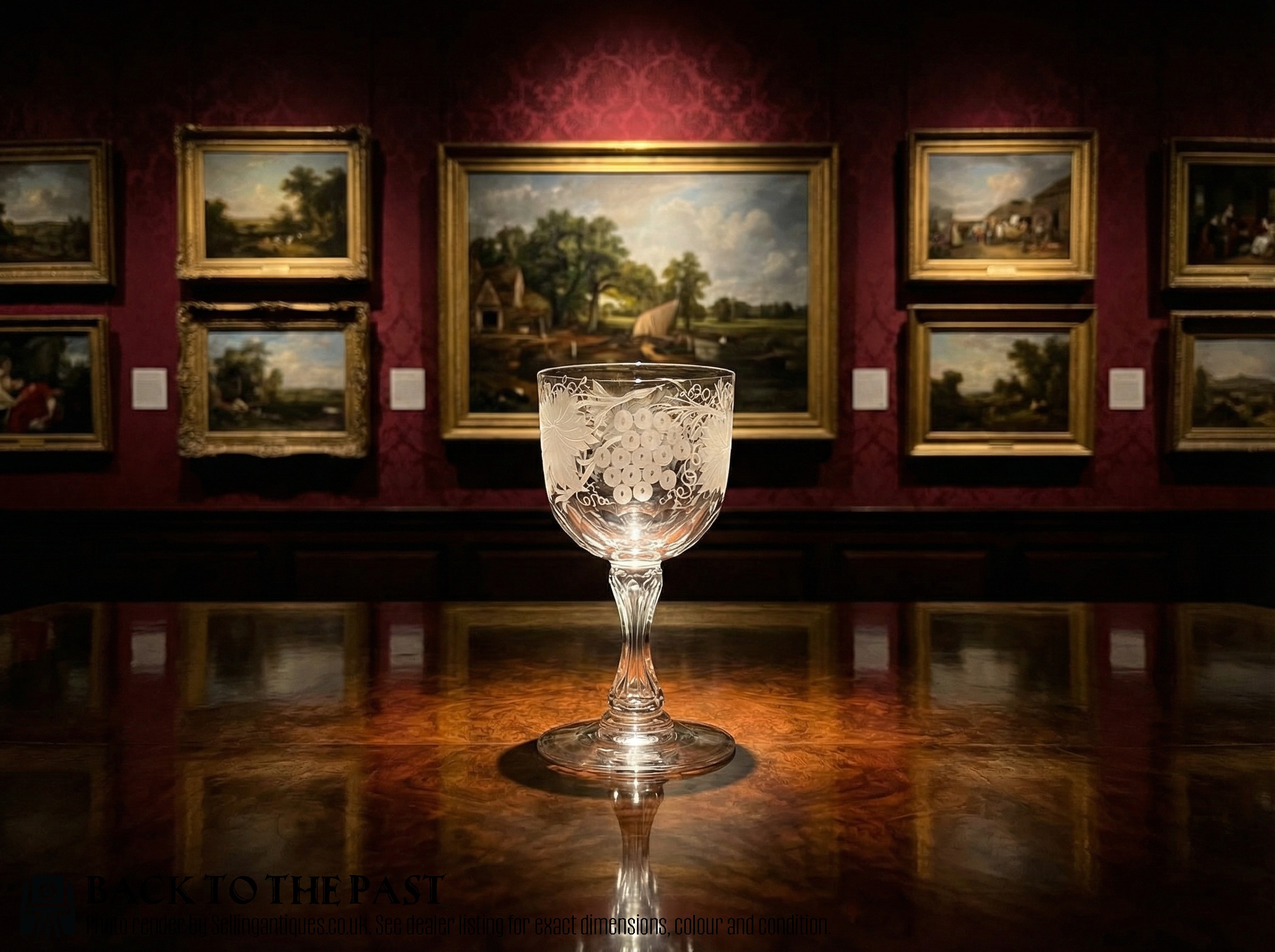
When you search for etched glass stemware, you encounter drinking vessels ranging from Georgian rummers to Victorian wine glasses and Art Deco suites. These pieces combine bowls, stems, and foot bases shaped for social drinking, elevated by surface decoration.
The most common examples on this page hail from the Victorian period, appearing as matched sets or individual wine glasses and champagne coupes. Alongside these, earlier 18th-century and Georgian pieces demonstrate simpler faceted bowls and naive hunting scenes.
Forms extend beyond standard wine glasses to include champagne glasses, rinsers, and large French or Scandinavian dining suites. Collectors find everything from ruby and amber coloured lead crystal to clear glass chalices.
Materials and methods
Glassmakers shaped these items using hand-blown techniques, working molten lead crystal and clear glass while hot. Craftsmen then formed hollow stems, faceted bowls, and wide foot bases by hand.
Decoration relied on engraving and acid techniques to cut patterns into the surface. Artisans utilised wheels and acid baths to create fruiting vines, stars, and figurative hunting scenes on the crystal body.
Georgian gentlemen often used heavy rummers to settle debates, sometimes engraving the bowl with the likeness of their favourite hunting dog.
Assessing quality and craftsmanship
Quality rests in the crispness of the wheel engraving and the clarity of the metal itself. Superior examples display deep, sharp cuts that catch the light, whereas lesser pieces show faint or muddy surface marks.
The weight and resonance of the lead crystal indicate superior material composition. Balance in the stem and uniformity across a matched set further separate standard production from exceptional artistry.
Stevens & Williams·Riihimaki·Adelbert Niemeyer
The Etched Glass Stemware Glossary
- Lead crystal
- Glass containing a high proportion of lead oxide, which increases brilliance, weight, and resonance. This material allows for finer wheel-cutting without chipping.
- Rummer
- A large, heavy-stemmed drinking glass popular in the Georgian and Victorian eras. These vessels typically featured wide bowls suited for ale, wine, or punch.
- Air twist
- An optical effect created by trapping elongated air bubbles inside the stem of a glass during formation. Makers drew and twisted the glass while hot to spiral the internal air threads.
- Champagne coupe
- A shallow, broad-bowled stemmed glass designed originally for sparkling wine. The wide aperture encourages the release of aromas.
- Acid cut cameo
- A technique using acid to etch away outer layers of coloured glass to reveal a contrasting background design. This process requires precise masking to achieve layered relief.
Etched Glass Stemware: Frequently Asked Questions
Can I use these vintage glasses for daily dining?
Many collectors enjoy using their pieces for special dinners and formal gatherings. Hand-blown lead crystal remains durable enough for careful handling.
Take care when setting them down on hard surfaces, and store them upright on their foot bases rather than hanging them by the rims.
How do I tell Georgian stemware from Victorian pieces?
Georgian drinking glasses often display heavier proportions, simpler facet-cutting, and naive hand-engraved motifs. Their metal can feel darker or show small bubbles from early production methods.
Victorian examples frequently showcase more intricate star patterns, machine-assisted precision, and a wider variety of coloured glass bowls like ruby and amber.
What is the difference between etched and engraved glass?
Engraved glass is worked mechanically using rotating copper or stone wheels to carve lines directly into the surface. This leaves deeper, V-shaped cuts.
Etched glass utilises acid to eat away the exposed surface around a protective wax resist, producing frosted or shallow textured designs.