


Vintage Etched Wine Goblet
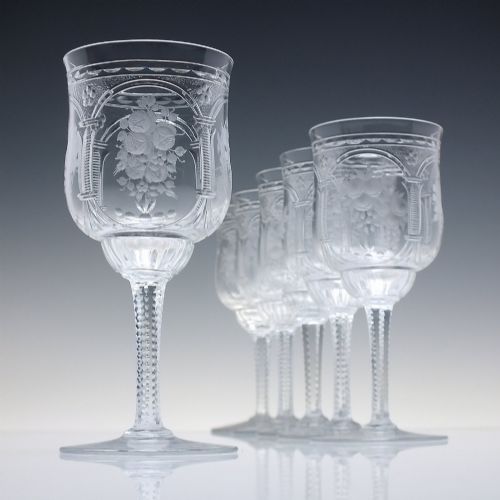
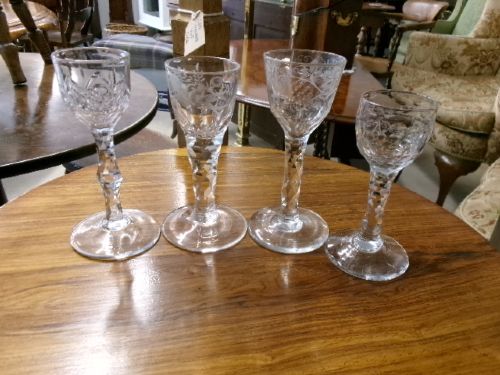
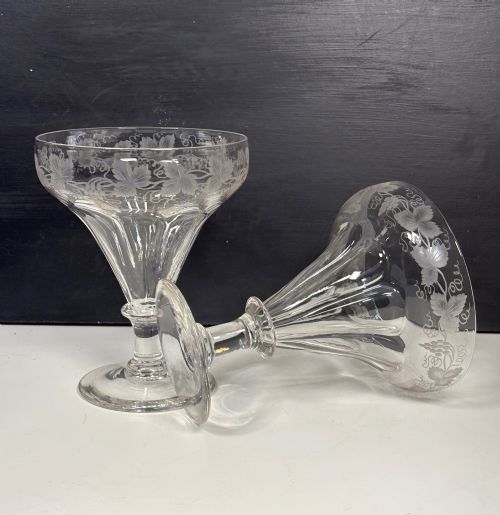
These vintage etched wine goblet pieces combine period glasswork with delicate wheel-engraved or acid-etched motifs, offering an authentic touch for your table.
Vintage Etched Wine Goblet
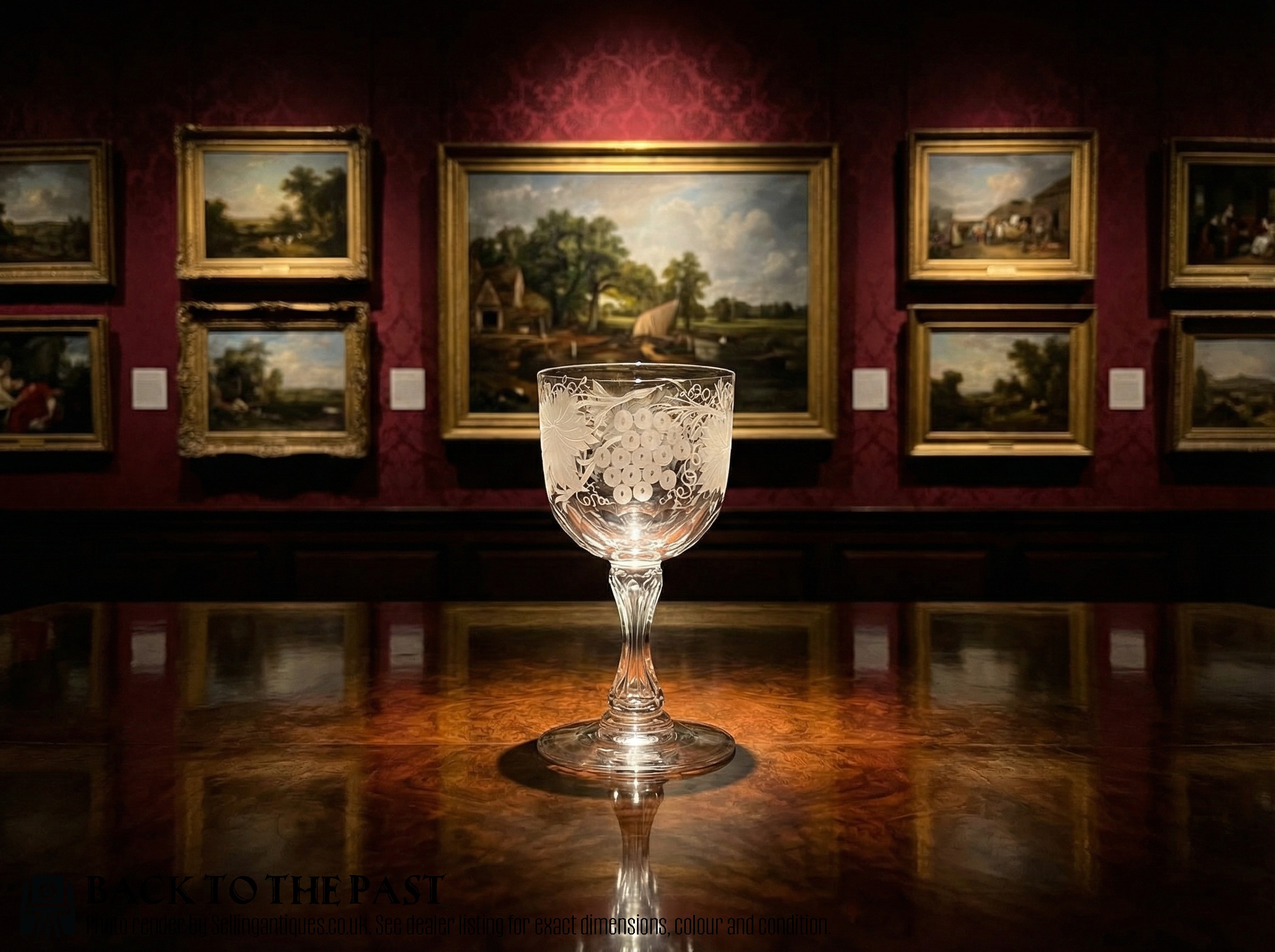
When you search for vintage etched wine goblet items, you are looking at decorative and functional drinkware spanning the Georgian, Victorian, Edwardian, and Art Deco periods. These drinking vessels and chalices bring historical glasswork directly to the modern table setting.
The most common examples you will meet on this page are Victorian wine glasses and larger goblets featuring etched, cut, or frosted surface decoration. They frequently appear singly, in pairs, or in matching sets.
Originating from British, Bohemian, and Scandinavian workshops, these pieces showcase traditional forms such as faceted stems and wide foot bases. Their historical range stretches from the mid-nineteenth century through to the nineteen-thirties.
How they were made
These items are shaped from clear glass, lead crystal, or amber glass using traditional blowing and moulding techniques. Artisans then applied surface decoration through wheel engraving, cutting, or acid-etching to create intricate patterns.
Certain specialty items incorporate elaborate finishes such as gold leaf accents or cameo layering. Workshops like those in Bohemia and makers such as Stevens and Williams utilised advanced chemical and mechanical treatments to achieve high-contrast surface textures.
What varies in quality
The distinction between standard production items and superior examples lies in the crispness and depth of the etched or cut decoration. Deeper wheel engraving and precise acid cutting demand greater artisan skill, resulting in sharper visual contrast across the bowl.
Material clarity and weight also separate the tiers, with high lead crystal pieces offering superior refraction and resonance compared to standard clear glass. Additionally, uniformity within matched sets indicates higher manufacturing standards during the original production period.
Stevens and Williams·Riihimaki Savoy·Adelbert Niemeyer
The Vintage Etched Wine Goblet Glossary
- Etched glass
- Glassware decorated by applying acid to eat away exposed areas, creating frosted designs. This technique allows for intricate floral or geometric patterns that remain smooth to the touch.
- Lead crystal
- A high-clarity glass containing metallic oxide that increases weight and refractive index. It produces a distinct bell-like ring when struck gently.
- Roemer
- A traditional Germanic stemmed drinking glass, often executed in amber or green glass with a wide, decorated bowl. They frequently feature applied prunts on the stem for a secure grip.
- Jugendstil
- The continental European manifestation of Art Nouveau, prominent around nineteen hundred. It is characterised by organic, flowing lines and natural motifs.
- Faceted stem
- A glass stem shaped with multiple flat polished planes that catch the light. This traditional cutting method enhances the sparkle of the glassware during use.
Vintage Etched Wine Goblet: Frequently Asked Questions
Are vintage etched wine goblets usable today?
These pieces function adequately for occasional dining and celebratory toasts, provided you handle them with care. Their historical nature means they require gentle treatment rather than heavy daily use.
Hand washing in lukewarm water preserves the delicate glass surfaces and any fine etched details. Avoid thermal shock from extreme temperature changes.
How do I identify Victorian glass pieces?
Victorian items often display characteristic heavy lead crystal composition, deep wheel cutting, and botanical or geometric etched motifs. Forms tend to be robust with wide foot bases and faceted stems.
Comparing the manufacturing style and weight against documented period examples helps confirm the era. Examining the pontil mark on the underside also aids in dating.
What is the difference between cut and etched glass?
Cut glass involves grinding deep grooves into the material using mechanical wheels, creating sharp facets and distinct edges. This technique yields a brilliant, highly reflective surface texture.
Etched glass uses acid or light abrasive application to create shallow, matte designs on the surface. The resulting patterns appear frosted and smooth compared to deep mechanical cuts.
How should I display my collection?
Display these items in a stable cabinet with adequate spacing to showcase their silhouettes and refractive qualities. Good lighting highlights the intricate surface etching without exposing the glass to direct heat.
Ensure shelves are level and lined with protective material to prevent chipping. Grouping pieces by period or colour creates a cohesive visual arrangement.